A spoiler-heavy single-scene film review & analysis.
In the last “Selected Scenes”, I noted that The Canterbury Tales the Book was a staple of modern courses in English. To set the stage for today’s edition (and it’s a doozy), here is the exact quote presented pedantically and unsarcastically:
“…the final shot of the crowd paying tribute could be interpreted as the common public, approving of Chaucer’s work as much as the artist himself. And they did: The Canterbury Tales the Book has been a staple of Middle English literature in Universities everywhere, obscenity-be-damned.”
I don’t think anyone will debate me on this but it did have me thinking. One of the first things you learn as an essay writer is to cite your sources: produce a bibliography to that academic specification we all remember from high school (start with the last name of the author and follow the format, tabbing the second line, etcetera) and make sure that you can prove something before you say something. I never cited any “official” sources that said Canterbury Tales was taught in English courses: it’s just something I know. Isn’t that why quote-unquote “classics” are given that designation? Because they have risen above anonymity and in to the social pantheon of common parlance?
Okay, maybe you aren’t going to a garden-variety dinner party in this day-and-age and tell people you read this really good book called The Canterbury Tales? Have you heard of it? And it’s written by this guy named Geoffrey Chaucer and it’s really old and written in this strange, ancient form of English but it’s really good? And that one single woman who’s friends with the hostess and wants an excuse to talk to you asks you where she can pick up a copy and you tell her that you don’t know because you took it off your folks’ bookshelf and the cover was falling off of it and there was this old, crusty brown stuff that kept a chunk of the pages stuck together so you had to look up that bit on the Internet? Maybe at a different kind of dinner party: the kind you see on TV, where wealthy intellectuals in tuxedos discuss fine literature over cognac and cigars until one of their rebellious sons who works at the local firehouse crashes the party with accusations of fraud within the department. Or the kind of party that quick-talking hipsters and college graduates would frequent. I don’t know. I’ve never been to a function where the conversation was anything deeper than “the dumb shit Trudeau said this week”. That’s just where I fall on the ladder. And since the coronavirus won’t be ending any time soon, I’m sure we’ll all be talking desiccatedly about that into the foreseeable future. Poor Geoffrey won’t be trending as strongly in certain scholarly markets anymore.
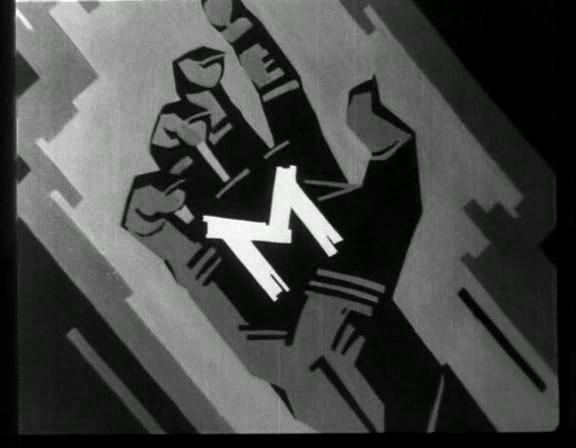
I am way off track, but also not really. The point of all that was to say, some things are just classic. Movies are a great example: anything by Francis Ford Coppola in the 1970s and Christopher Nolan in the 2000s; The Silence of the Lambs; Martyrs by Pascal Laugier; Outrage by Takeshi Kitano. These are personal examples, although they are still considered, in their own way, “classics” of their respective genres. But what about “true” classics from the Golden Age of cinema? The Ten Commandments with Charlton Heston; Ace in the Hole with Kirk Douglas; All That Heaven Allows with Rock Hudson. And we can go back even further, to films that laid the foundation for what we know cinema to be today. I’m talking The Battleship Potemkin; The Passion of Joan of Arc; Modern Times: for as much shovelware as I’m sure the Silent Age produced (if only for the still-fresh thrill of filming a train and having everyone in the audience scurry because they thought a train was about to hit them), there were those works – these “classics” – from the first round of cineastes who dared to experiment with the medium and how to tell a story. I am sure that not all of these films were as successful in certain regards as M was by German director Fritz Lang, but can you really fault something that is a piece of history? That doesn’t mean it’s perfect, at least not from a contemporary discourse. Regular readers will note my concentration on visual editing: this was my specialty in school, and I had to learn many a hard lesson simply through the act of cutting and re-arranging footage as illustration. M could have done with some editing, particularly in an excruciatingly-prolonged chase sequence that culminates the second act and made this humble blogger lose focus. But again, as a quote-unquote classic it’s hard to fault Lang’s early use of controlled tension through the film’s long takes – often silent, despite this being a sound film – and his desire to keep the procedural side of the story play out in real-time, which I’m sure helped early audiences follow the labyrinth that is the inquest at the film’s core. Again, this was unheard of in the 1930s: a catch-the-serial-killer movie about a pedophile, where each step of the police investigation (from canvassing the neighborhood to interrogating witnesses) is observed in-detail?

And on top of all that, the killer is given a speaking role (a monologue, no less) and a chance to nuncupate his own defense at the end? Wild stuff. I’m sure the movie’s audience in the 1960s who saw it after it was vaulted post-Reichstag (Lang was a Jew) was more used to the material than the limited crowds who saw it at the time of its initial 1931 release. Maybe that was the popularization of the material showing. Thank Hitchcock. I could also be blowing things out of proportion as I’m want to do: some of Lang’s hubris of prolongation is that still-fresh thrill of making people jump in their seats from the unknown.
But it’s 2020. We’ve seen thousands of foot chases and police procedurals and creepy bad guys being chased by the morally-ambiguous good guys in movies and on TV and sometimes even in real-life, if metropolitan population sizes keep increasing. M was already outdated 30 years after it originally came out and now we’re coming up to its 90th anniversary. But it’s still heralded as a classic, and how do I know? Because every movie historian and critic from Schneider to Ebert has mentioned this damn thing in their books and writings. Do you want me to quote them all? Because I won’t. And you can watch the full movie right now for free, because the other great thing about Silent and Golden Age films is that many of their exhibition licenses have expired: an entire library of free movies exists out there, and as the years tick on and rights holders pass away and their estate forgets to renew the hundred-year lease on those kitschy oddities in their collection that library will just keep growing. Who needs Disney Plus (DP) when you have YouTube? I’ve touched base on a great many things in this intro, but for this Selected Scenes there really is only one topic I want to concentrate on, and that’s the film’s ending. Spoiler alert, as always and forever more.

German police are in a tizzy: a demented child killer is on the loose, and he has just claimed another victim. So appalled, too, are the organized criminals and the homeless in the city with this murderer’s elusiveness and his dizzying effect of the populace that they have joined forces in the manhunt, with each faction vying to get their hands on the maniac first. The killer’s identity is eventually revealed: just an ordinary citizen (forgiving actor Peter Lorre’s exaggerated facial features) with a big secret. The underground gets to him before the cops do, and hold a kangaroo court – presided over by the city’s bums and scums – with the intention of never letting him go alive. But they still assign him a defense attorney, and give him an opportunity to plead his case. The killer – who has a name: Hans Beckert – does not deny what he has done. Rather, he blames his actions on an inexorable tendency towards evil:
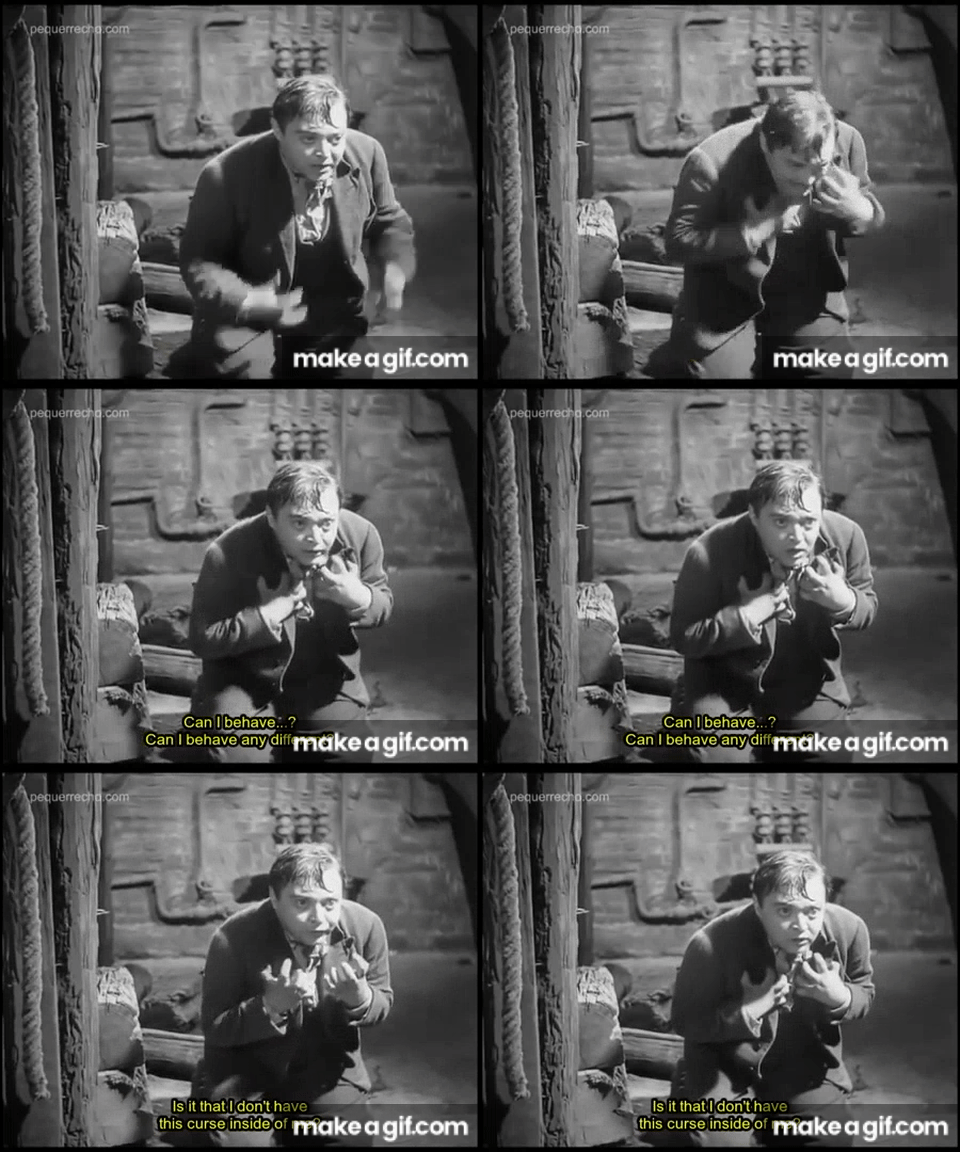
“It’s there all the time, driving me out to wander the streets, following me, silently, but I can feel it there. It’s me, pursuing myself! I want to escape, to escape from myself! But it’s impossible. I can’t escape, I have to obey it. … Then I can’t remember anything. And afterwards I see those posters and read what I’ve done, and read, and read… did I do that? But I can’t remember anything about it! But who will believe me?”
His lawyer agrees: how can someone be held accountable for that which they have no control over? The “judge” – an underworld boss known as The Safecracker – disagrees, saying that disassociation doesn’t change the fact that he still committed the crimes. Someone has to pay. Both opinions divide the jury just as the court is broken up by the police and Beckert is taken in to custody. At the real trial, the grieving mothers of the girls Beckert killed watch on and proclaim that no verdict will bring back their daughters. And like any old movie that has made its point loud and clear, we cut to black and the film ends.
Powerful stuff. It’s just a shame it all comes after a 30-minute pursuit where Beckert is holed-up in an office building and his hunters have to cut a hole in a wall to get him out. We just had the iconic shot of Beckert being “tagged” with an M on his back (for Murderer) and chased through the streets: it would have been faster to have him captured at this point instead of dragging the whole thing out, having the mob attack the building’s guards to find out where he is, and then they trip the silent alarm so the police arrive and arrest one of the mob so that’s how they find out where the kangaroo court is being held but first the cops walk through the office building, looking at the hole, admiring the tenacity to make the hole in the first place… it just goes on and on and on! It took my man Peter to bring it home in the end, and a Hell of a performance it is. Lorre is best known to the West as the villain of Bogart’s The Maltese Falcon and this was one of his first screen appearances. He is seen in fits-and-starts through most of the film (usually in low-angle POVs that convey his looming presence over his victims) but it isn’t until the last hour when he is given a face and a voice and a name – personified and not just a dark entity. Lorre begging, pleading with the criminals not to kill him because his actions are out of his control is a great scene, and not just because of the acting. Because Lang’s screenplay has asked a rudimentary but altogether-important question: should someone be condemned for something within the self that is beyond the will? The sympathy that Beckert gains from not only the jury, but the film’s audience as well, tells us that while this is a simple question it is not easily answered without a measure of self-incrimination: how can you empathize with the devil?
I keep thinking about this passage: the duality of Lang’s message, and the bluntness of its truth that no outcome will rectify the past. These girls are still dead. I watched this film in April and this message has stayed with me. Let me tell you a story. My sister is an addict. My family and I fears for her future because it is an unknown. She was just fired from her job, she’s in incredible debt, and her landlord wants her out even though there isn’t anywhere for her to go right now during COVID. We can’t say that we can help her when we cannot: she has burned bridges between our father and mother, and although our father still leaps to her rescue when she finds herself genuinely stranded and in-trouble, our mother cannot since she’s a six-hour drive away, and our father’s generosity is running low. I can’t help her either: my landlords would not tolerate having her live here with the behavior she’s displaying right now. I told my wife that, if it took me moving in with her to a place for six months to help her gain some stability in her life then I would. Babysitting, she said. “You would babysit her? Do you have the patience for that?” I thought I did, but now I’m thinking otherwise. None of her current situation changes the fact that she is simply not trustworthy: she has stolen money and ID; acted aggressively and occasionally-violent; lied and omitted. But she is family. And she is an addict, so this can’t be her real self doing this, can it? Isn’t it her dependency that is affecting her psychology? The depression and anxiety that brought about the dependency in the first place? Aren’t these things treatable? Thing is, you have to want the treatment, and even when you do get it, you still have to gain back the trust you lost when you weren’t right in your own head. Now, my sister’s problems are nowhere near “child murderer” level but the duality is still the same, arguably made even more complicated by that devious overlying theme that is family. Beckert has no one, other than the woman who tends to his flat but she could hardly be called a replacement for a friend? A mother? A counselor? Someone to talk his problems out with before they manifested into murder? What was his past like? What trauma did he have to make him this way? Was there any trauma? Was he just as big a shithead coming out as he is now? Did counselors as we know them to be now exist then or were they just all lumped together with psychiatrists and behavioral science (this is something I probably could look up)? There are deeper levels we can go into on this but the film is content with implanting the thought, and so am I. Can my sister be cured of her addiction? Can she achieve true atonement by ridding herself of that addiction? Does the addiction even have anything to do with it? None of this changes whether we trust her or not, nor does it change that she is family. We don’t, and she is. One could argue that Beckert is, in fact, with his family in that makeshift courtroom: in the company of his peers, being ostracized for his own crime when no one else is for theirs. But again, he killed kids. Possibly worse. My brain hurts.
Would I recommend a full-watch of M based on the quality of the film’s ending? I would, based on much more. Don’t get me wrong. It’s effective and made with attention, and its message is timeless though its desire either for preservation of narrative consistency or directorial crowing has aged its presentation. A contemporary alternative for a discerning viewer could be found in Denis Villeneuve’s Prisoners, although that also has its faults (and not because it’s a classic). But how much longer will these audio/visual relics remain relevant? At what point will future cinematic antiquarians see the Golden Age as the 1980s and anything before that as a footnote? When the faulty generalization of the John Hughes “teen movie” becomes the great turning point that led to genre “classics” like Good Boys and Like A Boss and Tag? I’m kidding (it wasn’t funny anyway). Who knows except the time traveler what the future has in-store for film and film history going-forward. It takes a patient eye to watch some of these old movies now – especially the ones that are in black and white AND have subtitles – and in this age of 5G and instant gratification, dated films like M may become lost to future generations. Is this a bad thing? I think us pundits see it as a bad thing in the present, but the industry really has changed an enormous amount itself anyway, and it’s changing even faster now to try and keep up with the world-at-large. Movies are freely delayed and reshot and retooled to make them as effective as possible to an opening weekend audience who could very well forget what they just watched as soon as they’re finished watching it. Some will say the stakes are higher than ever for a fledgling filmmaker entering the workforce now, but as a privileged Canadian I may never truly grasp Lang’s predicament ninety years ago, as a Jew and an ambassador for the budding German film market. That is history. M is history, and that’s what makes it a classic.
//jf 5.27.2020

 theory of a daskeman