A spoiler-heavy movie review.
Happy 100th Cumulative Post!
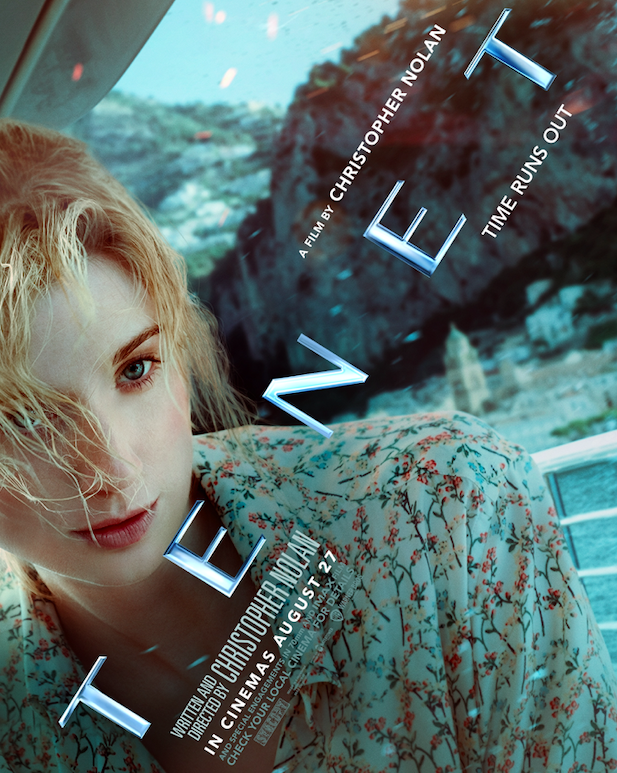
I have created a monster. I knew that my wife loved movies before we got serious, but all my talk of the Hollywood machine has permanently-ruined the conversations we have about what we watch together. Take, for instance, Christopher Nolan’s latest: “Tenet”. For a director who shies-away from the immediate-aftermath of violence, I was pretty surprised with how much violence against women was in the film: specifically against its leading lady Katherine, played by Elizabeth Debicki (who – ironically – praised the ground Nolan walks on in the theatre pre-show). Her character is married to the Big Baddie of the piece: a Russian arms dealer named Andrei, played by the superlative Kenneth Branagh; and her release from her husband’s abusive bondage plays prominently in the choices our unnamed lead (Denzel Washington’s son John David) makes in the film. I told my wife that the scenes of domestic abuse were unnecessary: I figured Nolan had done enough to show how ruthless and evil Andrei was without giving our otherwise-unfeeling hero the personal attachment in saving the battered wife. My wife, on the other hand, suggested that the extra-violence was because some European (and even Russian) audiences expect that gratuitousness as it fits in with their cinematic culture: she even cited the rape scenes from the Swedish version of “The Girl With The Dragon Tattoo”, and how they were toned-down for the American remake. I said that Nolan probably has Final Cut now (after how much money he’s made Warner in the last 15-years), and the studio would be contractually-obligated to leave him alone and let him put whatever he wants in his movies without interference, even if that meant deliberately changing certain things for a foreign audience.
She didn’t buy this, saying that Nolan may have filmed these scenes to ensure the film was successful in non-Colonial territories. This is not unheard of: look at the sexual aesthetics of cross-over hits like “365 Days”, which introduced television-levels of Eastern European erotica to the unsuspecting masses stateside. However, between you Nolan-freaks and myself, we know why a character like Katherine was only bound to show up in one of his movies eventually. He’s played with the battered wife archetype – or, the supportive female used by the men in-control until it breaks them – in most of his films now: Scarlett Johansson and Rebecca Hall as the romantically-misguided wives in “The Prestige”; Rachel’s doomed affairs from the “Dark Knight” movies; Marion Cotillard’s tragic marriage-and-business-partnership in “Inception”; Jessica Chastain’s daddy issues from “Interstellar”; even Carrie-Anne Moss was corrupted by a bad relationship in “Memento”. However, never was this cruelty – and contempt – towards his female characters been more-pronounced than in Tenet, and it threatens to derail what is otherwise a narratively-clever-but-technically-derivative addition to his oeuvre.
Nolan has been developing his style down a very particular path ever since “The Dark Knight” in 2008, and every movie of his since then has shared identical framing; color-correction; aerial shots; and soundtrack (although a different composer this time), to the point you would be forgiven for confusing them were it not for the different actors he uses (except for Michael Caine). Tenet, then, is a sort-of culmination of this aesthetic evolution: doing nothing different yet tweaking what’s already there, like a System Update. The biggest tweak for myself, this time around, was script-based: one reason Inception doesn’t work as well for me now as it did on-release was how – like a video game – its first hour was tutorial for the last 90-minutes’ “main mission”. There was no flow to how information was provided: you were left with what was dumped on you and were expected to figure-out what was happening in the last-half on your own (not only that, but they never folded the world or really did any of the cool stuff that they alluded-to in that first hour). Tenet, while just as exposition-heavy, spaces its tutorials out to the point that, once shit really starts hitting the fan, the audience is still in a constant-state of information-gathering, keeping them in a refresher-phase through most of the runtime and enabling easier comprehension of the web Nolan puts us into. And rest assured, he seems more-eager than ever to show off his smarts and cleverness with a script treatment that seeks to top anything he’s done before. Forget the universe-hopping of Interstellar or the dream-baiting of Inception: Tenet’s time-manipulation takes the cake. Essentially, the future has created a device that can reverse the “entropy” of matter (allowing things to appear as though they are operating in-reverse, while actually operating linearly), and its creator has hidden “all nine pieces” of the device “in the past”, where Branagh’s psychopath Thanos – I mean, Andrei – seeks to collect them and set the world into an admittedly very-original apocalypse, where time would permanently reverse and the human race would never have existed. Because not only is he a wife-beater, arms dealer, and psychopath with a God-complex, but a cancer patient who wants to take everyone with him when he goes. Washington’s CIA agent has his death faked before joining the super-secret task force set up to take him down, and Bob’s your uncle.
Yes, the plot is labyrinth. But acting is never something we have to worry about in a Nolan joint: the players navigate his pseudo-science with that standard intensity we’ve come to expect. Joining the ranks of “protagonists” alongside Christian Bale and Leonardo DiCaprio, John David Washington plays a good badass, with military-training; quick-reflexes; and an open-mind. Of each character’s signature scenes, Washington’s initial escaping-capture in a restaurant kitchen took the cake for me, clearing the area of Big Bad Russian Dudes with ease. Robert Pattinson as his mercenary pal holds his own as well: I haven’t followed his career since “Twilight” and to me he still looks like Edward, so it was nice to see that he can play it straight (and yes, I know he’s done enough independent films by-now to increase his mainstream street-cred, but I haven’t seen “High Life” or “Good Time” yet). We’ll see how he does in the new “Batman”. Branagh is great, as usual, but we’ll talk more about that later, along with Debicki, who does what she can with your garden-variety “woman-in-peril” role. However, every character is too damned smart. Things only have to be explained to them once before they “get it”, and characters with purely-military backgrounds have no problem conversing with physics-majors about the intricacies of Nolan’s time-hopping mechanics. People can complain all they want about how fundamentally-useless Ellen Page’s character was in Inception, but you have to admit that her “stranger-in-a-strange-land” arc did well to explain to confused audiences exactly what the Hell was going on. Personally, I understood what was going on, but I couldn’t believe that no one would stop for two-minutes and just breathe and ask, “What is going on right now?” There is a forward-momentum through the whole picture, which is presumed, but not a single character the audience can truly sympathize with or connect with other than the abused wife. The characters are simply vessels that Nolan uses to illustrate his thesis: tools of the trade, if you will. It would be nice to see him go back to smaller-scale drama – like The Prestige – after this, and put his grand ideas to rest so he can work on the simple things like a streamlined plot and character.
Not that the action isn’t anything spectacular, because it is. Nolan’s penchant for keeping old-world cinema technique in modern film pays dividends for the audience when he’s willing to bungee-jump his actors off a building, or blow-up an actual airplane, or train his actors to move-and-talk in-reverse, all without CGI. Many will talk about the practical effects in the car chase scene, but my favorite was when Washington – moving forward in time – fights a masked man moving in-reverse, and then there is a fake-out a good half-hour later where we find out the masked man is actually Washington from the future, travelling in the past. It was brilliant: probably the best scene in the whole film, although I didn’t understand why Nolan felt the need to show the same fight scene twice in its entirety (in fact, there is probably a mean, lean, 90-minute movie here, if Nolan wanted it). All this action is complemented by an electronic soundtrack cut from the Hans Zimmer cloth (because he wasn’t available that weekend) that sways and pulsates in that way all of Zimmer’s soundtracks have since the 90s. However, like “The Dark Knight Rises”, there is a serious sound mixing problem here, with music turned up so loud that in certain scenes you can barely hear spoken dialogue: a problem for a movie that is 1/3rd its cast speaking through oxygen masks. And it all comes down to a climactic fight at an abandoned Soviet nuclear silo, with two teams of good guys: one working in forward-time, the other in reverse. This fight felt more like a video game than anything else Nolan has in his oeuvre, and I was bored to tears: why did the film have to end like a “Call of Duty” mission in the desert? To show what this technology could be used for in wartime? Unfortunately, it didn’t have that desired effect on me: it just felt like he had a really good time working on “Dunkirk”. It also clearly-demonstrated his unwillingness to show certain scenes of violence for cinematic effect, cutting away at the last second before the deadly blow is dealt (the opening scene in the opera house is just as bad a culprit). The Dark Knight, for all it’s dark and brooding, had this problem too: I’m all for quick cutaways to jar your audience, but if you aren’t willing to show bullets grazing flesh or the aftermath of a pistol-whipping, or even someone’s teeth being pulled out, then why are you willing to show spousal abuse?
So it all comes back to Branagh and Debicki’s arc. Yes, there are only two scenes in the two-and-a-half-hour picture where we get to see Andrei really give it to her, but they are so out-of-place of the rest of the movie’s tone that they shouldn’t have even been left in the picture. Who told Nolan this was a good idea? No one, obviously. The sad thing is, the scene where Branagh is about to beat Debicki with a cufflink attached to a belt has the best acting in the whole film: especially in Branagh’s close-up, where the audience can see – and feel – his rage. But Branagh is already set-up to be a monster villain: there is a flashback early in the movie where he’s shown murdering his co-workers for profit, and I felt that was enough to position him as a bad guy. And for all of Debicki’s posturing, her character doesn’t do anything either except bait Branagh and then need saving. And don’t get me started on the whole undercurrent that they still love each-other. These moments simply do not belong thematically in the film, and stand unearned from what’s there. I understand that Nolan was using Katherine to illustrate what a “normal” person would do with the power to go back in time and change the past, but there really is no excuse for how blunt that particular metaphor is shown here. If the movie must have been over two-hours, couldn’t Nolan have used the extra runtime better and had, say, an actual payoff to the film? An ending that was already foreshadowed? Like when Aaron Taylor-Johnson warns Washington not to cross paths with his time double? Maybe have Branagh dispatched by having him merge with his past-self? And then Nolan would have had an opportunity for another set-piece, to show what he felt it would look like if you crossed streams? Instead of your wife-fighting-back nonsense we just saw better-composed in “Unhinged”? There was a time when Nolan was being courted as the director of the long-gestating “Akira” live-action movie, and I couldn’t have been happier: I love all-things Akira, and figured Nolan – with his scope and ambition – would be the perfect person to take the property on. Now I’m not so sure. Only time will tell (sic) whether he’s even capable of dialing-it-back anymore, and working on driving his characters and not his narrative-and-cinematic range.
//jf 8.29.2020
Poster sourced from slashfilm.com.
 theory of a daskeman