A revisionist & spoiler-heavy movie review and personal analysis.
A Roman, divorced from his wife, was blamed by friends for the separation. “Was she not beautiful?” they chorused. “Was she not chaste?” The Roman, holding out his shoe for them to see, asked if it were not good-looking and well made. “Yet,” he added, “none of you can tell where it pinches me.”
– Adapted from Plutarch by Reader’s Digest
When I was in Grade 9, a few friends and I got together one afternoon and shot a movie on my Dad’s ancient Hi-8 Panasonic camcorder. Grade 9, how old would we all have been… 15? In this riveting independent feature (that took hours to film and only yielded 10-minutes of useable footage), there is a gang war between humans and bottles. Anthropomorphic, Ebonic-spouting plastic Pepsi bottles with angry faces scribbled on them in black Sharpie. There were three scenes: the prologue, with the bottles encroaching on the humans’ turf; a “driving” scene where the humans go to the bottles’ hideout (where all us underage-teenagers pretended to drive around in my friend’s mother’s sedan, which was parked in the garage); and a final confrontation where the humans kicked the shit out of the bottles. We win, The End. It sounds ridiculous just writing it here, and it WAS ridiculous, and a good memory. But – being the fledging cineaste I was – it wasn’t good enough. It could have been better. So I tried to “improve” it by adding 90-minutes of stock footage stolen from both poorly-converted VHS tapes of Hollywood movies and the public domain database that came off the editing software CD I was using.
Around this time, I had just seen “The Godfather Part III”, and for some reason I thought I could “edit-down” the movie to make it so the Corleones were ALSO fighting with the bottles, who at this point were led by Joey Zasa. I don’t know why I thought this was a good idea (I also used footage from the car chase in the first “Terminator” spliced with the same 2-minutes of driving footage from the garage). Maybe I was fascinated by this First Experience with post-production and was just having fun experimenting, but I spent SO MUCH TIME converting the footage from tape (don’t forget, this was in 2003, so it wasn’t just a case of “uploading the footage”, no problem: you had to mess around with analogue signals, too) and just staring at the screen buffering every 10-seconds that I was starting to become really attached – creatively – to this Frankenstein’s-monster of a project. I added-in some text, connecting all the disassociate narrative tissue, and had my Grand Premiere for all-of 1 of the remaining friends I had from that group still. Yes, the project took SO LONG that your boy Jay had managed to purge that entire friends group, for reasons. I don’t remember much of that screening either, except it was painful, but it was my first time watching the whole thing front-to-back so I forced us to sit through it. I didn’t hang out much with that guy after that, either.

For all that posturing I did over the bottle film, the third Godfather film was still better than my effort. And – if it’s full-disclosure we’re going for – it was the first Godfather I had ever seen. You see, around this time I was not allowed to watch R-rated movies, so when I did eventually bring home the first movie from the library, there was a whole scene with my parents about why the chick lent the movie out to me in the first place (I was 14), yadda yadda yadda, and I never did get to watch it. BUT, at my video store they had the third movie, and as I’ve mentioned before I had my ways to rent R-rated movies from the rental place without my parents OVERTLY suspecting anything (although I’m sure they wondered why-on-Earth “Scarface” was only 14A). So, I saw the third movie first. I wasn’t uneducated at this point – just young – so I already knew that the third one was purportedly “the worst”, and thus I was pleasantly-surprised when I did not mind it. Al Pacino was in it, and he’s great. The story was pretty good, full of intrigue and political backstabbing (literally). And there were babes (that’s right, I’m talking about you too, Sofia).
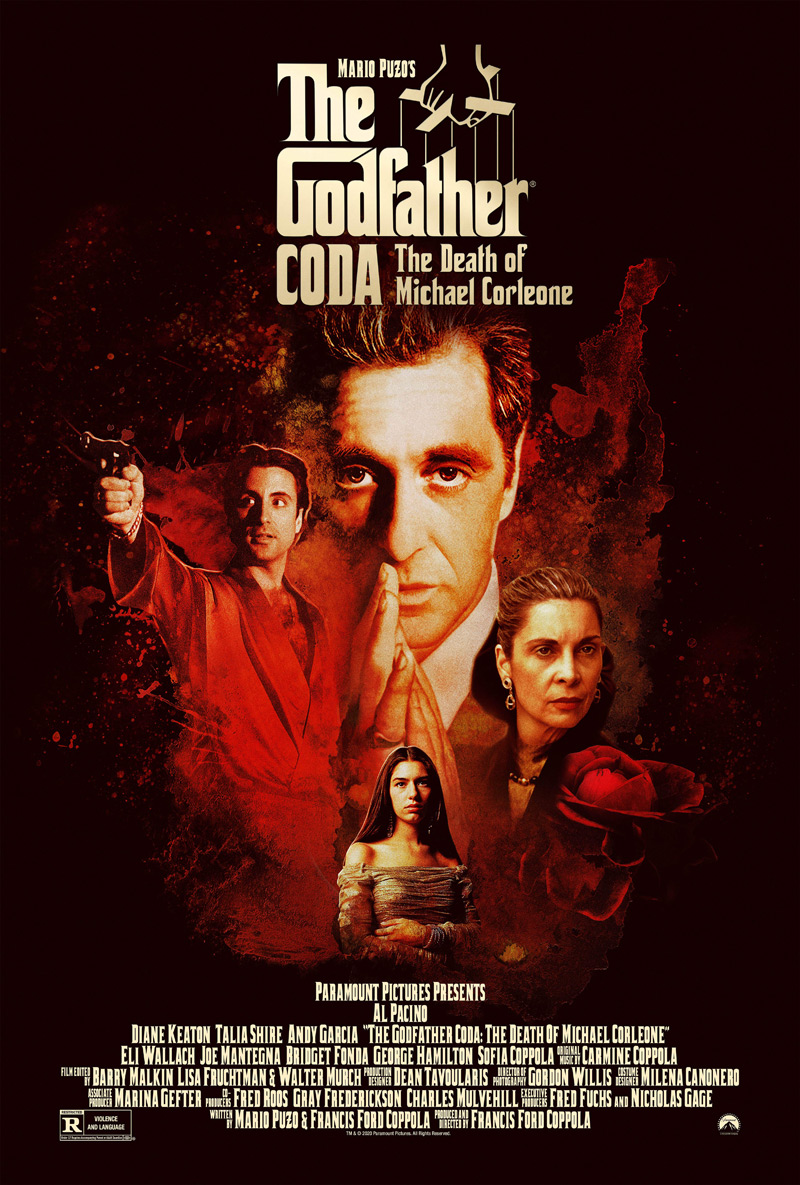
By the time I got around to watching the first and second movies, Godfather 3 had already done what it had for my development as a filmmaker, and I stopped watching it so frequently. Why would I need the third one anyway when I could finally watch the “superior” originals? And the originals ARE superior. I can turn on either Godfather 1 or 2 to any scene and finish the movie from there. I’ve seen them a million times, I love them, YOU love them, and there isn’t any point to dwelling on it. Unless, of course, you’re director Francis Ford Coppola: he NEVER seems to think any of his movies are perfect, or at least up-to-snuff enough to stop him from touching them anymore (and there’s always an excuse too, whether that’s weather or “studio interference”). Recall, we’ve had TWO new, theatrically-released cuts of “Apocalypse Now” in the last 20-years; a “Cotton Club” redux; an “Outsiders” extended version; and a chronological re-edit of the first two Godfather movies for TV (including a SECOND made-for-TV version with the third movie shoehorned-in that came later). Now, in the middle of Coronavirus with nary a new film to be seen, the 81-year-old auteur proves that he has no other hobbies during his retirement with a new release of Part 3; now called: “Coda: The Death of Michael Corleone”.

Lest we forget, this ISN’T the first time Coppola has given us a “definitive” Godfather 3 Experience. That “FINAL” there on the cover looks pretty suspicious to me…
Yes, apparently this was Coppola’s “intention” all-along: to have the third movie be less of a proper sequel than an epilogical parenthesis. Fair enough. And we can assume there was some Executive head-butting at Paramount on the level of announcing a fourth movie, so maybe his vision really didn’t get across the first time around. But we also know now that Coppola was in debt when Godfather 3 was originally put into production, which tarnishes whatever fictive validation he’s coming up with as his excuse this-time-around for revisiting the material. Let’s just say – for the sake of this article – that Francis was bored one weekend during his quarantine (because he’s an at-risk senior) and decided to have another crack at it. And the result is another chance to squeeze some money out of Godfather fans & casuals with ANOTHER DVD/Blu-ray/5.99 streaming rental.
And you know what? The publicity worked on me. I was excited to watch Godfather 3 again. The last time I had seen it was part of a retrospective at a local arts center, and it was my Christmas present to my father to go see all three. At that point, I hadn’t seen it in YEARS, and it was still good, but paled in-comparison to its older siblings. That could be because, we ALL see the third movie as a bit of a footnote against the previous-two. Sure, I can watch whatever from the first two whenever, but that was never the case for the third movie: it struggles to stand on its own accord. I can admit I only ever watched the third movie on its own BECAUSE I didn’t have access to the other two, so never having that support I’m sure helped levitate my opinion of it. But sequels DO exist that stand best on-their-own rather than stacked-up against the originals: “The Matrix Revolutions”; “Live Free or Die Hard”; “Friday the 13th Part 7”, to name a few. The most exciting part of this new release, then, was to be able to watch Part 3 on its own again – without it being a part of a marathon or simply being an extension of a series – and see if it holds water like it did when I was a bright-eyed kid. Or, in a bit of life-imitating-art, coming back into the criminal fold after an extended period of attrition – like our tragic protagonist Michael – only to realize that he never really left, or the life never really left him.

There’s no point in rehashing the movie’s plot at this point, but why the Hell not? Everyone else is. It’s been thirty years since Don Michael Corleone ordered the murder of his treacherous brother Fredo. In that time, he’s grown disillusioned with the mob life, and plans not only to transfer controlling interest to a new heir, but legitimize the Family Business through a deal with the Vatican bank. Little does Michael know that the Vatican deal is actually a plot by another Boss to double-cross him, and that his heir-to-be is the bastard son of his long-dead brother Sonny; who has inherited his father’s emotional instability and fits of violence. Side stories about his nephew Vincent trying to get with his daughter and Michael trying to salvage his separation with ex-wife Kay & his children – along with succumbing to his own mortality – complicate matters. Just another day in the life of a former Mafia Don trying to go straight. In the end, despite his best efforts, he dies. It’s not a spoiler: it’s in the title.
Having Michael regress, whether through his own moral choices or through the consequences of nature and his own aging, to where he was when he initially rejected his father’s offer to take over the business is a good basis for a follow-up story (not to mention fitting-in thematically with the rest of Coppola’s oeuvre). Michael’s obligation to family brought him back from the war and into the grips of the mob life, but he never intended for those choices to directly-impact his own family. He just never realized how deep he was going to get himself embroiled, especially when he decided to kill the police Captain to save his father. There were sides to the business he never saw, even when his father was alive, and negotiating the family drama of having a wife and kids and the Life was something Vito was successful at, but Michael – as we’ve seen in the last two films – was miserable at. He expected Kay to understand and she never did, because that was never the kind of life she had envisioned for herself and the kids, and never allowed herself or them to become beholden to it. Not that the younger Michael ever did anything to make her feel like she was important to him: hell, he’s in exile in Sicily for two years after the World’s Worst Dinner Date, and rolls up on her no problem when he gets back like, “Get in the car and act like I’ve never been gone.” (really, Apollonia was the love of his life. By the time he returned, Kay was the safe choice). So there’s quite a bit for these lost souls to get off their chest. And it’s not a surprise that the story is good: it’s still penned by Mario Puzo, the author of the original Godfather book and a gripping crime writer by-all-accounts (“The Sicilian”, “Omertà”). Even when we’re inundated with Michael’s quest for atonement in the second-half of the picture, Puzo and co-writer Francis try earnestly to clear up some of the emotional loose-ends from the saga.
But really, when it comes down to it, the film seems trapped in its echoist sentiments. Individual scenes & passages flow better isolated than coherently with the rest of the picture. The original films had great single scenes – name any of them off (my favourite is the stare-down between Pacino and Keaton in the second film, when Kay comes to see her kids just after she breaks up with Michael. That shit is ICE COLD) – but the third film often sacrifices forging its own path in favour of spoon-feeding the viewer for maximum anamnesis: the similar shot structure of the walk through Corleone; Zasa’s death mirroring Don Fanucci’s; the hospital bed scenes; a “murder montage” at the climax, etcetera. Even Al Martino shows up to the party to croon a few, just because it’s familiar. While we’re on the topic of auto-refreshing, there’s oranges everywhere. That was ONE PART of the other movies, Francis. Now, Michael has diabetes, so he HAS to keep his blood sugar up! When he has a hypoglycemic attack late in the film, they have a whole tray of candies and a jug of orange juice ready to go, like someone from the Family had called ahead to make sure Michael was covered. I shouldn’t have to read that far into the material for it to make sense. This is not a Wilford Brimley ADA PSA; this is a Godfather sequel.

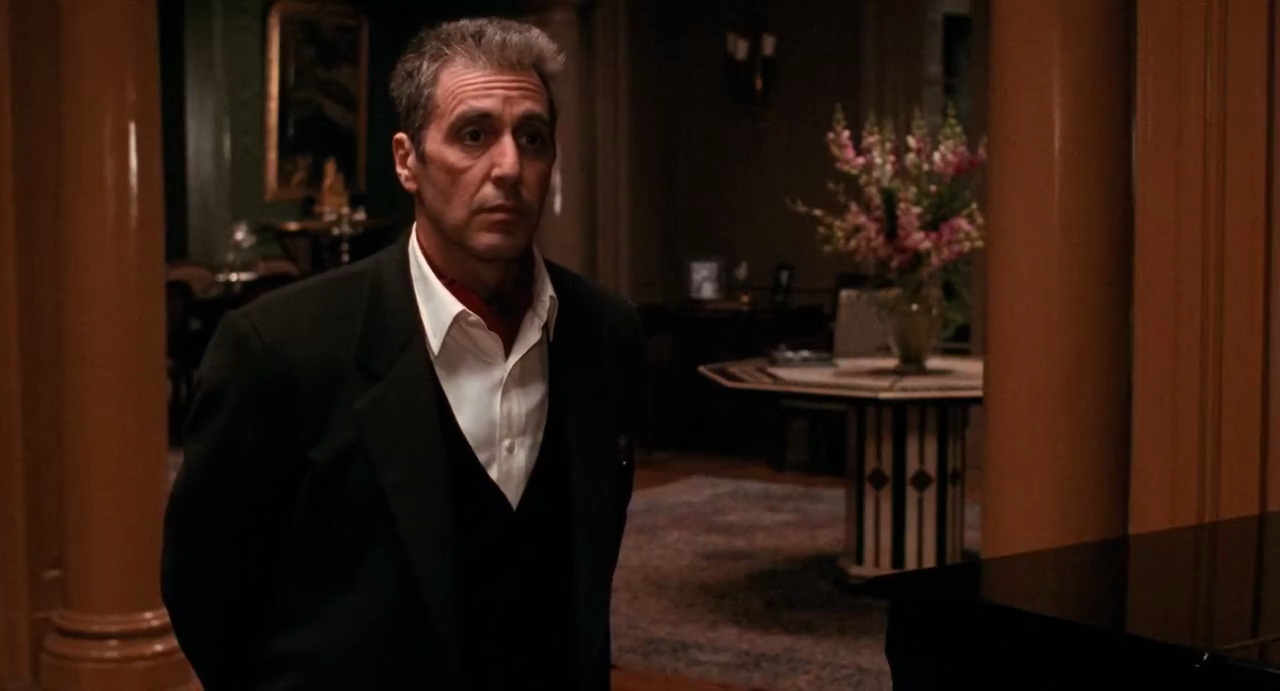
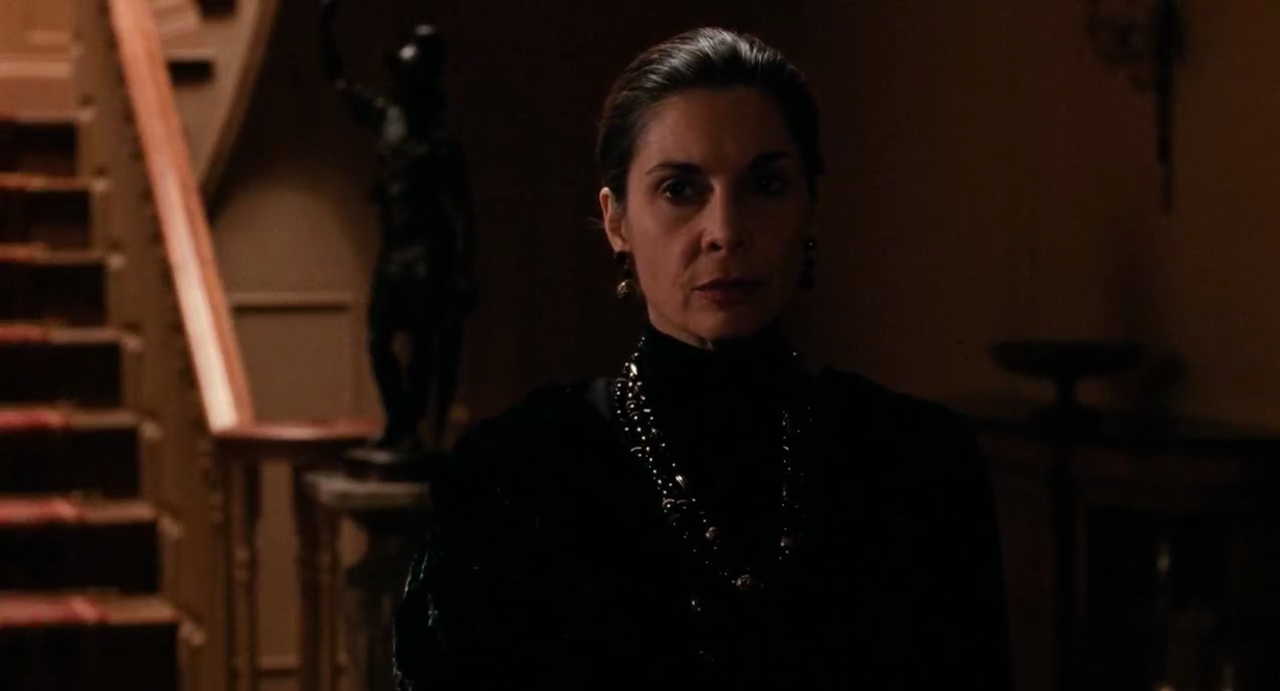
Besides being overly-familiar, what else is wrong with G3? Unfortunately, I think the answer to that rests squarely on the heads of Coppola’s ALL-STAR CAST. And I’m not talking about not-having Robert Duvall come back (because, stingingly, he wanted more money): I’m talking about who DID come back. And really, I expected much more, but then again not really. Pacino overacted his way to an Oscar in the ’90s, so Michael’s frequent tirades are par-for-the-course. No, I think it’s the girls, and funny-enough I’m STILL not talking about Sofia! “So who ARE you talking about?” Diane Keaton and Talia Shire. My goodness, these ladies did NOT want to be here. Keaton’s older Kay is more bitter than ever, and spends her screentime scowling at Pacino every opportunity she can get; even when we’re coming to the end of the film, when Michael has his time alone with her to apologize and reconcile, she tells him she used to “dread” him and that he was her “horror”. Granted, he did slap the shit out of her in Part 2, but some of her lines are as heavy-handed as her delivery and it masks any extra dimension she may have been trying to infuse the part with.
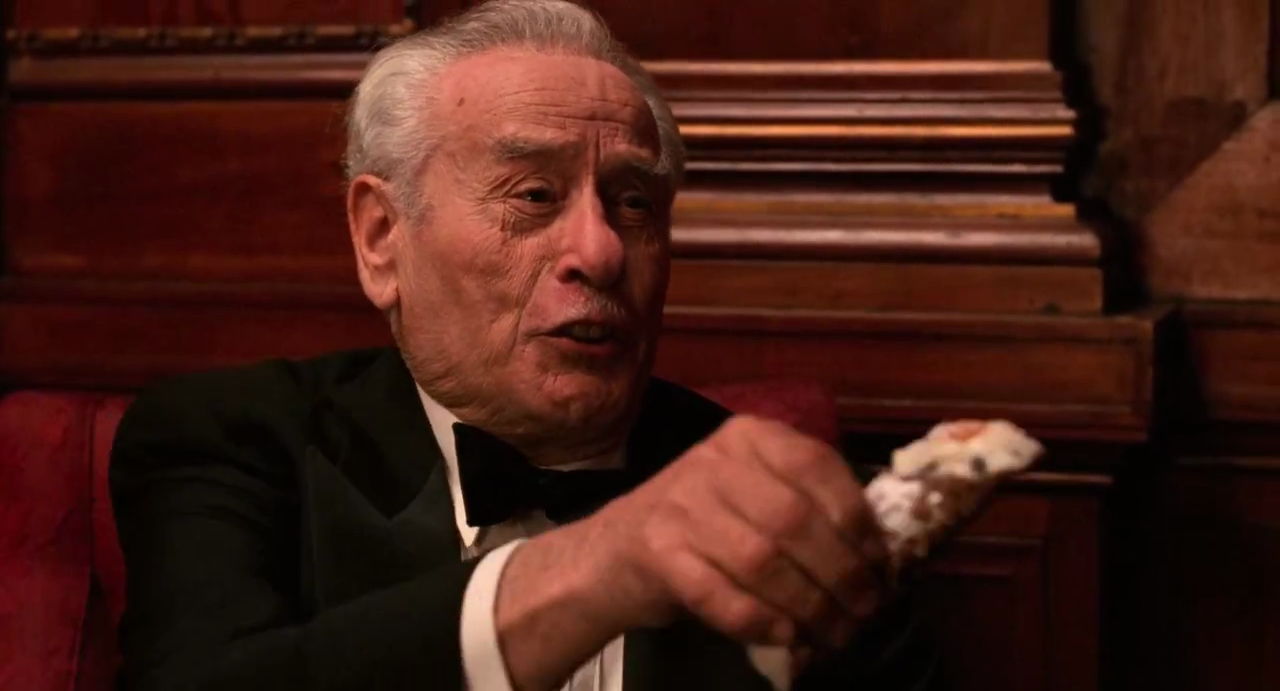
Shire and her Connie, however, deserve their own paragraph. Our favourite disruptive Italian scalmanata all-but-disappeared from Part 2 only to come back here as the Family’s adopted matriarch, where she stomps around in her lace shawl and disobeys her brother the Don at every opportunity. In this way, she is still the Connie of old. But there’s no single scene where she confides in anyone about the choices SHE’S made in the last thirty years. Maybe Connie doesn’t have anyone anymore, except the Family? Not that she NEEDS a man: she never could pick them. So she could have no interest in a relationship, but STILL she could, I don’t know, talk out-loud? Maybe to one of the maids? After her brother has the stroke and everything is up-in-the-air and she has to consider that maybe it’s HER turn to step up to the plate and help the Family? The way her brother helped HER? Or, if you want to have that mirroring Coppola seems to be going for, just have her standing by the damn hospital bed when Michael wakes up and have her tell him that she’ll be there for him, the same way Michael told his father? Can I write or can I? And though this scene doesn’t exist, the very notion that – with Michael’s children turning their backs to the Life – her and her brother are the last remaining of the original Family, prompting an urgency in her to make the hard choices (like supporting Vincent), is a great arc for her character to have. BUT, even IF that scene existed, it wouldn’t change the fact that we never saw any of that violent side to her in the other films. She was always submissive to her partners, and her coming back for her brother’s protection was out-of-necessity and not necessarily because she wanted to. She had nowhere else to go. So for her to be so “bloodthirsty” in this chapter is NOT a subtle change and could have used more exposition (and Michael’s one line that “maybe they should fear her” isn’t good enough). The women were often pushed to the sidelines in the first two films, and Coppola continues that trend here. Plus, Shire can’t realistically fake-eat a poison-laced cannoli if her life depended on it (she was probably better off putting the poison in the ORANGE-COLOURED WAFER she put on top, then she could have taken a great big bite and been all, “Sorry Don Altobello! It’s just so good!”).
It speaks to the brusqueness of both performances that neither woman has very much screentime: Kay serves the plot more in the second-half while Connie was never given much attention in the other films either. When they’re there, you notice. Otherwise it’s a boy’s show, including the opposite end of the coin: our two resident babes Bridget Fonda (as a reporter that gets picked-up-and-dumped the same day by Vincent) and Ms. Sofia as Michael’s daughter Mary. Even thirty-years after its release, they still look good in their physical-primes and do what they can with limited material (eye-candy. OK OK OK Mary IS important but not THAT important). Doesn’t change the fact that the sex scene is super-creepy since it’s Dad behind the camera (that’s like learning Sunny Lane’s parents are her managers! Yuck!). ON TOP OF THAT, there’s the little point of the characters themselves being cousins. Just sayin’.


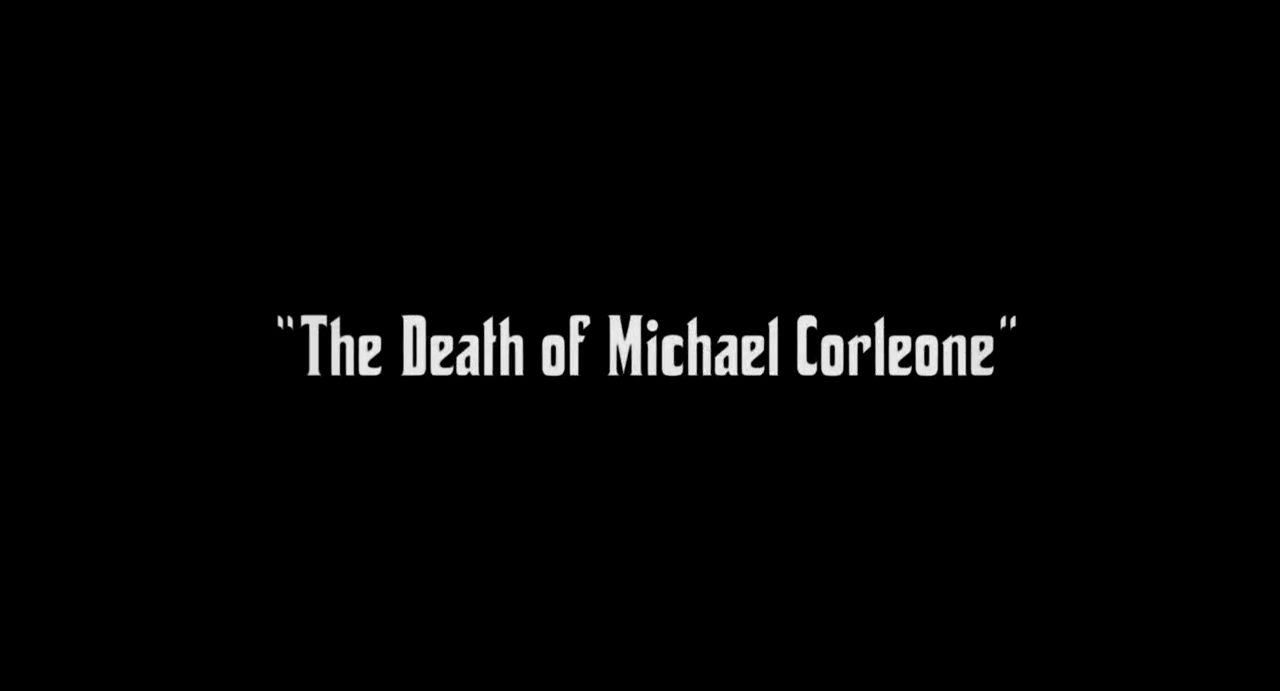
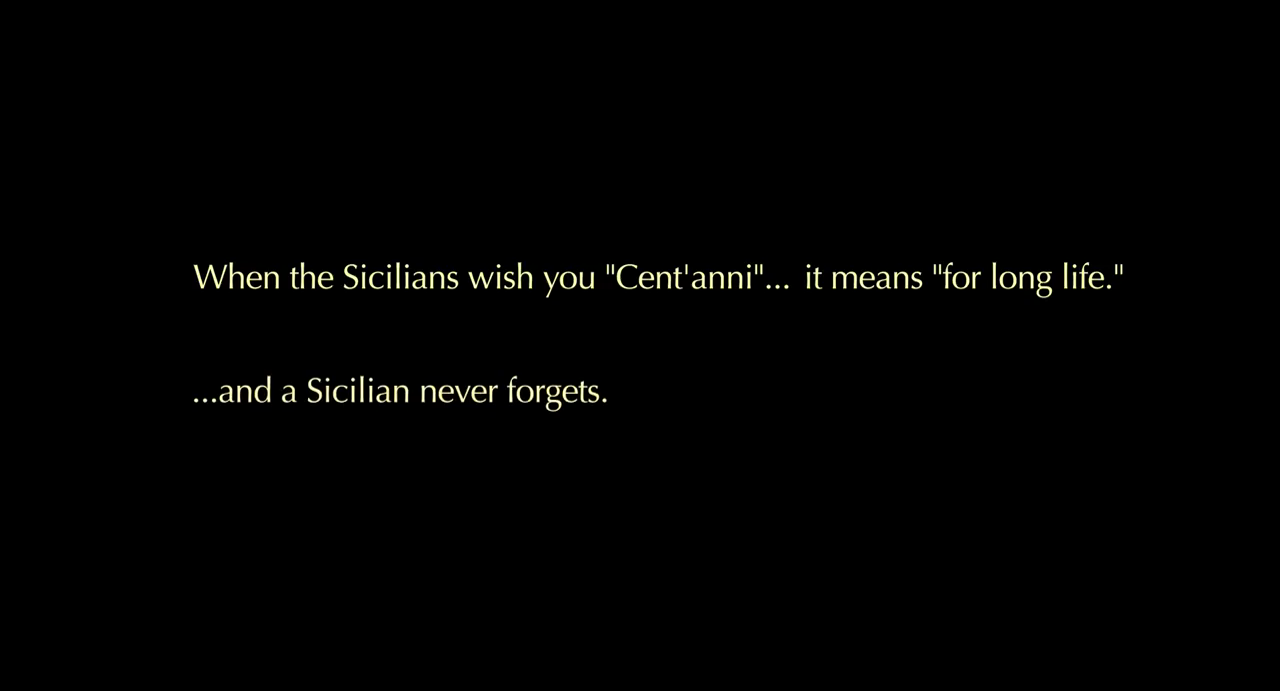
But this is not really what you came for. Y’all want to know what’s going on with the new cut, don’cha? Well, I’m sorry to break it to you, but it’s not like Coppola has drastically restructured the picture or anything: it’s a few minutes shorter (by taking out some of the flashback shots to the first two films in the opening-and-closing montages, along with some other inconsequential changes I’m sure), and the beginning & ending have had WD-40 sprayed on them. Pacino was reportedly unhappy with how Michael’s remorse for Fredo was portrayed: namely, so soberly, when Michael would have just buried the trauma (which I would disagree with, as the final shot of the second movie communicates; unless he is simply ruminating on his choices). By taking out the theatrical version’s prologue at the now-dilapidated Corleone compound & the subsequent flashback to Fredo’s death in the boat, you have made Pacino a very Happy Pacino indeed. Not that anyone cares; what I want to know is, what is Pacino doing rewatching Godfather 3 anyway? Aren’t there better movies in his filmography to watch with his dates? “Sea of Love”? “Heat”? If he HAS to watch a movie he’s in, that is? Not only is Pacino happy, but Coppola is happy, too: by cutting directly to Michael’s meeting with the Pontiff, he manages to just-barely parallel the first film’s prologue (when the Don meets with the funeral director, on the day of his daughter’s wedding).
But is it successful? Sadly, unlike Francis’ wine his filmmaking decisions have NOT improved with age. There are so many cuts back-and-forth between Michael and Gilday that the scene just doesn’t BREATHE the same way the original scene between Vito and Bonasera did, with the camera panning back, concealing Brando’s reveal until only after he found out what he was being asked to do. Here, there IS a shot that pans back behind Pacino’s head the same way the original’s did, but how MUCH of the scene had they shot? Was it simply not possible to have the full scene roll from that one shot? Apparently not, because cut cut cut cut cut. So while we – the viewer – can correlate that one particular shot with what we know to be a Very Famous Scene from the original, if what Coppola was going for was a straight comparison then he failed, simply by virtue of his editing choices, ironically-enough. This isn’t the only grievous error in judgement, however: remember Vito’s reveal? With the cat? Having to pass it off so he can negotiate the murder? The duality of this gentle grandfather with his savage career choice is not lost on attentive viewers. Michael’s reveal in the theatrical version of Part 3 is similarly dual: he is being canonized, but still can’t forgive himself for his sins, even if God has (not to mention the weariness of the wrinkles on his face and the salt & pepper of his hair). Here, because the scene in the church is gone and what’s left is too fractured for an introduction, the viewer doesn’t have time to digest either the time gap or its implications before being dumped right in the middle of some first-act disquisition. Another question you may ask is, “Does the change work for a casual viewer who doesn’t care about the science behind the scene?” And the answer there is, nope. It’s a boring, unengaging way to start a movie, period.
The ending is the same way: there is this horrible digital pan-in to Pacino in the chair, then his close-up, then some text, and then the credits. One review I read called the change “bleaker”. I did not have a problem with Michael falling out of the chair, unlike some people apparently did. Enough to bother Coppola to change it in this cut. But in the theatrical version, the fade-in to his aged face after the montage of his dancing with Kay in the second movie to his dancing with Mary in this WAS incredibly poetic. Now it’s just Mary. Even poor Apollonia doesn’t get a callback! Don’t fix what ain’t broke, not the least-of-which being, YOUR MOVIE IS NOW CALLED “The Death of Michael Corleone” AND YOU CUT OUT THE DEATH! What was he THINKING?

Aside from those points, I didn’t notice anything else substantial: it’s still almost 3-hours-long. So where does that leave us? It leaves me thinking that Francis needs money again. What is it with these Coppola boys? Nicolas Kim Cage Coppola going out and buying dinosaur bones, I hope his friends got to at least be able to look at them when they came over. I have huge respect for Francis, as does everybody else, I’m sure. His contributions to cinema cannot be overstated. But he needs to retire and BE DONE. Drink some wine in the sun. Let his movies go. Hell, make some new ones. Yes, a recent browse of his IMDB filmography does, in fact, reveal that he has some other films in the works. Good for him. Regardless of the quality of his most recent output, it’s better than sitting at home and dwelling on the past, which is about what Michael is reduced to at the end of the film: alone, left with the consequential guilt of the sum of his actions – the death of his daughter; the dissolution of the dream to reconnect with his estranged blood; handing his empire over to someone he never wanted running it, rather than continue making the tough decisions himself; the subsequent failure of his choice to go legit; the murder of his brother… oh wait, that isn’t in this cut anymore. Guy’s been through the ringer, I suppose Coppola had to cut him SOME slack. Godfather 3 is not a GREAT film, but it IS a good film, with a ripping first-half led by some tearaway male performances and an appropriately-somber climax, with some classic scenery-chewing Pacino spiced throughout for extra-fatty calories. Coppola’s re-edit is NOT a good film: it is a FLAWED film. I would highly recommend that anyone keen on watching it stick with the widely-available theatrical-slash-Final Director’s Cut Home Video Edition, whatever it’s called. Go on your favourite streaming service and search for “godfather” and whatever Godfather 3 comes up that’s free-to-watch with your subscription, go with that. Don’t be like Jason and spend 5.99 CAD on someone going back to their High School graduation project for the fifth time because they think THIS TIME they got it. It’s been thirty years, Francis. It’s still good. Leave it alone.
And I suppose, in the interests of wrapping things up here (no pun intended), I should have my own “coda” of sorts to tie everything back together in a nice little bow (pun retroactively intended). The bottle film – in both its forms – is lost to time, along with that afternoon whence I can sincerely remember having the time of my life. In the years since, one of that group passed away in a rafting accident; one came out of the closet; and the other – the one who had that once-in-a-lifetime screening in front of my CRT monitor almost 20-years-ago – became a close friend, only for me to leave him for another group who despised him and egged his house on a regular basis. I knew they did and I never said anything about it. I saw him once again, in my early-20s, and he had become a cynical, bitter young adult himself, for different reasons than my own. This “not being able to decide what side of the tracks I fall on” has been my own duality that I have had to wrestle with, like Michael does, and Vito before him; and, in that universal way that good cinema can connect us to, I presume Coppola as well. The main characters in Francis’ films reject either their own primordial dark side or the side that holds them back from rejoicing life or accepting their true selves, until circumstance forces their hand. As the “Hearts of Darkness” documentary taught me, when Francis is “in the zone” he is as confident and as overzealous as Vincent is in Godfather 3, but behind-the-camera he has the same self-doubt and insecurities that made George Lucas and the Scott brothers constantly re-edit their movies, too.
Since that bottle movie, I made my share of other shorts: some I couldn’t let go of, touching & poking here-and-there over the years; some I was really proud of and never had to go back to; and others I should have forgotten about developing in the first place. And it was only when I made my peers watch a re-edit of something that just wasn’t working on a fundamental level, that they would balk and wonder why they were my acquaintances to begin with. This was a lifetime ago. I haven’t made a film in ten years. But I can remember that bullheadedness that drove a young auteur to make the choices he did, in the name of his art, and the sacrifices too. But with time grows wisdom, at least for some of us, and my compulsiveness with perfection has thankfully diluted in that decade along with my penchant for running-away from actual responsibility. It is Francis’ responsibility as an artist, to continue to produce his art. The Godfather Coda is not art: it is evocative of one man’s vacillation with a past that is HIS to confront. It’s not the audience’s responsibility to help the filmmaker GET OVER making a film they regret and paying them for the privilege. Plus, you can’t get any better vindication than following up the original release with what I think is his best movie (“Bram Stoker’s Dracula”). I’m sure Francis doesn’t go Google-searching his reviews, but if anyone from the Coppola Clan reads this (and they’re everywhere), know that this is my Very Special Holiday Wish for your Grandpapa, out of reverence and respect, that we get NO MORE Special Editions from him. YOU GOT THAT, FRANCIS? NO. MORE. STOP. And I’m not afraid to be in his debt. Be my friend, Godfather?
This has been a Jason Fynne Christmas Service Announcement.
//jf 12.16.2020
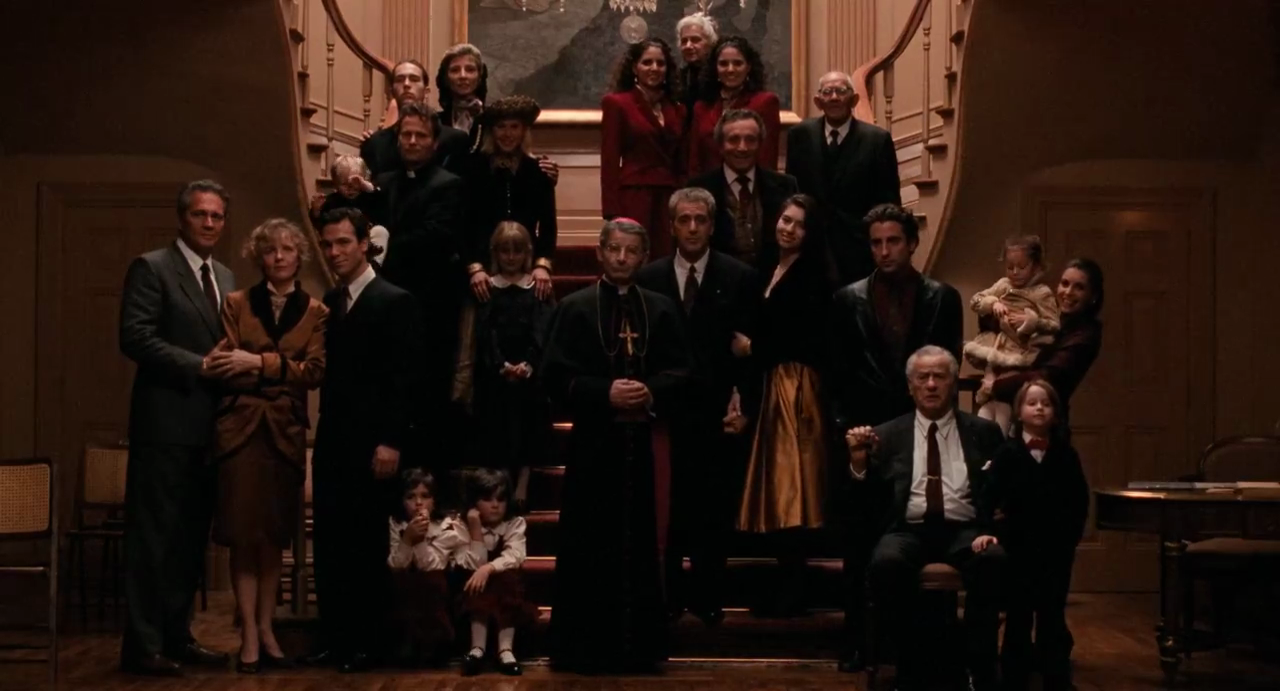
Poster sourced from firstshowing.net, screenshots author-obtained. Watched via Amazon Prime CA for review (non-sponsored).
 theory of a daskeman