A spoiler-heavy single-scene film analysis & review.
Are there directors you are familiar with who you think you know everything about? You swear you’ve seen ALL their movies, you understand their technique, and when a new movie of theirs’ comes out you recognize their trademarks & make sure all your friends know them too? “That’s why you’ll always find me in the kitchen at parties.” I’m like that with Paul Thomas Anderson, and Michael Mann, apparently. When I first started writing this “Selected Scenes”, I had intended it to be a “Jay’s Take”: I was convinced I knew enough about Mann’s filmography that I was qualified to write a lengthy, in-depth review, as opposed to a quick discussion (since it isn’t like the film doesn’t have a Criterion edition that includes a wealth of supplemental material of more qualified people saying the exact same things… right?). Yes, I have seen a handful of Mann’s movies: some more than once. But to think I am an expert is a fool’s errand: I haven’t seen “Ali” or “Collateral”, nor “The Last of the Mohicans”, or 2015’s career-ending box office dud “Blackhat” (and you think I WOULD have seen that, just to know what the fuss was about). Did you know there’s a Michael Mann horror movie about Nazis and the occult, called “The Keep”? I didn’t, and it sounds awesome! Although, in a way, I know it will also be incredibly disappointing. That’s where I’m at from what I HAVE seen of his, and “Thief” – although it is early Mann, man – follows this methodology to a tee. Even with the seeds of doubt, I still think I know more about Michael Mann’s movies than I platonically should, and I think you’ll find out that you do too.
Confession time: the “Miami Vice” movie from 2006 is probably my favourite Michael Mann movie, so it will be used to set what I believe to be his standard. What makes Miami Vice so good? Didn’t you hear it was terrible? Well, it oozes style (especially in the Director’s Cut, which opens with a gorgeous speedboat chase); the procedural bits (how the cops & criminals in the movie operate) are fairly detailed & interesting; it has Gong Li in it (who is icy-cold but downright seductive); and the action – when there IS any action – is good, with technically-impressive shots of gratuitous boom-boom. AND, I would argue that, the “cheese-factor” in the acting & plot is totally intentional, because you can see the actors laying-it-on like they would in 80s primetime TV and, just, generally looking like they’re having a good time working (we all KNOW Colin Farrell was, who was at the peak of his “bad boy” phase while making it).
What isn’t good about it? The Director’s Cut is too damn long: almost three hours! The Theatrical Cut doesn’t fare much better but it IS the superior version (that speedboat chase I mentioned is a doozy). The romantic subplots go on, and on, and on, and on… getting you all engaged in the characters and their relationships just in time for the BIG payoff… which doesn’t come. Because that’s ANOTHER problem with Mann’s movies: they end abruptly; all build-up without enough “wow” factor in the climax to justify the endless exposition & narrative ballyhoo. Miami Vice makes you think it’s going to end with a spectacular action sequence and instead it’s a shoot-out in an abandoned lot. Sure, there’s some good boom-boom (including some gruesome shots of dudes getting dismembered by Black Market artillery), but it’s not really “the fate of the intercontinental drug trade” that the rest of the film makes you think it’s going to be.
What other films of his could you apply this too? Well, let’s talk about “Public Enemies”, from 2009. PE isn’t necessarily a movie I would admit to enjoying in front of a respectable group of people but, yes, I have seen it a few times and I don’t think it’s as bad as everyone says it is. It radiates style (especially since it’s a Depression-era set period piece about John Dillinger, and it’s all shot digitally); the procedural bits are fairly detailed & engaging; it has Marion Cotillard in it (who isn’t really my taste, but I suppose she has a nice classical French feel to her: icy-cold & seductive); and the action – when there IS any action – is good: guys shoot hundreds of rounds from Tommy Guns at buildings & other cars and stuff blows up real good. And honestly (despite it feeling like a publicity point rather than a conscious hiring decision), Johnny Depp does a pretty good job opposite Christian Bale, even though it doesn’t ever really feel like he’s working hard.
So it sounds good, doesn’t it? Well, it too has some big problems: it’s God-damned long! The romantic subplot goes on and on, and on, and on… in an effort to humanize what history has already taught us to be a very reckless & dangerous man. Maybe Mann’s intention was for the audience to be seduced by him – just like the other characters are – but that point may have been driven-home better with a different actor than Depp at the lead. He just sort-of coasts through the role on charisma alone. And we all know how it ended for Dillinger, so that’s how it ends for the movie: massacred by the police, in public, in slow-motion (maybe not the slow-motion so much).
“Heat” – Mann’s magnum-opus from 1995 – has all the same positives & problems: it looks good & has a great cast (you don’t get better stunt casting than Pacino & De Niro), but it’s ultimately boring & aimless. There is hardly any action, save for the epic bank-heist centerpiece, and Mann is – once again – more interested in the personal lives of his characters than his audience is. If you don’t like Mann’s movies, then us fans understand, man (last time, promise): he has a very particular method, and if you don’t like one of his movies you sure aren’t going to like the other ones because it’s like an assembly line for the guy. He doesn’t know when to quit, when to tone it down, or when to stop. AND, he’s one of those Coppola-types who is constantly going back to tinker with his finished films when there’s no reason to. I haven’t seen the new version of “Heat”, but is a blue filter over everything really going to change the fact that had he shown a more judicious hand at editing the picture itself when it was originally made, you would probably have an Oscar winner on your hands? It’s too late now though.
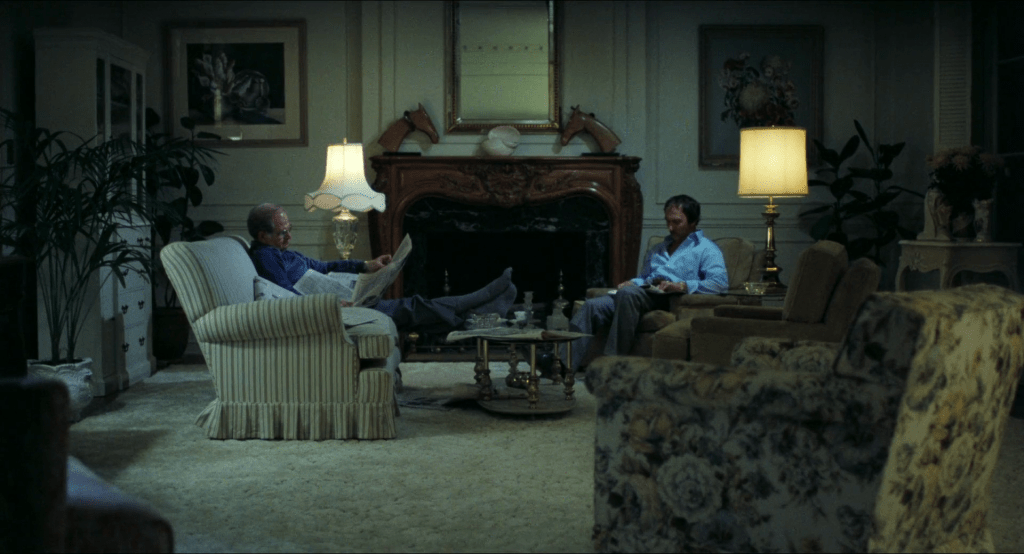
So, we come to Thief. The plot sounds like something you’ve heard of before, or something you may have seen already recently, because it’s now 40-years-old. How many things was IT imitating at the time of its release? You got legendary macho tough guy James Cann playing the same role he has before: of an overconfident macho tough guy. He’s Frank: a mercenary safe-cracker who dreams of getting out of the business, even though he is self-aware enough to know that it’s the only thing he may be good at, and that getting out clean may not even be feasible. To plan for his big break, he hooks up with Tuesday Weld’s Jesse (a totally-subservient pouty-face that Frank is up-front & honest with less than five dates in); makes a deal with Robert Prosky’s Leo (a Made man) to do one last job for some big cash; and proceeds to recklessly pre-spend his advance on everything from a house, to an adoption (since Jesse can’t have kids), and even to buy a judge to get his stepfather Okla (Willie Nelson) out of jail early. He does the job, finds out that he’s now eternally tied to the mob, and THEN proceeds to cut every tie between him & his old life in a bid to start fresh. But what was his life then, really, if he’s so quick to purge everything in favour of starting new?
Well, Frank doesn’t really know what a “real life” is then, does he? He’s a total narcissistic tool in the vein of Caan’s other notable performances like Sonny in “The Godfather” and Axel in “The Gambler”: he thinks he’s the best, and in a way he is. But his tunnel vision is so great that even becoming a martyr isn’t such a big deal for him; almost like he didn’t ever think he would live as long as he has. Frank would rather pay for a life – or to live the illusion of one – than to work for it only to have it ripped out from under him anyway. In these ways, Mann’s screenplay asks very interesting questions about the psychology of our protagonist and others in his profession, and the movie itself IS very engaging, with authentic-sounding dialogue & cool bits showing the procedure of being a thief (like when Frank goes to a special mechanic to get a very special tool made for the job). Even this being Mann’s first feature, it looks neato & the night scenes of Chicago drip that very-special style sauce you can only find now in 80s cinema & obvious throwbacks. It has Tuesday Weld in it, who is pretty cute & has that icy-cold, seductive thing going on. And the action – when there IS any action – is bright & loud: an unexpected explosion in the third act of the movie is at acceptable levels of Mann-made boom-boom. Speaking of Frank, Caan is perfect for the role: maybe a little too perfect. I couldn’t imagine anyone else in it, even if it doesn’t necessarily look like he’s taking any chances with the part.
So, it looks good, and it has a great cast. But it’s false representation. You think you’re going to see a mob movie, but Thief wants to be everything: a character study; an action movie; a procedural; a love story, etcetera. Anyone going to see it thinking it was going to be an EXCITING movie, would have been very disappointed. Thief is too chatty, full of pained characters making big deals whose lives live and die by their word. Maybe 30% of it is taken up with the actual hard details of the big climactic heist (and that INCLUDES all of the action scenes put together) and the other 70% is more interested in the personas & their lives, and big questions about the universe and this & that and doesn’t this all sound painfully familiar? As a result, Thief ends up feeling like it runs an hour longer than it actually does, and drags its heels especially towards the end when things should be ramping up.
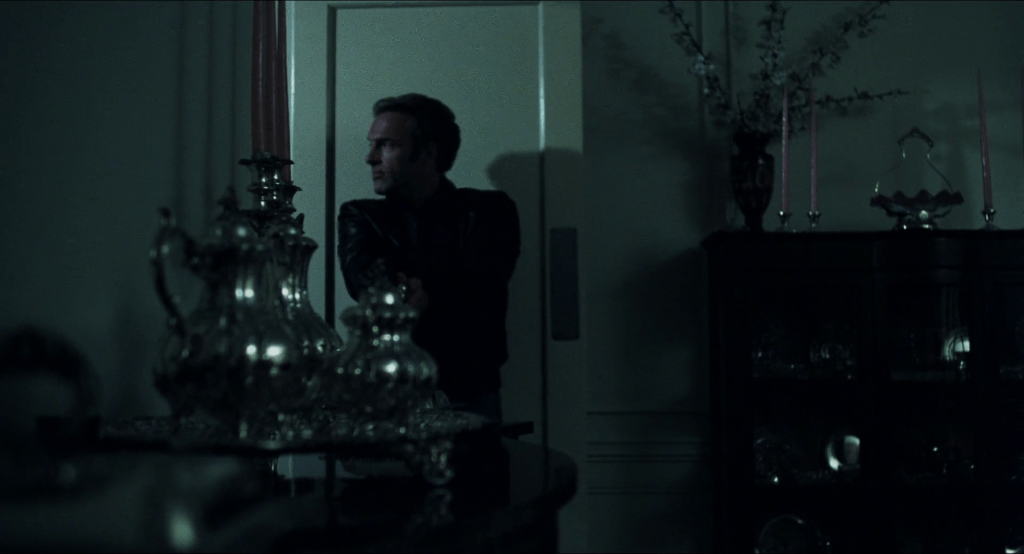
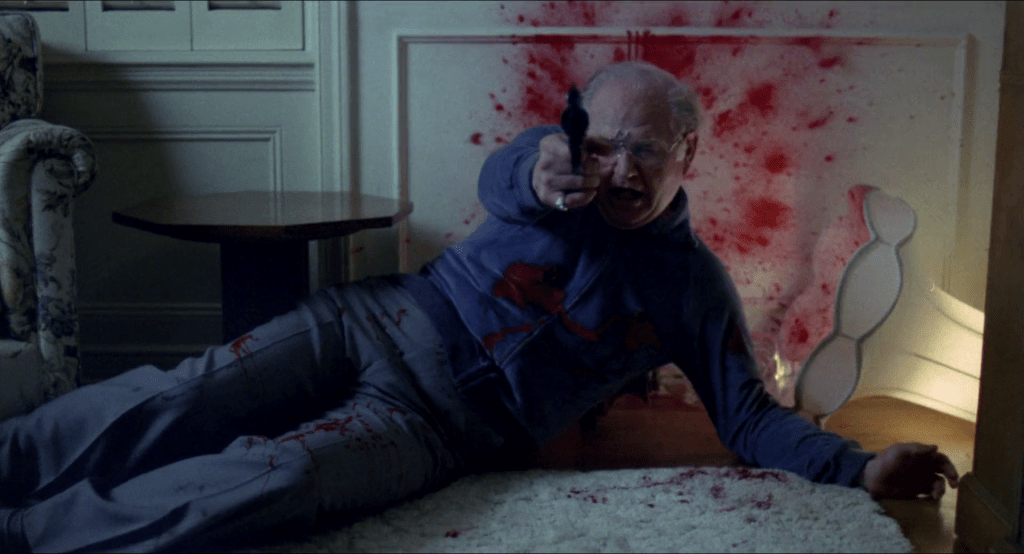
And speaking of endings, Thief’s is spectacularly poor, and the subject of this week’s “Selected Scenes” (was that enough build-up for you?). Anybody else watch the “Monty Python” show? There’s a skit called “Scott of the Antarctic”. In it, Eric Idle is an overzealous producer of an adventure epic trying to convince the BBC crew doing a documentary on the film that it’s going to be the bee’s knees (when it’s clearly terrible). When talking about protagonist Scott’s big confrontation with a lion (in Antarctica), he says, “…he fights it, and he kills it, and the blood goes pssssshhtt in slow motion.” Humor has its roots in truth: how often have you seen a movie end with a massacre? “The Wild Bunch” (most Westerns, come to think of it); “Road House”; “Scarface”; Miami Vice ’06; Public Enemies, Heat, even Mann’s “Manhunter” from 5 years later! There’s more, but that’s what’s at the top of my head. It can definitely put a firm period at the end of a great movie. However, Thief’s use of the trope is a cheap cop-out, considering what came before. Once Frank gets away from the last heist, Mann drags out his afterglow, frolicking on the beach with Jesse & Jim Belushi as Frank’s BFF Barry like everything’s going to be a-OK, before the tables turn and Leo tells him in no-uncertain-terms that he’ll never get out of the life now that “they” have him:
Ya kids mine because I bought ‘it. You got ‘im on loan, he is leased, you are renting him. I’ll whack out ya whole family. People’ll be eatin’ ’em in their lunch tomorrow in their Wimpyburgers and not know it. You get paid what I say. You do what I say, I run you, there is no discussion. I want, you work, until you are burned-out, you are busted, or you’re dead… you get it?
Phew, who knew the kindly-old magic-ticket taker from “Last Action Hero” could be so merciless? Some questions: if Frank never works for a client more than once – and subsequently has never been arrested – why didn’t his own internal radar go off when he met Leo? And don’t tell me it’s because he’s blinded by the possibilities from the payday. Frank chooses to live frugally as part of his cover, so he had to have money in his savings already. And why doesn’t Frank even consider the job with the Mob if he’s so unsure about his future? Sure, he’ll be working till the day he’s either caught or killed, but he’d still get to keep everything he had accumulated. But, that’s not the point of the movie. The POINT, is that he can always start again from scratch, just like a real thief. So what does he do? He blows up his house and goes to Leo’s place where he proceeds to have a big confrontation with the thugs like it’s “A History of Violence” (and the blood most definitely goes pssssshhtt in slow-motion). AND he manages to get away with only a flesh wound!
Mann obviously thought this was a good idea, or he wouldn’t have kept doing it in other films. Audiences in 1981 surely had no idea that the movie would end so suddenly and so violently. But we can’t very well go back and erase 40 years of cinema from our minds to experience things for the first time? As it stands now, Thief’s ending is hopelessly generic. Surely they could have ended it more abruptly & more disorienting had they cut it after Leo had told Frank his peace? To leave Frank – and us – with that collective lump in our stomachs? Or found some other way to end it that would push Frank passed his comfort zone and tie up some thematic questions? By the end of the movie, Thief has horizontally-converged (I wanted to say “evolved”) from a crime-thriller into a drama, but then as opposed to a dramatic ending, opts for pedestrian boom-boom. It takes all the goodwill given by the viewer throughout the rest of the film – after adjusting to the change-of-pace & misleading genre advertising – only to end it all in a protracted, genre way. How very Michael Mann. And that, my friends, is too bad.
//jf 6.23.2021
Screenshots author-obtained. Special mention to this article, which inspired this edition of the series.
 theory of a daskeman