A revisionist movie review.
“Cabaret”. It’s a classic, according to “industry experts”. It’s on every “Top 1000” / “See This Before You Die” list, and all the reviews on Plex have that little “tomatoe” icon. Director Bob Fosse is known for more than his four main theatrical features, from Cabaret-on, although at least two of those movies are actual, confirmed personal favorites (full disclosure: I haven’t seen “All That Jazz” yet). Shouldn’t “Cabaret”, then, be worth 5000-words-or-more? Surely? Meh. Surely it’s been done.
For yours’ truly, the only thing that really stood-out from Cabaret – having now watched the film for the first time beginning-to-end instead of bits-and-pieces on TV for years – were the musical numbers, which are superb. Joel Grey has the charisma to carry them; Liza’s got the voice to sustain them; and Fosse shows off his legendary choreography skills by limiting these passages to the tiny, tiny, tiny cabaret stage, which I’m sure is a far-cry from the source material’s partial genesis on a full-sized Broadway playground. But the nucleus of the film’s narrative lies in the love story between Liza’s “manic pixie dream girl” Sally Bowles and Michael York’s British ex-pat Brian against the backdrop of the Nazi’s rise in 1930s’ Germany, and as a romantic movie, it is seriously lacking in thrills and spills. I’m sure most men have been where Brian is: in-love and perpetually frustrated with a woman who treats them hot-and-cold, especially one as promiscuous & overbearing as Sally is. I had empathy for him.
But introducing a third-wheel in Helmut Griem’s rich sympathizer Max didn’t inject the film with the salacious drama and historical resonance that I hoped it would. It wasn’t like there wasn’t any chemistry between Liza and York, because there was. It was all just a little pointless, a little dull, and ultimately didn’t lead anywhere. Yes, out-of-the-closet gays and Jews were ostracized in Nazi Germany. Fact. But Cabaret’s story only toys enough with the broad strokes of these themes to keep the plot moving, and without exploring them – whether they were already well-worn tropes by the ’70s or not – the film left me without much background texture to grab ahold of emotionally. No stakes, no big twists, no third-act revelations, nor even any eleventh-hour grandstanding here. By that final third, much like Brian’s exhaustive & waning sense of duty to Sally, my interest level in the story fizzled out, too. You could say, then, that it’s a lot like “life”. That may be enough for some of you. And I’m sure there’s some symbolic connection between the three leads and the era being portrayed: maybe Sally is supposed to represent Germany and Brian is the common man playing push-and-pull with their country, and Max is the ever-encroaching reality that brings everyone’s truths to light… I don’t know. I just watch movies. And this love story left me desultory: it couldn’t compete with other screen romances that I feel supersede it.
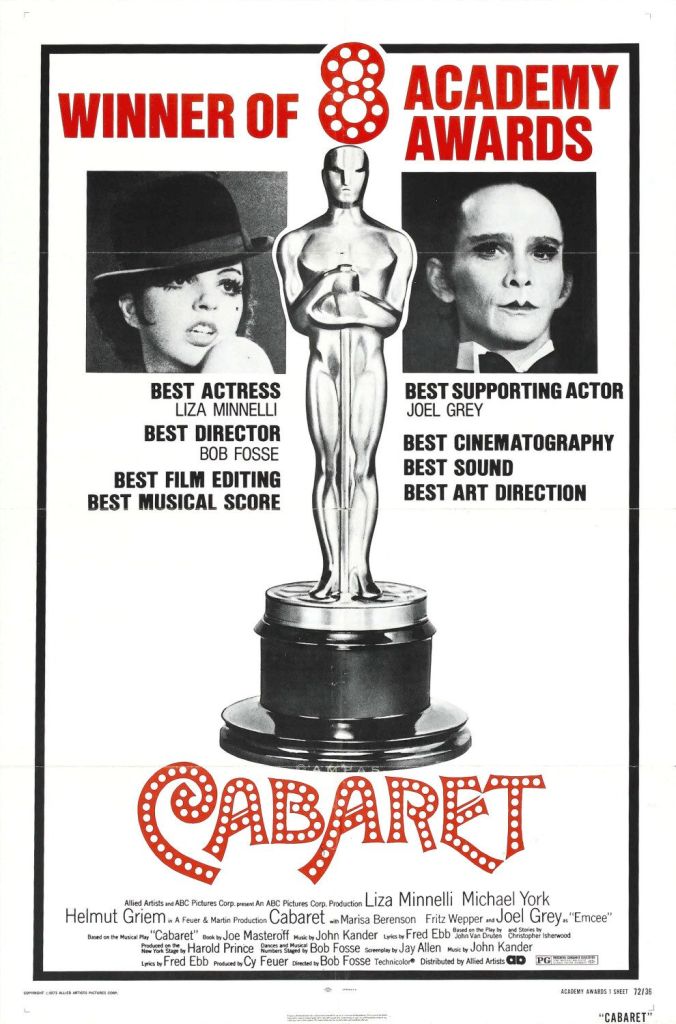
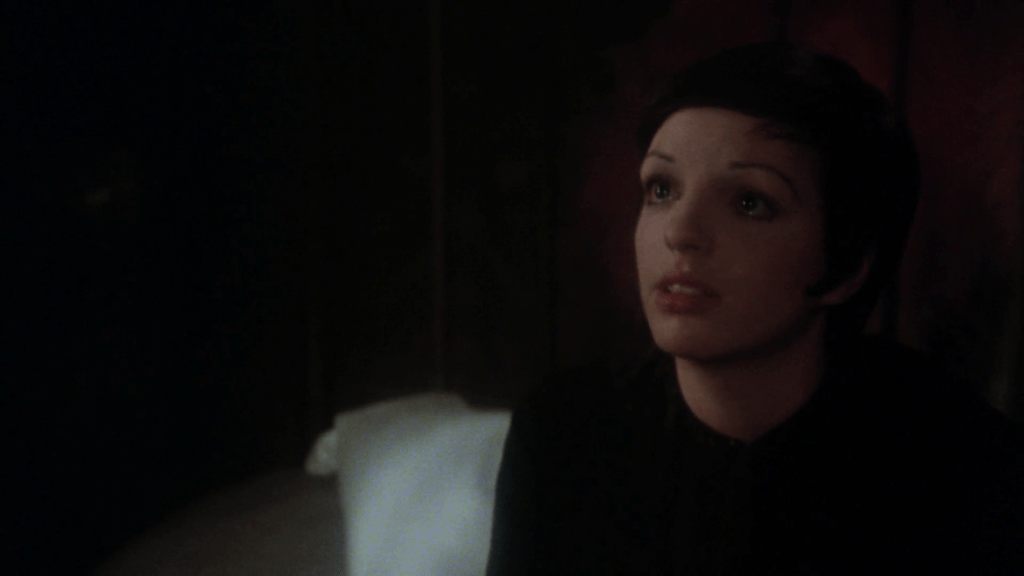
Sadly, that could have something to do with the “hype” I felt clobbered with before watching it (just look at that poster). Cabaret’s place in the annals of cinema is clear by the mastery at work during those musical numbers – and there’s one shot where Liza is as beautiful as I’ve ever seen her, ever – but as a movie, I was seriously let down. But… but… those musical numbers! “Two ladies… two ladies…” Worth a watch for them alone.
//jf 6.4.2022
Movie poster sourced from impawards.com. Screenshots author-obtained.
 theory of a daskeman