too bad: part one

The first of a short story in three parts. A dramedy for mature readers.

“In a post-COVID world, a naive & lonely nineteen-year-old waitress crosses paths with a middle-aged, misanthropic line-cook.”


The following is dedicated to two special ladies – neither I introduced myself properly to, but from what I assumed formed the basis of the character of Cassidy; and to my wonderful wife, for whom if I ever were to leave, or her leave I, this story would stand as prognostication.

i

“Why won’t you talk to me?”

Arthur heard what she said, and the tremble behind it, “What did you say?”

Why won’t you talk to me?”

“I don’t like people.” He intended that as a period and went back to work, but since he bothered to reply, it was an invitation.

“You can say ‘hi’.”

“Hi, huh?”

“Yeah. You know, saying hi probably takes less than a second. We have been here all night together.”

“Okay, thanks.” He went back to scrubbing the inside of one of the fryers.

It was after-hours one regular Saturday night in November. Arthur & Cassidy were scheduled the closing shift: they had both done it before, just not together yet. Cassidy saw it as an opportunity to get to know Arthur better, but, as was his norm now, all Arthur wanted to do was fight back his discomfort with stoicism, finish the job, and go home. He was bone-tired, and attacking a hard, crunchy bit of caked-on residue with a steel wool brush. He still had two more fryers to clean, and he had ten minutes until their scheduled shift ended at 10PM. These things were shit: no wonder management had to keep replacing them.

Cassidy had more-or-less finished everything in the dining room and was sweeping up in the vestibule, slowly and cautiously approaching the kitchen as she completed the spots before it. There were only the two of them left in the building, and she had the keys to lock up. Faintly, on the worn-out, twenty-year-old Phillips stereo that sat perched high on a shelf in the vestibule played the soft reverberations of Top-40 radio.

“…That’s it?”

“What else do you want me to say, Cassidy? I’m trying to scrub this shit off the fryer. I’m busy.”

“You know, just some soap and water would do the trick.”

“…Really?

“Hey, if you want to stay here all night to win the war on dirt & grime, be my guest. But I’d like to go home at some point, and I’m all done, so…”

“Did you do the bathrooms yet?”

Yes I did the bathrooms. I told you I was done. You don’t think I don’t want to go home, too?”

“You want to clean this too? Be my guest.” He rudely threw the brush down and stepped back, handing the reigns to her. She filled a red bucket with soapy water from the sink, took a rag, and wiped the spot. Even when hunched over, she still towered almost a foot above him. The crud began to break up, leaving the scratched surface from the wool brush underneath, “Okay, okay, okay, thank you so much.”

“See? You don’t have to be so rough with everything.”

“Listen, if you’re done, why don’t you go dust off the stereo speakers so I can actually hear something back here.”

“I would, if we had any dusters.”

“Then, I don’t know, go find the step-ladder and wipe off the little shelf it sits on. Oh wait, you don’t need that.”

“Har-dee-har-har.”

“I can be bratty, too.”

“Who’s being bratty?”

“You! You’re bratty. You’re a bratty girl.”

“…Is that some porn thing?” She was having fun with him, now.

“Whatever. Do whatever you want to do. That’s what you do anyway.”

“Excuse me?”

“Just leave me alone, okay?”

“No, what did you said?”

“I said you kids are going to do whatever it is you’re going to do anyway, so who gives a shit what I tell you, hm? You’re probably not even listening.”

“What’s this all about, Arthur?” It was the first time he had ever heard her say his name out-loud.

“Nothing!”

“You’re such a liar.”

“Fine, it’s you. You and all the other dumb White girls that get hired. Okay? You’re a bunch of entitled snowflakes who don’t know anything about putting in a real day’s work. Tell me I’m wrong! You all have your fucking hacks online to make shit easier for yourselves, while guys like me get shit on, even though I’m breaking my fucking back. It’s bullshit and I’m fucking sick of it.”

“Is that why you haven’t been talking to me? Because you think I’m a bad co-worker? Listen buddy, you don’t even know me. We’ve said more to each other tonight than we have in the whole three months we’ve been working together. You don’t say hi, you don’t look at me, you ignore me when I talk to you over the counter…”

[cont’d]

Continue reading

forgotten or unacknowledged

(tomatoes, potatoes)

A poem.


television permits us its
unassailable truths
as escapism:

generic hygienic,
purposeless youth
earn first-meets and whole Fridays with
ten-star heartbreaks in waiting –
despite the real world red flags that
demoing all your breakfast doth bring –


and they look into their eyes as the whales coo

and a fight ensues,
because each assumes what side of the tracks
the other derives,
as often occurs at the end of act two


and he’s home
middle-aging
with the before-bed Pringles in his hand contemplating,
“when was the last time that ever happened to me?”

the good parts, he means,
forgetting or not acknowledging what’s already been.


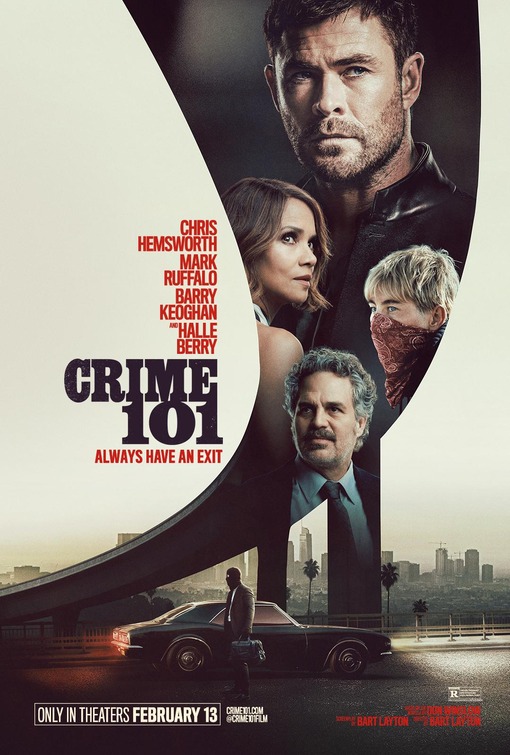
400 Words on: Crime 101 (2026)

or, “Putting Ray-Bans on a Turd
and Calling it Potato Head”:
A spoiler-free mini movie review.


1.5 out of 5

“Crime 101” eluded first impressions, due to my needing a movie for Papa that wasn’t animated, subtitled, or sexy. Otherwise, its poster – with the cast’s faces on it, like a direct-to-video DVD cover from the late 2000s – should’ve been a sign.

Then, I was marked by its totally agreeable first hour: propulsive, and well acted & shot. Despite narrative formulaicity, there was novelty in some tightly-directed transitions of one character walking by another before they’d met in the story – like the ensemble drama “Magnolia”. I trusted the film was going somewhere.

But then I took inventory: maybe it was that the characters didn’t develop beyond their scripted function; maybe it was the forced romantic subplot; or maybe it was its dreary “Inside Man” style denouement.

Regardless, my film school side took over and I couldn’t bear it anymore. “Crime 101” is here for the long con.

[cont’d]

Continue reading

broadband

A poem.


i don’t want to get out of bed
and face the cold, foreboding wild
of this sunny spring day.
a walk to a pleasant lake
is just two blocks away
but i need to be sure i look ok.
to be down is to be alone
with nowhere to go but home.

so i waste away behind barred blinds,
my head buried in sand.
i check my email frequently
to see if i still exist,
if only in a broadband.


Original photo by Tima Miroshnichenko on Pexels.com.

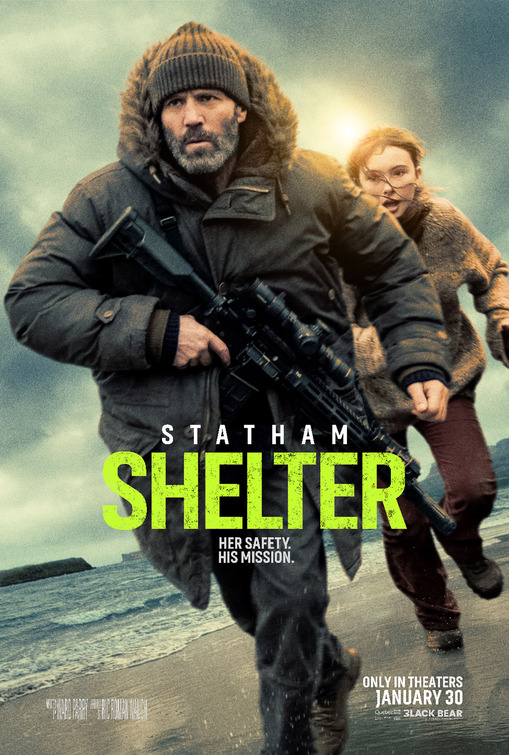
400 Words on: Shelter (2026)

or, “Without Breaking a Sweat”:
A spoiler-free mini movie review.


3 out of 5

I don’t usually gush (I’ve consigned two 5-star ratings in two years with the system), but I’m a Jason Statham fan.

Regardless of the actual quality of the movies themselves he’s headlined, Statham himself is effortlessly appealing & ‘unfuckable with’. I wouldn’t want him to kick me full-force in the breastbone.

Curious, then, that Statham’s “Shelter” character Mason spends most of the first act drunk, with his feet up by the fire. Yes, Mason is supposed to be a self-exiled recluse, but it’s rare to see Statham – at this stage in his career – chillaxin’ on-screen without exterior pressure.

[cont’d]

Continue reading

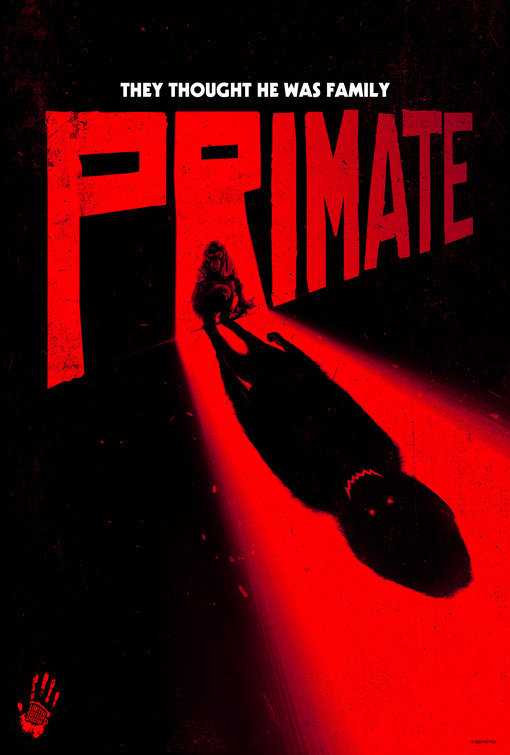
400 Words on: Primate (2026)

or, “Johannes and the Terrible, No Good,
Very Bad Monkey Movie”:
A spoiler-free mini movie review.


1 out of 5

‘Pacing’ is certainly a thing: attributed to no one, it’s an essential part of any entertainment. Audiences won’t notice the spacetime something occupies in their lives unless they’re bored, or they totally disagree with what they’re experiencing.

As an example, halfway through Michael Haneke’s 1997 art-horror “Funny Games”, there’s a long, unbroken take assumed as decompression for its characters. That part is so slow that the first time I watched, I fast-forwarded through it.

But skipping “FG’s” depiction of grief also meant reinforcing its themes of desensitization. Once it clicked, it’s a rare movie scene where something simple blossoms within a spacial indiscipline.

On the other hand, skipping scenes in Johannes Roberts’ “Primate” won’t reveal the dark side of its audience, but it will get you to the credits faster.

[cont’d]

Continue reading