A single-panel editorial cartoon.

What’s your take? Any thoughts on Waters’ album? Leave us a comment below!

What’s your take? Any thoughts on Waters’ album? Leave us a comment below!
“It is dangerous to assume, because you might make an ‘ass’ out of ‘u’ and ‘me’.”
Sometimes, a great performance can elevate an under or over-written character in a film (Hilary Swank in “Ordinary Angels”). Other times, a well-written role – or interpretive slate – is botched by a performer’s over/under-acting, or good suggestions potentially vetoed (Michelle Dockery in “Flight Risk”). And, once in a while, the wrong actor gives a misguided turn as a bland character.
Playing Black Widow may have connoted Scarlett Johansson as the perfect choice for “Jurassic World Rebirth’s” Lara Croft-esque heroine, but she’s ultimately miscast.
[cont’d]


“Kissed” is a bizarre but on-brand Canadian film, with Molly Parker (from Global TV’s “Doc”) in her first major appearance. It’s a drama that skews closer to video art, with a striking premise that eventually plays second-fiddle to a middling obsession plot.
But damned if it exists at all: a straight-faced movie about necrophilia. Jörg Buttgereit’s “Nekromantik” this is not – though both films share the same fleeting duration of just over an hour: an unheard-of runtime in today’s feature market. Plenty for director Lynne Stopkewich to poke her head in, make her points, and leave, in – fingers-crossed – the most memorable way possible.
In that regard, its prologue is laudable: a snapshot of heroine Sandra’s youth & learned Wiccanness: evolving from a respect for the dead, into intimacy. Getting these character beats so early made me emotionally invested in the unorthodox subject matter – as did Parker’s fearless, Genie award winning performance as the adult Sandra (Genies are the Canadian Oscars, now called the “Canadian Screen Awards”).
[cont’d]
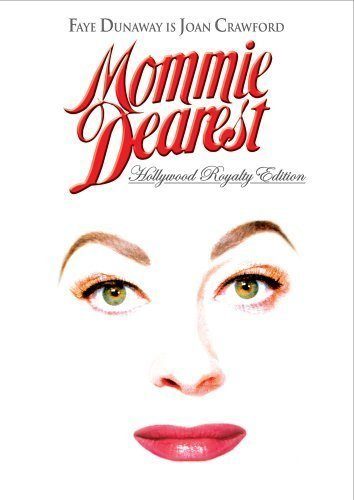
To paraphrase Tarantino, a movie that successfully uses a piece of music, owns that music. Likewise, 1981’s docudrama “Mommie Dearest” (or MD) belongs to its lead actress, Faye Dunaway.
Audiences are fickle. As a broad example (pun not intended), Sydney Sweeney is objectively attractive, but sometimes we need to be reminded that her place in history – as a babe – will only occupy a small space: one inhabited by the ghosts of celebrity babes past, like Farrah Fawcett or Marilyn Monroe.
Same goes for legendary performances: they only become discourse if viewers put the proverbial poster on their wall. As much as I admire Dunaway, there’s only a handful of movies out of her six-decade career I can definitively name – most from one era.
[cont’d]


Marvel’s “Thunderbolts*” is lustreless – not just in its “New Avengers” advertising, or its ragtag group of antiheroes: accrued from a roster that studio boss Kevin Feige himself, ironically, would call “homework.”
A lifetime ago, I made an uncouth script pitch for a cop movie to a university girlfriend, with its villain a serial rapist. She asked why it was so important to use rape as a plot device. “Because it sells!”
What I meant to say (retrospectively) was that, along with child peril & domestic abuse, rape elicits a powerful viewer response, which they want ‘avenged’ by the time the credits roll. That’s just one of the stupid things I said & did to send that relationship into free-fall, much like Marvel Studio’s stupid choices since “Avengers: Endgame” in 2019 – theirs’ being a lack of creative honour, and too much contextual juggling.
Irrespectively, Marvel productions still carry a professional-grade aesthetic, even if you don’t connect with them on a human level. But while there’s no literal rape in Thunderbolts*, it violated my other sensibilities.
[cont’d]