A spoiler-free mini movie review.
3.5 out of 5
In a 2022 interview, actress Emily Blunt said she’s tired of being offered roles for “strong female leads”: “I’m already out. I’m bored. … you spend the whole time acting tough and saying tough things.”
Blunt is not a candidate for a place in Kevin Costner’s Wild West, where the women hold themselves together in the face of relentless adversity. Of the major players in this, the first part of a planned four-part series, Sienna Miller, Jena Malone, and Abbey Lee leave the greatest acting impressions, even if the film’s three-hour runtime still manages to omit information about their backstories.
The greatest strength, then, of “Horizon Chapter/Part 1” was that I was OK with my questions going unanswered until the next film, or not at all. There’s a “flying by the seat of your pants” quality to the narrative, whereby Costner plunks us in the middle of a juicy patch of land in contentious Aboriginal territory, and lets the plot play itself out. In a way, it’s the perfect continuation of “Dances With Wolves”: there, Kevin rode off mid-mission only for a titlecard to inform viewers that the Indigenous genocide continued unabated. Here, the antagonistic Apaches are represented as a dwindling, dissented tribe, holed-up in the mountains, waiting for fate’s intervention.
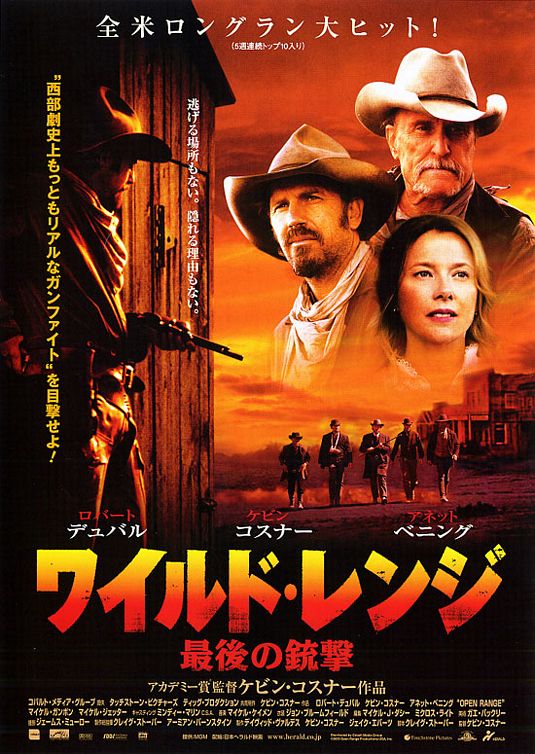
In my review for Costner’s 2003 feature “Open Range”, I said it lacked the “Costner Factor”, likely due to a critically-induced restraint. By the Costner Factor, I’m referring to the audacity he shows by having his self-acted characters save women and dogs from drowning, fish dead bucks out of water, and drink their own piss. Say what you want about Kevin’s acting, but he’s fearless as a producer.
Here, Costner’s discipline could be laid at his 69 years, but he still frames shots in the curvature of a prostitute’s bust, gets laid even when his character doesn’t want it, and orchestrates at least two of the tensest scenes of encroaching violence outside of a horror film.
“Yellowstone” was good for about three seasons, coincidentally the number Costner was originally contracted for, but I stopped watching the latest when it was clear the show was spinning its wheels in the writers room. Horizon may be taking its sweet time in this first chapter, but I trust Costner more than Taylor Sheridan to carry me over the finish line.
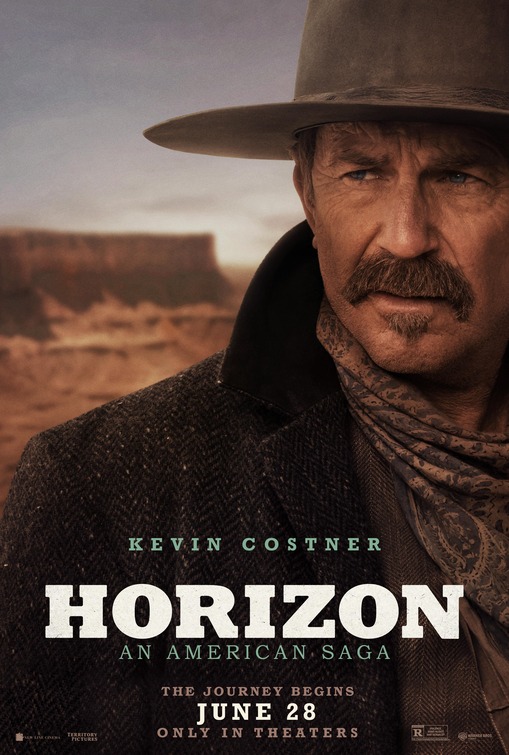
Poster sourced from impawards.com. What do you think? Did you, too, think the “wagon trail” story – despite the promising ensemble of Luke Wilson, Will Patton, and Isabelle Fuhrman – is perfunctory in the face of the ultimate wagon trail simulator that is Taylor Sheridan’s “1883” (even if it was basically garbage)? How many takes of the “boob shot” did Kevin have to do before he got it “just right”? Was it necessary for Costner to use his kid in a short role, only for all the news reports about it to highlight that Kevin “went hard” directing him? Leave your comments below!
 theory of a daskeman