or, “Misanthropic Thanatophiles in Love”: A spoiler-free mini movie review.
3.5 out of 5
“Kissed” is a bizarre but on-brand Canadian film, with Molly Parker (from Global TV’s “Doc”) in her first major appearance. It’s a drama that skews closer to video art, with a striking premise that eventually plays second-fiddle to a middling obsession plot.
But damned if it exists at all: a straight-faced movie about necrophilia.Jörg Buttgereit’s “Nekromantik” this is not – though both films share the same fleeting duration of just over an hour: an unheard-of runtime in today’s feature market. Plenty for director Lynne Stopkewich to poke her head in, make her points, and leave, in – fingers-crossed – the most memorable way possible.
In that regard, its prologue is laudable: a snapshot of heroine Sandra’s youth & learned Wiccanness: evolving from a respect for the dead, into intimacy. Getting these character beats so early made me emotionally invested in the unorthodox subject matter – as did Parker’s fearless, Genie award winning performance as the adult Sandra (Genies are the Canadian Oscars, now called the “Canadian Screen Awards”).
or, “An Abundant Deposit of Effective Cringe”: A spoiler-free mini movie review.
4.5 out of 5
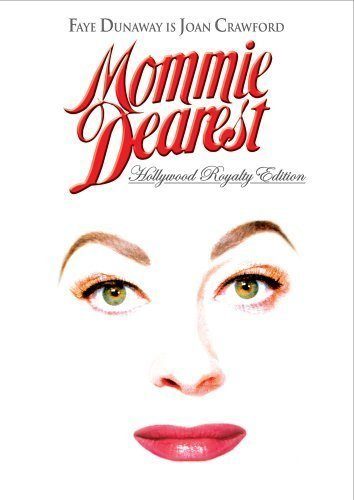
To paraphrase Tarantino, a movie that successfully uses a piece of music, owns that music. Likewise, 1981’s docudrama “Mommie Dearest” (or MD) belongs to its lead actress, Faye Dunaway.
Audiences are fickle. As a broad example (pun not intended), Sydney Sweeney is objectively attractive, but sometimes we need to be reminded that her place in history – as a babe – will only occupy a small space: one inhabited by the ghosts of celebrity babes past, like Farrah Fawcett or Marilyn Monroe.
Same goes for legendary performances: they only become discourse if viewers put the proverbial poster on their wall. As much as I admire Dunaway, there’s only a handful of movies out of her six-decade career I can definitively name – most from one era.
or, “Reconciled to Live from the Sidelines”: A spoiler-free mini movie review.
1.5 out of 5
“…it’s been so long since I did that stuff, I literally cannot remember how we did most of it. […] I really have to insist that we don’t talk about ‘Scanners’, or special effects, or exploding heads…”
– Canadian filmmaker David Cronenberg on Ken Finkleman’s “The Newsroom”, 1996
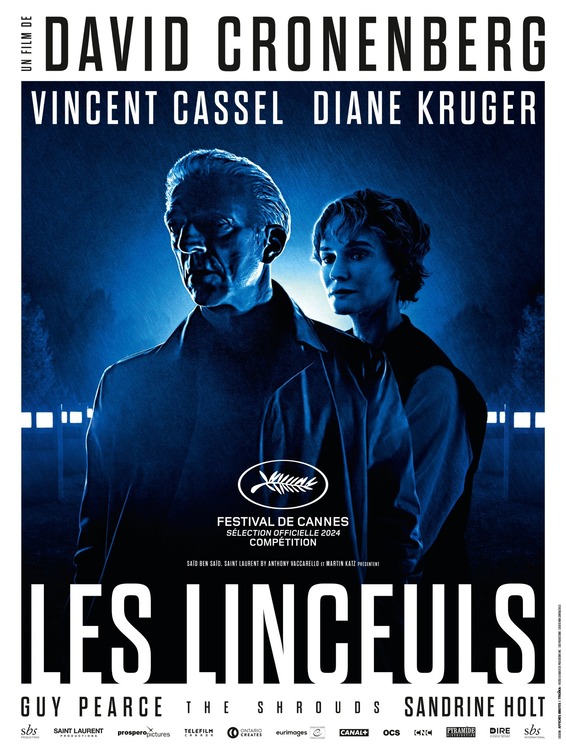
“The Shrouds” is an 82-year-old artist’s auto-elegiac statement. It’s aesthetically pleasing, and way too talky; its themes cerebral, though defeatist; its characters horny but dispassionate; and it’s told from a sanctimonious perspective that engenders viewer apathy.
My high school friends & I once drove an hour to see “A History of Violence”. We walked in late to the screening after getting a parking ticket, and immediately after the big 69’ing scene (but before the diner shootout). We didn’t find out until much later what else we had missed.
or, “Doing Away with the Chiller in the Thriller”: A spoiler-free mini movie review.
2 out of 5
I remember the trailer for Conclave last autumn, and I didn’t want to see it then, either.
Between the super-serious ensemble of Ralph Fiennes, John Lithgow, and Stanley Tucci all speaking in soft whispers; to the frequent high-angle framing of old White men in robes walking briskly through courtyards; to the punctuated explosion, it simply did not look like a good time. It looked like someone, somewhere was trying too hard.
Lo-and-behold, Conclave’s advertising & creative choices are misrepresentational – this isn’t a nail-biter: it’s a procedural about what happens when the Pope dies, and finding the right person to replace them.
The subject matter at-large joins The Program & The International as a movie with a rich topic worth edu-telling the viewer. But here, that knowledge is at the expense of wasting my time! (with an overdramatized aesthetic suggesting a core mystery that doesn’t actually exist)
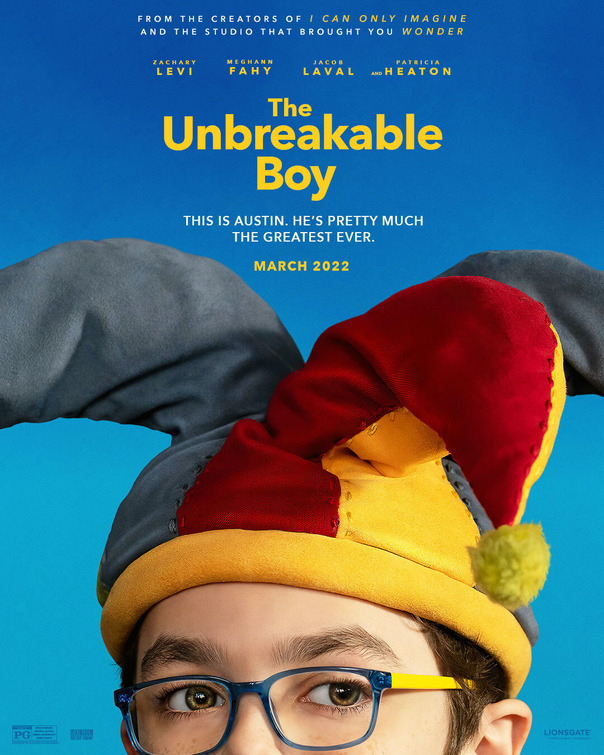
Watching “The Unbreakable Boy” (aka. UB) reminded me of Ben Stiller’s 2008 comedy “Tropic Thunder”, and Robert Downey Jr’s immortal words: “Never go full retard.”
Vulgarity aside, RDJ’s line signified that actors playing overly-challenged characters weren’t likely to win audience recognition. In the Real World, compassion is everything.
That being said, and with all due respect to real-life autistic/brittle-bone sufferer Austin LeRette (“Auz-Man”), the lisping imitation from actor Jacob Laval is so off-putting – transcending ‘cute’ into piteousness – that I couldn’t set aside my disbelief.
‘Uplifting’ genre flicks like this inspire pre-viewing expectations: maybe some bullying; some falling down stairs (like in Shyamalan’s “Unbreakable”)… I will give it to director Jon Gunn that he knows how to film scenes of bones breaking, as my wife & I both flinched at each mini-disaster and ones in-waiting.
But the third-act bullying is where I was done, and not because it was too cruel. Whether-or-not how the sequence plays out on-screen is actually what transpired between Auz-Man’s older brother Logan & the school bully ‘who became one of his best friends,’ it is the soppiest, most untenable bit of Hallmark reality ever. Logan should have just kicked the shit out of him and been done with it.
Laval’s representation of Auz-Man is dwarfed by Zachary Levi (both “Shazam’s”) as LaRette’s father. I wondered whether Levi could carry a serious movie with a belied filmography…
And he can’t, instead playing the hollow-headed goof we’ve seen from him time-and-time again. Not only that, but watch how much difficulty he has with sincerity in his climactic apology scene! Sorry, Zach: you don’t have the sauce.
There was kerfuffle with the new Captain America that it didn’t delve deeper into the modern zeitgeist (like its triple-the-length prequel miniseries). Indeed, my wife was adamant her main takeaway from UB was to be inspired by Auz-Man and fly her own freak-flag high.
UB doesn’t have goals of being disposable entertainment: it wants to be an important movie about faith & resilience. So why doesn’t it study some of the dad’s autistic traits more? Why does it give a middle-aged man an imaginary friend, and cutaways of his OCD & restless leg, without exploring them beyond passive freakishness?
The Unbreakable Boy is too timid to answer the big questions it asks, but calculated against the viewer constituting their own empathy. Never go full retard.
Poster sourced from impawards.com.What do you think? Are you choked that Patricia Clarkson & Amy Acker both went underused (again)? Are you surprised the finished film went three years without a release? Do you think Zachary Levi should get another chance at a dramatic leading role? And probably the most important question of all: as a viewer, do you lose empathy for characters that demand it? Let us know in the comments below!


 theory of a daskeman