Selected Scenes: Beneath the Planet of the Apes

1970

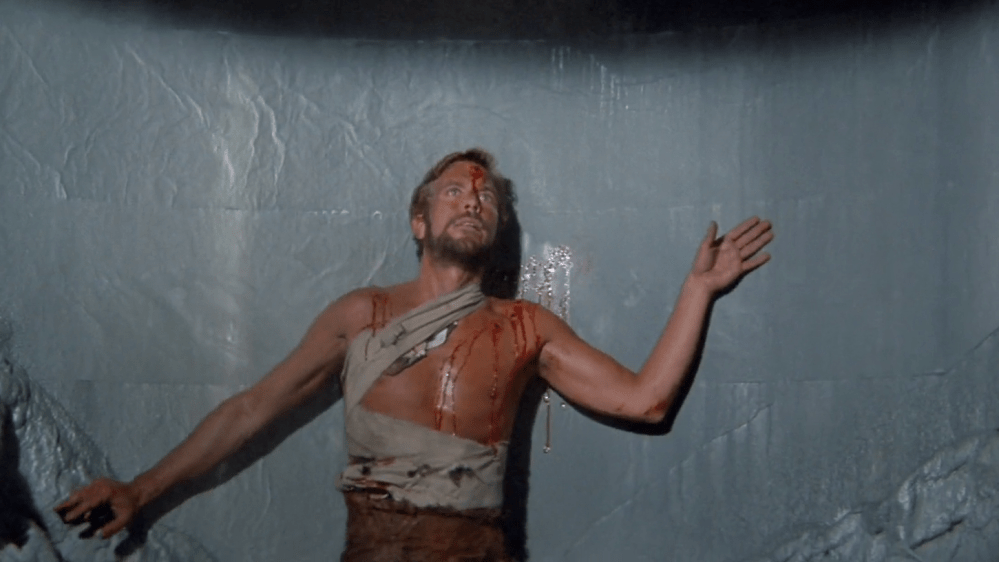
brent, like taylor, is a survivor. after travelling through the same break in space time, he crash lands on post-apocalyptic earth of the year 3978 where man is all but extinct and the planet is ruled by intelligent apes. they are losing numbers to a supernatural force preventing them from encroaching in to the forbidden zone, an area where monuments from the past still rise from the ashes of society as we knew it. brent escapes imprisonment by the apes and enters the forbidden zone to look for taylor, and finds a race of humans living underground. they are physically mutated, presumably from radiation poisoning, and have evolved a telekinetic ability that has prevented the apes from marching on their territory. however, as the apes grow wise and close in, the humans threaten a second doomsday on the planet with an atomic bomb they worship at the altar like jesus on the cross. all hope to prevent annihilation are moot. the apes enter the encampment. brent is killed in a flurry of machine gun fire. taylor, who is revealed to be alive and held captive by the mutants, is mortally-wounded. with his dying breath he actives the bomb, and the film ends.

on the list of great movie sequels beside star trek and the godfather, beneath the planet of the apes is unfairly treated. every couple of years a new planet of the apes movie comes out in an attempt to revitalize the franchise and the original sequels, from beneath to battle, are forgotten in this stream of endless reboots and sequels. those who have seen beneath as it rests within the timeline of the original series can agree though that it expands on the mythology of the original in a slick, fast-paced (ninety lean minutes) package. and the abrupt, nihilistic ending (courtesy of charlton heston, apparently to make sure his appearance in further sequels was never going to happen) is the definition of awesome. everyone dies horribly, especially brent in the third-to-last shot of the film (literally). the planet is effectively destroyed. fade to black. end credits. there was nowhere left to go from there but back in time.
Jay’s Take on: West Side Story

2016

things age. stuff dies. facts of life. old electronics don’t last forever (but in nintendo’s case an eternity). people weaken. and works of fiction that once were considered timeless are now running through the eye of the contemporary critic. they will tell you that while a movie or stage play or any entertainment can age poorly it can be appreciated by anyone willing to acknowledge its place in history. i call bullshit. it boils down to one’s own opinion. at the end of the day you either like something or you don’t. it’s that simple. if you don’t like citizen kane it’s a moot point to argue that it’s aged poorly because it’s ignorant to think you will change another’s opinion based on the discourse of the establishment. that and citizen kane is a great movie and anyone who tells you otherwise probably has a queue of dtv steven seagal movies on netflix (though even some of those are watchable).

i have not seen the film adaptation of west side story. in fact before tuesday night i had never seen the play performed in any incantation, nor could i tell you what songs were associated with it. i was excited to go in fresh with only its legacy to help me along. the word ‘hack’ kept illuminating in my mind as i watched the live performance. sondheim is a god to many but to know that west side was adapted from romeo and juliet just made me play with the revisionist aspects in my head. shakespeare’s original is a simple story told through complex prose that dissected the motivation of its characters. at this point in our time every story you could possibly imagine has been done to death in every medium possible. so it is the method then that the story is told and the quality of the telling that will tell you if a work will stand up to scrutiny. the particular performance of west side story that i saw could not hold up to my scrutiny. it was poorly cast, with dream sequences cut in and out of the story like a warner brothers producer messing with the latest dc picture. the songs themselves, the pumping blood of musical theater, were quieting (though i feel pretty is a fucking classic).

so what was the problem? was it the show itself or the play? were the problems i had the choices of the director or were they intended by the writers to begin with? i am in a position now where i could watch the oscar-winning film adaptation, or seek out another live performance and make the call for myself, or hell even ask someone involved with the production i viewed. but i don’t want to. i feel like i have seen the show and it is not necessary for me to see it again. that finality tells me that it was more the script then the show. but the burden of proof is on the show i watched and not the original source material. i turned to my partner during the performance, who has seen the movie but not the play, and asked them if the balletic fight choreography and tempered delivery of the songs were deliberate. they said it was. good enough for me.

Selected Scenes: Watership Down

1978

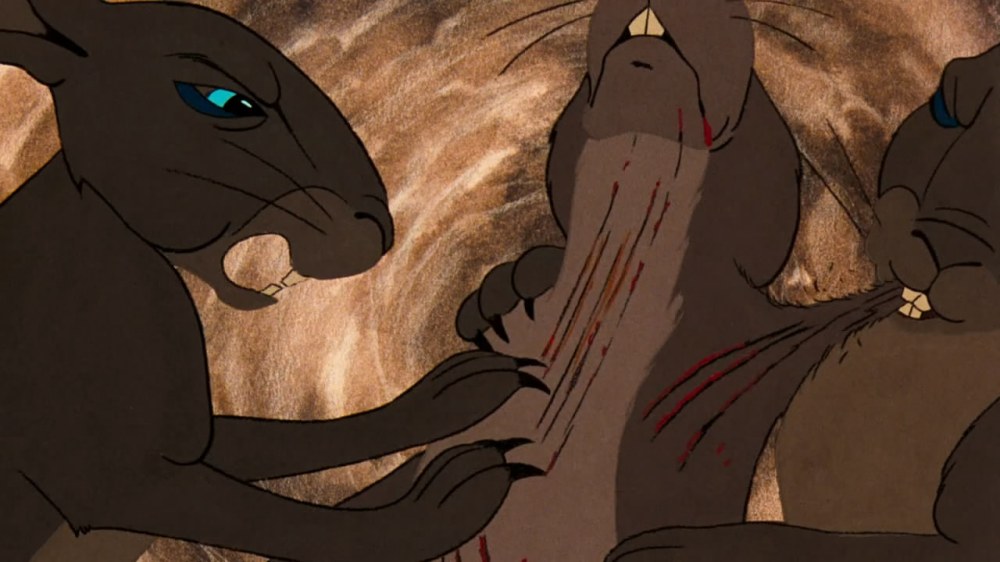
the English countryside of Watership Down is a land where lore and tradition walk hand-in-hand. where history isn’t just a story and legend not just fantasy. Fiver, a rabbit, begins to have visions of an apocalyptic future for his warren and, with the help of his older brother Hazel, convince a motley crew to leave their home and seek another. with help from converted royal guard Bigwig, these three lead the others on a quest inspired by their disturbed brother’s hallucinations. attacks from predatory animals, drowning, the basest elements: there IS something better out there for them beyond their trials, if Fiver’s visions are accurate. but they have to persevere. they have to be caught. the survivors arrive at an abandoned warren high up and away from danger and think that their worries are over, but an unexpected visitor in Bigwig’s former brother-in-arms Holly changes their fortunes. he is battered and bleeding. Fiver’s visions were true: the old warren was destroyed by human excavation, and on his way to find Hazel and the others, Holly was captured and tortured by a rival warren. the continued survival of their new colony rests in liberating the females from this dictatorship. because when the whole world is out to kill you, sometimes the greatest enemy of all comes from within.

this wasn’t what i was assuming it was. a staple of numerous “adult animation” lists, i thought it would be more “Saw meets Disney” based on what i read (rabbits getting knocked-off one-by-one as their trials progress) but what i watched was surprisingly formulaic (political commentary notwithstanding). the non-linear survival plot of the first half gave way to a second half “save the babes” plot, where the third-act villain in the rival warren keep the females hostage under a tyrannical head bunny with one eye missing called the General. but when the mature content finally transpired, such as Holly’s account of subjugation at the hands of the General, brief as they are they do remind you that the film is striving for a certain level of realism beneath the spiritual angle. a good watch if expectations are kept in check.

Selected Scenes: Lilya 4-Ever

2002

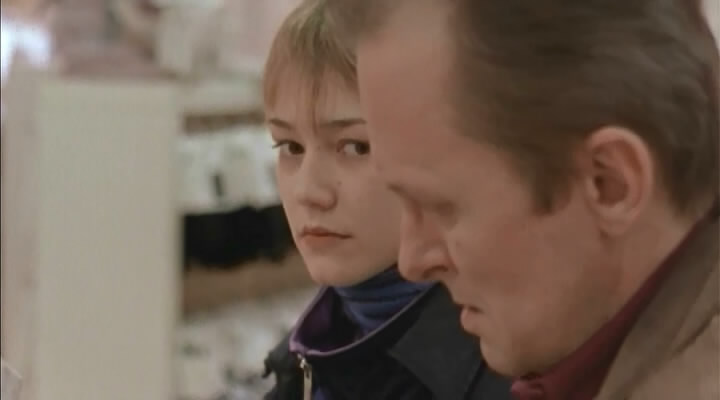
Lilya, 16, is another lost soul in the slums of the Soviet Union. abandoned by her mother and ostracized by her neighbors for making ends meet as a prostitute, she sees a way out: a young, smooth-talking man in a reliable car who takes her under his wing and makes promises of a new life in Sweden. it’s almost too good to be true, especially to her best friend and fellow outcast Volodya: he tells her over and over again that the man, Andrei, is just using her for sex. it couldn’t be true. her beau gives her a fake passport and tells her to go on ahead while he makes excuses to stay behind and come later. Andrei’s boss meets her at the airport in Stockholm. he takes her to a furnished apartment where the doorknob from the inside is broken. he tells her she’ll start work tomorrow. she bathes and ignorantly enjoys her new bounties. the man returns the next day with groceries and rapes her. he tells her Andrei isn’t coming. he drops her off at a john’s flat and pimps her out for sex. her fate is sealed, as much as she tries to resist. she cuts her hair against her captor’s wishes and he takes her to a busy department store to buy a tuque. it’s clear that he’s told her to keep quiet or else she’ll be punished. there are people everywhere. she holds her tongue. her face tells us that she wants to scream; to run; to try to get away, back to her old life in Russia where at least she could dream. and the audience screams right back at her. but we realize that, more maybe then the fear of her predicament, is the fear of being outside of her element: of being away from the low-income housing she’s known her whole life, far from the city and the reality of her dreams, to here, still lost in a dream that’s become a nightmare.

this was on quite a few “most depressing movies” lists and while it wasn’t as disturbing as those previews made me expect, it was still thoroughly engrossing as far as “how bad can things get” plots go. if you like this one then The Whistleblower from 2010 is another good watch.