Dub’s Take: Ne Zha 2 & Night of the Zoopocalypse

Two Spoiler-Free Family-Friendly Micro Movie Reviews


NE ZHA 2

3.5 out of 5

I’m a cultured guy: my favourite movie has a naked French lady in it. But “Ne Zha 2” is a movie from China, rooted in its mythology, without conceding to a global audience.

Despite every barrier to enjoyment possible (I haven’t seen the first film; super-quick & error-ridden subtitles; what I thought would be a 10 minute recap being a 30 second ‘last time on’; did I say fast subtitles?), Ne Zha 2 earned my part of its astonishing $2 billion in global profit through spectacle & gut reaction alone.

Who cares if the human characters are animated out of a PS2-era musou game, or if the whole third act reminded me of twenty seconds from “Akira”? Highlights include a scene with photorealistic gophers that almost made me throw up in the theatre; a heroic sacrifice that had me teary-eyed (only for a late twist to make me realize I didn’t actually know what was going on); and my 73-year-old father enjoying it, too.

I don’t foresee an English dub being possible without huge script revisions, and 10 minutes of Coles Notes at the beginning.

NIGHT OF THE ZOOPOCALYPSE

2.5 out of 5

Being a writer, I know what it’s like to fall in love with your words, whether those be poeticisms, a sudden revelation, or building to a literary crescendo.

“Night of the Zoopocalypse’s” scribes didn’t think objectively enough when it came to divvying traits out to its protagonists. The cinema-loving lemur Xavier won’t shut up about film theory as it pertains to every situation (like the critic from Shyamalan’s “Lady in the Water”), but capybara Frida is stuck reiterating that she doesn’t know anything because she’s “just a capybara.” Not a great start for a comedy that relies on the camaraderie of its core team.

But kids probably won’t care, so I’m trying not to, either. Zoopocalypse is a quick, cute time, most successful in its visual details than story ones. Gracie’s voice-actress Gabbi Kosmidis says in the pre-show that it’s a good entryway for young horror fans-to-be, and while that’s just a publicity quote to get butts in seats, I don’t disagree on its sanitized zombie-movie status, with enough neon colours & felty CGI fuzz to keep everyone entertained.

Some of the soundtrack was a little weird and could be triggering for kids with hearing sensitivity.


Posters sourced from impawards.com (1; 2). Are you going to see either of these? Do you agree that everything yanks something from Akira at one point or another? Let us know your impressions in the comments below!
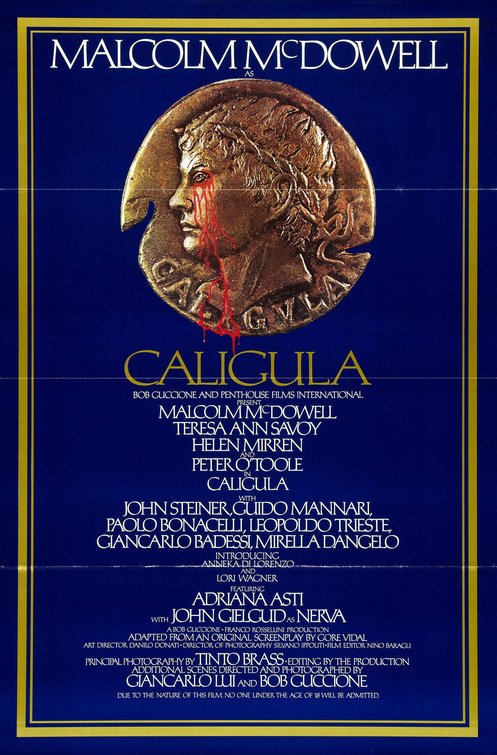
400 Words on: Caligula (1979)

A spoiler-free mini movie review.


NO STAR RATING

The following post contains language
that could be triggering.

If one tries to explain why they consider the ‘fall of the Roman Empire’ docudrama Caligula great, civilians won’t get it.

Then you show it to them, and not only will they still not get it, they are unlikely to speak with you again. Caligula is an ugly movie, in technique; aesthetic; and content combined (this is the Theatrical Version I’m talking about, presently).

[cont’d]

Continue reading

Dub’s Take: The Unbreakable Boy (2025)

A spoiler-free mini movie review.


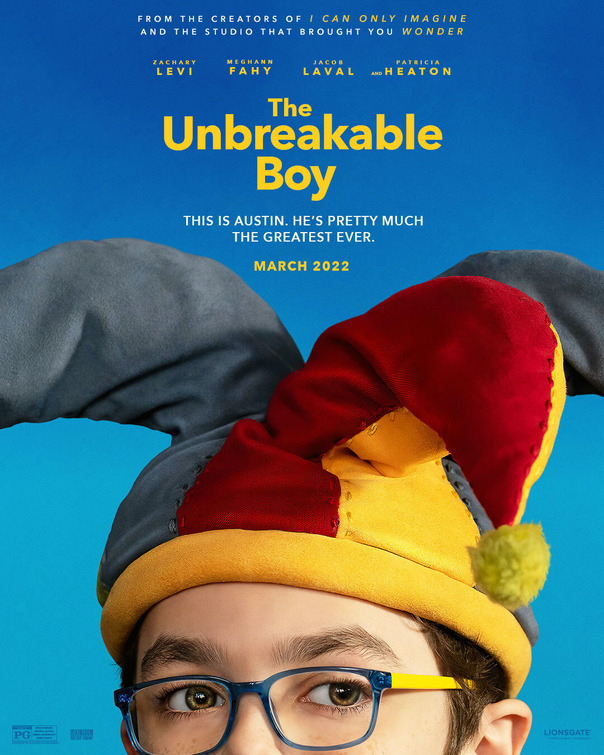
1 out of 5

Watching “The Unbreakable Boy” (aka. UB) reminded me of Ben Stiller’s 2008 comedy “Tropic Thunder”, and Robert Downey Jr’s immortal words: “Never go full retard.”

Vulgarity aside, RDJ’s line signified that actors playing overly-challenged characters weren’t likely to win audience recognition. In the Real World, compassion is everything.

That being said, and with all due respect to real-life autistic/brittle-bone sufferer Austin LeRette (“Auz-Man”), the lisping imitation from actor Jacob Laval is so off-putting – transcending ‘cute’ into piteousness – that I couldn’t set aside my disbelief.

‘Uplifting’ genre flicks like this inspire pre-viewing expectations: maybe some bullying; some falling down stairs (like in Shyamalan’s “Unbreakable”)… I will give it to director Jon Gunn that he knows how to film scenes of bones breaking, as my wife & I both flinched at each mini-disaster and ones in-waiting.

But the third-act bullying is where I was done, and not because it was too cruel. Whether-or-not how the sequence plays out on-screen is actually what transpired between Auz-Man’s older brother Logan & the school bully ‘who became one of his best friends,’ it is the soppiest, most untenable bit of Hallmark reality ever. Logan should have just kicked the shit out of him and been done with it.

Laval’s representation of Auz-Man is dwarfed by Zachary Levi (both “Shazam’s”) as LaRette’s father. I wondered whether Levi could carry a serious movie with a belied filmography…

And he can’t, instead playing the hollow-headed goof we’ve seen from him time-and-time again. Not only that, but watch how much difficulty he has with sincerity in his climactic apology scene! Sorry, Zach: you don’t have the sauce.

There was kerfuffle with the new Captain America that it didn’t delve deeper into the modern zeitgeist (like its triple-the-length prequel miniseries). Indeed, my wife was adamant her main takeaway from UB was to be inspired by Auz-Man and fly her own freak-flag high.

UB doesn’t have goals of being disposable entertainment: it wants to be an important movie about faith & resilience. So why doesn’t it study some of the dad’s autistic traits more? Why does it give a middle-aged man an imaginary friend, and cutaways of his OCD & restless leg, without exploring them beyond passive freakishness?

The Unbreakable Boy is too timid to answer the big questions it asks, but calculated against the viewer constituting their own empathy. Never go full retard.


Poster sourced from impawards.com. What do you think? Are you choked that Patricia Clarkson & Amy Acker both went underused (again)? Are you surprised the finished film went three years without a release? Do you think Zachary Levi should get another chance at a dramatic leading role? And probably the most important question of all: as a viewer, do you lose empathy for characters that demand it? Let us know in the comments below!

Dub’s Take: Forsaken (2015)

A spoiler-free mini movie review.


2.5 out of 5

Let’s consider the contentiousness between celebrity parents & their offspring: the Voigt/Jolie/Pitt’s; the O’Neal’s; the Barrymore’s…

The public only receives as much information that’s dished; often, that doesn’t include the forgiveness intrinsic to maintaining a healthy, life-long relationship with one’s family. That’s usually something us plebs experience ourselves, in time.

Great, then, for actor Kiefer Sutherland actually wanting to work with his late father & icon Donald. Kiefer hasn’t been featured on-screen so much since the height of COVID, what with his side-gig as a country musician. I saw him live in 2019 and, while I can’t remember his music, I think all of us in attendance were awed to see Jack Bauer/David the Daywalker in the flesh.

Where their filmography choices differ, father & son’s similar acting disciplines, and uncanny biology, can be felt in their shared scenes for the 2015 western Forsaken.

Forsaken has noble intentions – no doubt about that. It has a linear, easy-to-follow man-versus-himself redemption story, devoid of texture that doesn’t serve the plot. It has wonderfully verbose dialogue, recited melodramatically by its cavalcade of character actors (Demi Moore; Michael Wincott). It has a subversive epilogue, swapping a lovesick reunion for a tearful family goodbye. There really isn’t anything thematically wrong with it.

But it’s slow. Damn slow! Characterizations & script points are blander than superior genre examples, like Clint Eastwood’s Unforgiven (Richard Harris’ English Bob vs. Wincott’s Gentleman Dave) and Ed Harris’ Appaloosa (the love triangle). Brian Cox as the villain is Brian Cox as the villain, doing his billowy, profane Brian Cox thing – though credit goes to director Jon Cassar for convincing the Shakespearean-trained thespian to die next to a big pile of horse shit. And it’s always a bit rocking to see close-ups of gory, chunky gibs in the last ten minutes when the previous eighty lacked such morbid details.

Although only an hour-and-a-half, Forsaken feels twice as long when its quiet moments insist on themselves, like endless wood-cutting, and rumours from the church social club. If there were fewer of those hyperrealistic pauses – so common in modern prestige television – perhaps Kiefer & Donald’s understated work here would have serviced the picture as a whole, as opposed to being ‘one effective element’ of a decidedly average film.

If you want to see peak cinematic familial synchronicity, Forsaken is a low-calorie – if forgettable – clone.


Poster sourced from themoviedb.org. As of publication, Forsaken is available to watch for free in Western Canada on CBC Gem (unsponsored). What do you think? Leave us a comment below!

Dub’s Take: The Program (2015)

A spoiler-free mini movie review.


3 out of 5

In Tom Tykwer’s 2009 thriller The International, there’s a two minute scene explaining banking for laymen. Being now middle-aged, I get that financial institutions profit off interest, but, 16-years-ago & raised without financial skills, some surprise edu-tainment was appreciated.

Same goes for Lance Armstrong biopic The Program: Guillaume Canet as moustache-twirling Dr. Ferrari breaks down the science of steroids for a non-sports guy like myself within a few well-delivered lines.

If there’s one thing to admire about the film, it’s this streamlined structure: we start with Armstrong’s first Tour de France, and stay largely with the Tour and Lance’s first-hand experiences with cycling culture – including doping – in a linear narrative.

Ben Foster is the perfect lead for this creative direction: he exudes determination, even in his Lance’s moments of weakness. This vulnerability very rarely materializes under the narcissism, leading to some genuine – albeit cringey – humour, like a break-up message from Nike, or whispered threats to his competitors mid-race.

Awkward levity is par-for-the-course for High Fidelity director Stephen Frears, who also brings a digital, documentary quality to the film’s images, which work in favour of the lengthy, zestful racing scenes.

Alas, the film also feels the need to pivot to The IT Crowd’s Chris O’Dowd as David Walsh – a real-life journalist skeptical of Armstrong’s wins & author of the non-fiction book the film is based on. The Program may maintain a sprightly momentum its entire duration, but that includes the numerous office scenes with O’Dowd, which are visually edited so haphazardly they took me out of Golden Topping Land. Chris is good as the character, but viewers already follow a first-hand account in Lance himself, rendering O’Dowd’s role & the scenes it inhabits narratively supererogatory.

Usually I’m a champion of shorter movies, but The Program’s ninety minutes end too abruptly, where there would traditionally be a third-act courtroom climax. The post-film text alludes to events not-yet-transpired, suggesting the movie was made while Armstrong’s fate was still in litigation. Had producers waited, and exchanged O’Dowd’s material for more about Lance’s personal life (his wife’s meet-cute is blocked like a fling, but in the next scene they’re married), I may not have been disconnected from the material as often.

In spite of that, The Program is still worth watching for the knowledge gained, the racing, and Ben Foster’s performance.


Poster sourced from impawards.com. As of publication, The Program is available to watch for free in Western Canada on Tubi (unsponsored). What do you think? Leave us a comment below!