Dub’s Take: The Beekeeper

A spoiler-free mini movie review.


There is something to be said for texture. You could have the most formulaic theme – like “the ex-super-soldier with a heart of gold” – and innovate it with unconventional dialogue, design, and direction, so long as it’s in service to the movie at-large. Screenwriter Kurt Wimmer’s latest crucible has so much texture that it’s a deliriously overcomplicated melting pot, with flavours of your January-variety Jason Statham release, a pseudo-political conspiracy thriller, a cautionary tale on fake virus alerts (really), and a parable about dispirited parenting, all under high-concept control from David Ayer.

The film derives the majority of its thrills from tense scenes of idiots in rooms minimizing the shit-storm they’re in with Statham’s anonymous vigilante. Ayer convincingly propulses the plot in these ‘quiet’ moments, and “Hunger Games” alum Josh Hutcherson puts his best foot forward as the film’s primary antagonist.

But we’re here for the boom-boom – as showcased in the film’s persuasive trailers, where Statham’s “1 2 3” gassing initially concluded that “The Beekeeper” would be a ratty good time in a month known for disenfranchised movie releases. Statham does indeed kill his way through baddies of increasing eccentricity, and the turbulent editing that dominated the theatrical version of Ayer’s “Suicide Squad” is gone here: every shot of Statham kicking a dude in the face is held just long enough for its impact to be felt by the viewer.

Bottom line: you already saw most of the boom-boom in the trailers. Slower moments – including an implied romantic history & a family connection, which serve as beleaguering texture – could have been cut for pacing. The increasing tiers of henchmen feel too much like boss encounters in a video game. And the climax – infiltrating a party at the evil guy’s mansion – is depressingly doddering & ends abruptly, without any real show-stopping confrontation to close the movie on. Disregarding those cons, it was an excellent watch as part of the Canadian $5 February deal at Cineplex.

3 out of 5

Movie poster sourced from impawards.com. Have you seen “The Beekeeper” yet? Would you if the ticket was only five bucks? Are you a connoisseur of other fine Jason Statham January fare like “Wild Card”, “The Mechanic”, or “Parker”? Are you disappointed when people talk about Jennifer Lopez’s acting career and no one mentions “Blood and Wine”? Leave a comment below!
Dub’s Take: The Divide (2011)

A spoiler-free mini movie review.


Anyone who wanted less optimism in Netflix’s recent movie “The Furnace” may find the nihilism they’re looking for in “The Divide”. Director Xavier Gens is best known to American audiences for the first “Hitman” adaptation with Timothy Olyphant, but his “Frontier(s)” from the same year is his eminent opus: an ultra-violent allegory about civil unrest in France. The Divide shares commonalities with Frontiers, including subject matter about each person’s “breaking point”, and a remake of its head-shaving scene. Know then that The Divide is not a “happy” movie, though thankfully nowhere near as unwatchable for a general adult audience.

It’s true that not everyone wants to watch a depressing movie these days, despite an influx of downbeat titles on the market – most inspired by current events. I myself am not an optimist and enjoy the occasional morbid movie for escapism. By the same measure, I also want the film to have some other purpose for being – beyond pure cruelty – to not make the whole experience a big waste of time. The Divide locks the viewer in and makes them want to know what happens, which is the greatest compliment I can give it.

It is by no means perfect. Some of its best ideas – such as the ultimate reveal of the third-act villains – come too late in the film. It has a mish-mosh cast, with unrestrained, melodramatic performances by Michael Biehn & Rosanna Arquette. There’s a left-field event a half-hour in that should change the dynamic of the entire film, but left-minded viewers will be disappointed that it never goes back to it when it’s over. And it could have had a tighter second act without diluting the material. Having said all that, it was still compelling, and generated some good discussion between my wife & myself afterward. I wouldn’t ever watch it again.

3 out of 5

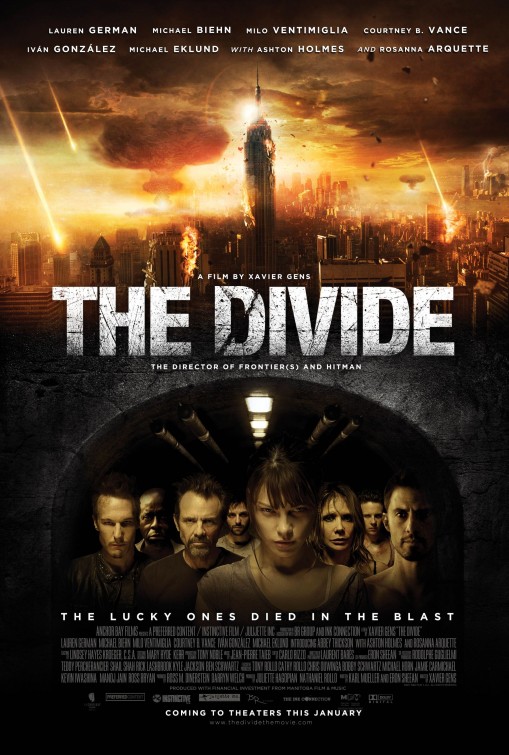
Poster sourced from impawards.com. What do you think? Are you the kind of viewer who stays away from thematically half-empty media, or do you like to be challenged in this day & age? That line-dancing scene in The Furnace was money though, am I right? Do you agree with Tarantino when he says a great movie can “own” its use of a song? Let me know your thoughts below!

Dub’s Take: The Island (2005)

A spoiler-free mini movie review.


The best performance, in a film full of convincing performances, comes from Djimon Hounsou as Laurent, the morally-conflicted mercenary sent after our heroes Scarlett Johansson & Ewan McGregor. While it’s a character that easily could have been played by any generic macho movie touch guy on-reserve like Christos Vasilopoulos or Michael Jai White, Laurent – as played by Hounsou – has conviction, and commands attention. It’s probably the role I’ll remember him most for, even if he’s woefully sidelined in the third act – the film’s only real disappointment.

Anyone who wonders whether director Michael Bay (yes, THAT Michael Bay, love him or hate him) is capable of making something serious should look no further than “The Island”. Sure, Bay can’t resist himself in the handful of action scenes that are here – including a mid-movie showstopper that escalates from launching giant steel train wheels off a moving flat-deck, to hanging precariously off the edge of a giant logo at the top of a skyscraper – but they aren’t the film’s focus. Be that as it may, don’t think that because you aren’t getting the intensity level of “Transformers 4” that The Island isn’t consistently thrilling, because it is: Bay’s bombastic technique keeps the pacing kinetic for the 2 hour+ runtime.

The film’s secret standout is its script – co-written by TV showrunners Kurtzman & Orci – and the less said the better. Okay, so you might guess what’s going on before the cut-and-dry reveal by Steve Buscemi, and it isn’t necessarily the freshest story off the line, but the production finds new ways, right up until its climax, to raise the stakes – however predictable. It’s fun. It’s one of only a handful of films I’ve seen in theatres more than once by choice, and almost 20-years-later this most recent viewing was just as entertaining: my older, wiser mind was keen to catch all the tricks in the film’s first half to keep the viewer at arm’s length. Good Job!

4.5 out of 5

Poster sourced from impawards.com. Do you think such a high mark is justified? Can you not get passed Michael Bay’s involvement? Is he the guy Olivia Munn was referring to? Will we reach a point with A.I. when Ewan McGreggor’s forehead mole gets scrubbed from every film he made before 2008? Comment, why don’t ‘cha!

Dub’s Take: The Legend of Tarzan (2016)

A spoiler-free mini movie review.


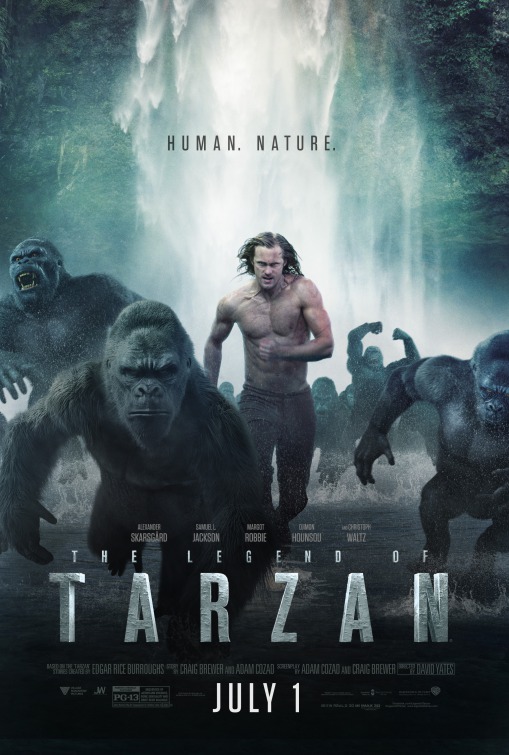
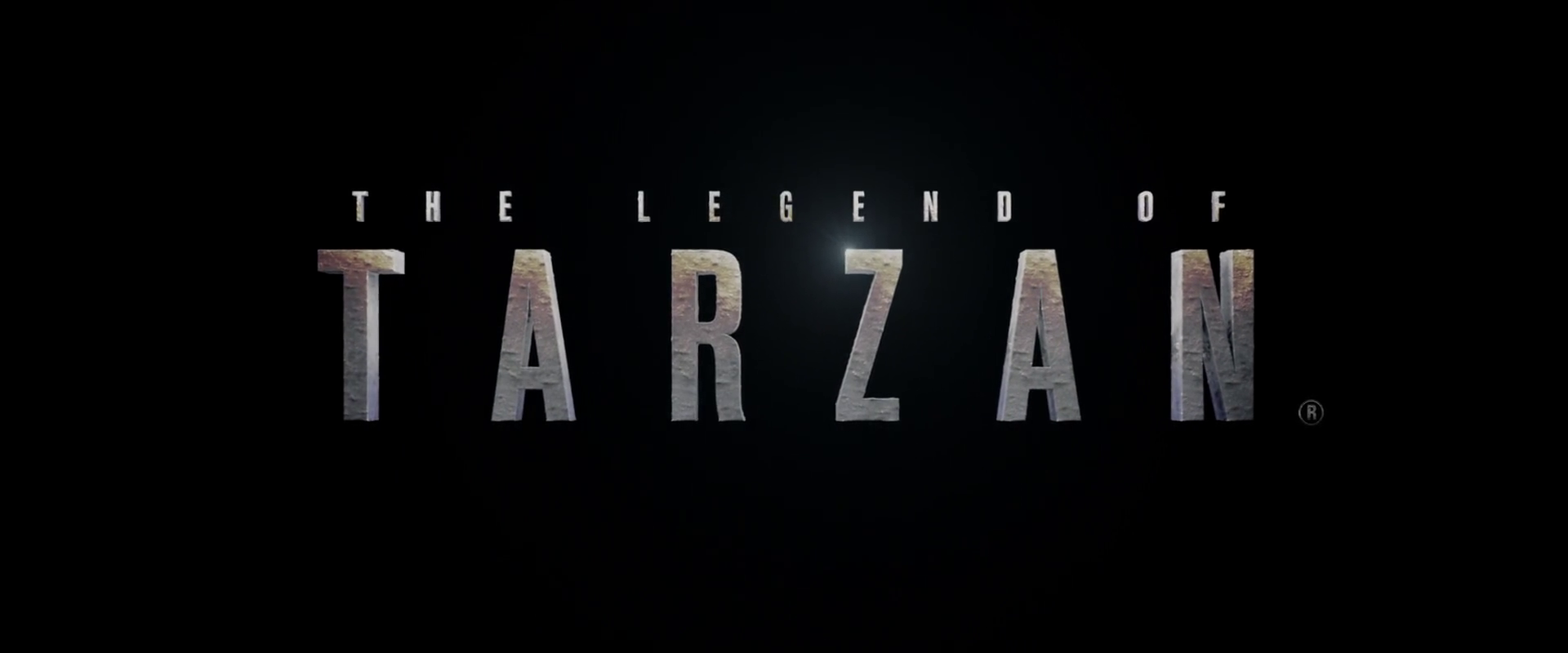
“Tarzan 2016” is a thing. What starts promisingly with Christoph Waltz & the great Djimon Hounsou squaring off is squashed once the title screen arrives, and conscious viewers notice the ‘registered trademark’ icon next to the logo. It still begs belief eight years post-release and reeks of corporate interference & franchise ensnarement. It’s mind-boggling thinking of what legal finagling forced such a decision – then you pause the movie on Netflix and it displays the logo on its idle screen without it. It isn’t even on the poster!

You can’t say the writers didn’t try to do something different: instead of another origin story, we open with an edified, middle-aged Tarzan, who retrogresses when he’s used as a pawn in the Congolese mineral trade. But then Waltz’s bad guy devolves into the one-dimensional schtick we’ve seen him do in every role since “Inglorious Basterds”, dragging Margot Robbie’s Jane from one set-piece to another while Alexander Skarsgård’s admittedly-shredded Tarzan is in hot pursuit. The action becomes the only point to the Sisyphysian push-and-pull, and the action scenes are a mish-mash of poor CGI & muted colours. While they’re thankfully not hyper-edited, anything in motion just looks like blobs – particularly the swinging-through-trees, which recall the ‘surfing’ from the 1999 Disney film.

The Casting Director got their budget’s worth, though. Acting is Tarzan 2016’s strongest quality, but was this caliber of work necessary here? Even Samuel L. Jackson had a chance to ham it up a bit, but he’s relatively low-key as the sidekick. There’s a five-second shot where Jackson lands on a tree branch and looks down, and he’s supposed to be hundreds of feet in the air but in reality it’s probably just a green screen beneath him, and it’s believable. I wish the cast’s effort had gone to a story with more follow-through: if not a “Birth of Tarzan” then maybe “Tarzan in Europe”.

2 out of 5

Poster sourced from impawards.com. Screenshots were author-obtained. Think I’m being too hard on Christoph? How about too easy on everyone else? Like yourself a good monkey movie? Planning to watch it before it’s “removed from Netflix”? Comment why don’t ‘cha!

Dub’s Take: Ferrari

A spoiler-free mini movie review.


Michael Mann films are divisive. They are Tarantino-esque, with sharp, heavily-stylized direction, punctuated by quick bursts of violence. But Mann isn’t a goofball like most of the characters in a Tarantino movie, and Mann’s films are often misrepresented as action movies. No Michael Mann film is wholly an action movie, and almost all take themselves far too seriously. Once again, with “Ferrari”, I was fooled by the advertising, which classifies the picture as a thrilling extravaganza.

What Ferrari the film actually is, is Mann finally embracing his dramatic side. If you go in knowing there’s maybe 15 total minutes of actual racing in its 2-hour+ runtime, you’ll enjoy it. In fact, none of its racing scenes are as exciting, empathy-inducing, or as well-framed as the ones in Neill Blomkamp’s “Gran Turismo”: barring two admittedly-spectacular crashes, I found Erik Messerschmidt’s camera is often too low to the ground in the close-ups with an over-reliance on wide shots – as the Oscar-winning cinematographer of “Mank”, he should have brought us within reach of those fast, pretty cars. There were also some abrupt transitions (the first dramatized race in the movie starts after a crash on the track that the viewer doesn’t see OR learn about until the other drivers are trying to pass it) that suggest the inevitable Director’s Cut is coming soon. While revisionism is part of Mann’s artistic method, I won’t need to see the movie again.

Great work by Adam Driver – I don’t usually seek his films out – and excellent pulsing orchestral soundtrack (in that Michael Mann way, just with actual instruments) by Daniel Pemberton. Mann should direct a straight romantic movie next without any tough fluff: he would probably be really successful at it.

4 out of 5

Poster sourced from imdb.com. Anyone interested in more of my ramblings on Michael Mann may enjoy this dissection of his first major film “Thief”. Don’t agree? Think the racing scenes were awesome? Big Mann fan? Sick of biopics? Comment why don’t ‘cha!