Selected Scenes: The Angels’ Melancholia

A spoiler-heavy multi-scene film analysis & review.
vlcsnap-2020-05-27-11h12m34s801

Hmm. Another shot of a woman peeing. She pees standing up at a sit-down toilet, pees on the floor, and pees on a dead guy’s face. Sometimes she poops, too: often at the same time as Number 1, lit sultrily by a bonfire where our protagonists are burning the disemboweled corpse of one of their own. Characters stick their fingers in each other’s holes and you are guaranteed a money-shot of their shit-stained fingers after, too. “Oh, well there’s that” I thought to myself as another disturbing image passed my view while I sat on my couch, high and alone at 10 PM on my Friday night.

Continue reading
Selected Scenes: M

A spoiler-heavy single-scene film review & analysis.

vlcsnap-2020-05-07-20h55m48s715

In the last “Selected Scenes”, I noted that The Canterbury Tales the Book was a staple of modern courses in English. To set the stage for today’s edition (and it’s a doozy), here is the exact quote presented pedantically and unsarcastically:

“…the final shot of the crowd paying tribute could be interpreted as the common public, approving of Chaucer’s work as much as the artist himself. And they did: The Canterbury Tales the Book has been a staple of Middle English literature in Universities everywhere, obscenity-be-damned.”

I don’t think anyone will debate me on this but it did have me thinking. One of the first things you learn as an essay writer is to cite your sources: produce a bibliography to that academic specification we all remember from high school (start with the last name of the author and follow the format, tabbing the second line, etcetera) and make sure that you can prove something before you say something. I never cited any “official” sources that said Canterbury Tales was taught in English courses: it’s just something I know. Isn’t that why quote-unquote “classics” are given that designation? Because they have risen above anonymity and in to the social pantheon of common parlance?

Continue reading

Jay’s Take: The Call of the Wild Double Feature

Two movie reviews.

callofthewild

I hate CGI. I know it, you know it. I love animals, especially doggos. I hate CGI animals. What is it about animal movies these days where you can get an experienced wrangler and real animals but instead they cheap-out and generate everything in a computer? Has it gotten to the point where we need to be making movies where cute animals are subjected to such unimaginable hardships that the only way to film it is to fake it? Are we scared for the animals themselves? The actors? THE PRODUCERS’ INVESTMENT? We all know Lindsay Lohan is expensive to insure: what if you made a movie where Lindsay Lohan played Jane Goodall and went into the middle of the wood with a bunch of living apes to shoot one of those handheld iPhone movies? FORGET IT. You would have better luck posting your movie to YouTube to watch for free let alone wide distribution in the slowest audience-attendance period of the theatrical year. Hollywood is cheap and stingy, and if something works then they will do that thing into the foreseeable future until a cheaper alternative is found. They found their alternative in CGI. Soon you won’t even need mo-cap actors because there will be cyborgs who do a better job of imitating Carrie Fisher than her own daughter. SOON YOU WON’T NEED ACTORS AT ALL. It’ll all be dead people, vomited-up from the grave and reconstituted on IBMs. Plus side: you could then get the dead animal actors such as ALL THE DOGS from ALL THE PREVIOUS FILMED ADAPTATIONS of Jack London’s book and reanimate them and have an unscripted reunion special on HBO. Invite the holograms of the original Benji and Old Yeller while you’re at it. Live animal wrangling for film is looked-down on in today’s world the same as those who perform in the circus and it looks like it may completely go the way of the dodo, like puppetry (if the dour and pointless Dark Crystal prequel on Netflix right now is anything to go by. LOW DIG).

Continue reading

Selected Scenes: The Canterbury Tales

A spoiler-heavy multi-scene film review & analysis.

vlcsnap-2020-04-22-12h20m13s336

The late, great, Italian multi-disciplinary artist and filmmaker Pier Paolo Pasolini wasn’t always about doom and gloom and the dark side of the human condition. His trio of films dubbed the “Trilogy of Life”, adapted from three prolific tomes of short stories, is as light and airy as your garden-variety Italian sex romp: something the filmmaker specifically hated hearing. But it’s true, and that’s not to fault it! His “Canterbury Tales” adaptation is wedged between his cinematic depictions of The Decameron and One Thousand and One Nights, respectively, and his detached filmmaking style lends itself nicely to the non-streamlined essence of the picture.

Continue reading

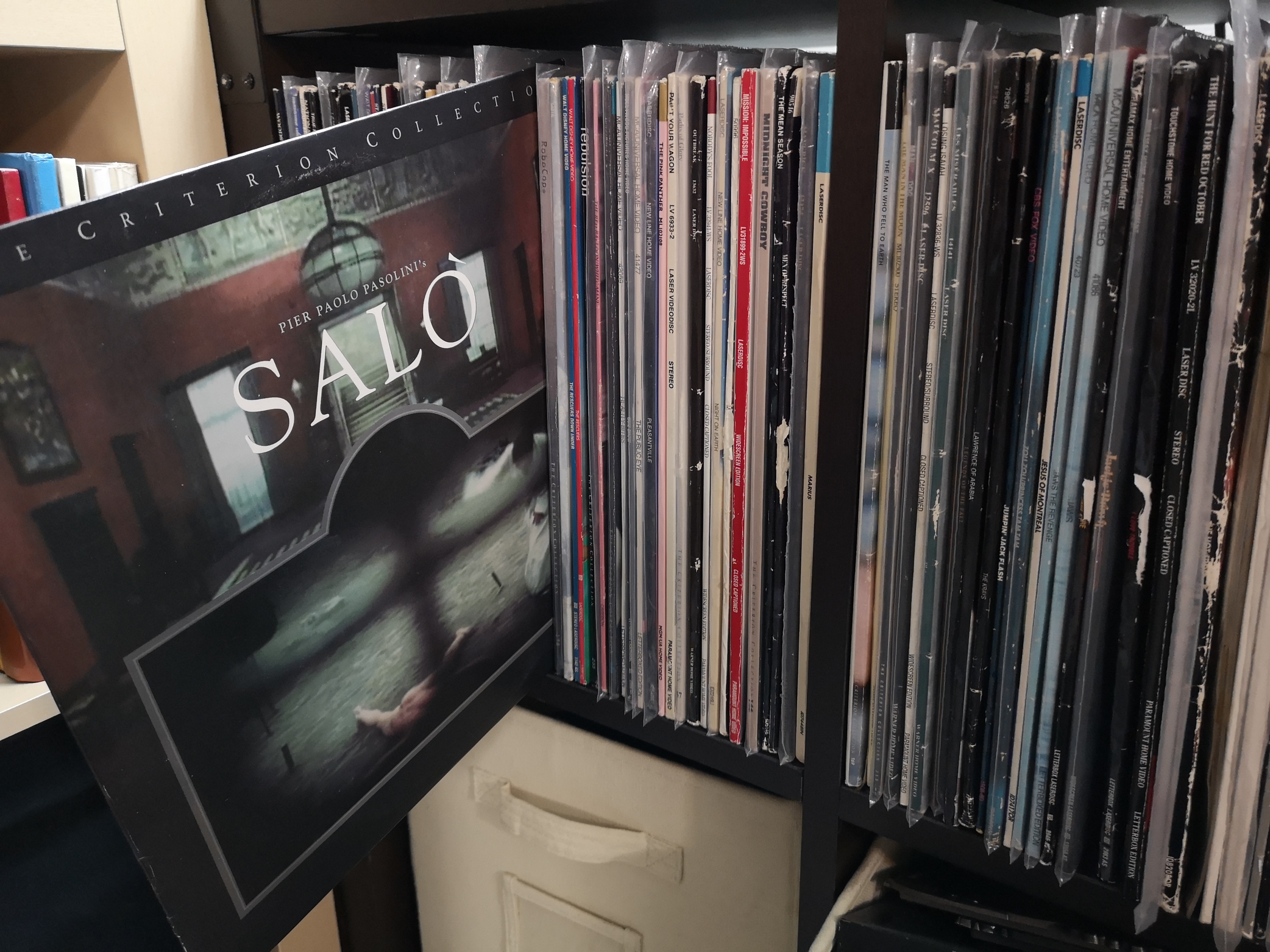
Now Available on Laserdisc: Salo

IMG_20200213_080903

I’m an odd guy. I like odd movies; especially ones that elicit a reaction. For a long time, the late Italian independent filmmaker Pier Paolo Pasolini’s final film Salo – an adaptation of the Marquis de Sade’s final novel – was the defacto choice when it came to disturbing, shocking cinema. Sure, there have been more horrifying movies released since, depending on one’s own preferences: August Underground; I Spit on Your Grave (any of them); Irreversible; Hereditary, to name a few. Any one of these could be a “jumping-off point” for future-filmmakers with a skewed world-view, but my own entry-point was Salo. I couldn’t tell you how I first came to know about it – probably from some Internet forum – but I can tell you how I came to watch it. Salo is a part of the Criterion Collection: a maverick distributor that secures the rights to oft-forgotten classics and international cinema (and movies that no one else seems to want to deal with, like Lena Dunham’s Tiny Furniture and Bowling for Columbine) and releasing expansive special-edition sets that cost an arm-and-a-leg for. It seems they are contented now with putting out anything that isn’t tied down, but back in the day you could count on a Criterion release – whether that was Laserdisc or DVD – to be the definitive edition of an otherwise-lost film.

Continue reading