Dub’s Take: Candyman (2021)

A spoiler-free mini movie review.


1.5 out of 5

In its scant ninety-minute running time, “Candyman 4” tries to be:

BOOM: a direct sequel to the original 1992 movie;
BAM: a reimagining of the central villain & his lore (fans of late Tony Todd should look elsewhere: he cameos for 30 seconds as a visual bookend);
C: a commentary on gentrification & a nouveau generation of Black yuppies;
4: a satire of the Chicago arts scene;
– full-on body horror à la 1986’s “The Fly”;
a rallying cry for ‘Black Lives Matter’;

and more I may have missed. It even employs a shadow-puppet aesthetic for its flashbacks in a quirky touch that wouldn’t be out of place in a Wes Anderson joint.

Phew! It’s a lot, but Candyman 4 isn’t done yet. Its themes draw parallels to “Pontypool”: a 2008 Canadian horror where miscommunication itself breeds zombies. C4 recontextualizes Todd’s Daniel Robitaille so that all instances of White-on-Black violence in Cabrini-Green fall under the discourse of ‘The Candyman’.

It’s a fascinating narrative pivot: probably the contribution of consistently-creative producer/co-writer Jordan Peele. The film is also wickedly shot, and certain set pieces independent of one-another do play well (the opening titles; the murder of two gallery owners; Yahya Abdul-Mateen II’s Anthony interacting with a reflection).

However, in corking Todd’s time with the series, C4 spoils the wine. Partial blame falls on director Nia DaCosta’s pacing, which recalls the extended takes & quiet character pensiveness of the most leisurely, self-aware 10-episode streaming series when she should be hitting us with the goods fast & hard to justify the short duration.

Other demerits go to poor Abdul-Mateen II who – between this, “Matrix 4”, and the DCEU reset – may have a hard time finding franchise work moving forward: his is an uninspired performance of a derivative hero’s journey.

For all the posturing of the neurotic, unlikeable one-percenter protagonists at the heart of the protracted first act, it, too, contributes nothing new to the discussion around the periodicity of racialized violence. Since C4 seems comfortable dropping references to the first film without context, viewers unfamiliar with the original will tell immediately where this story’s motives lie in its most meandering sections, and the heavy-handed finale.

Candyman 4 is guilty of overextending, but it gets a half-point for the chutzpah it takes to swing this hard and miss.


Poster sourced from impawards.com.
The film’s script left me with plenty of leftover questions: why did Sherman choose to stay in the complex when he knew he was being targeted as a pedophile? Why did it take Anthony so long to go to the hospital with the bug bite, let alone have it noticed by his live-in girlfriend? What did underlining his father’s suicide have to do with anything? In the high school bathroom, why wasn’t the Black girl blamed for the deaths of the White girls, keeping in theme with the rest of the story? Have your say in the comments below!

reminiscing about the fence

A poem about the periodicity of
celebrity ogling.


i had a dream about Chappell Roan


full stop.


okay not about her, but one in which
she appeared.

pretty sure it was her.
i feel i should be throwing confetti in the air.
blow a kazoo


and it wasn’t a sex dream,
don’t believe me?

and there wasn’t any reactive,
MS Paint-quality nudity.
calm down –
it was actuated by a photo
i saw of her without
too much makeup on

standing alone in profile on a press go-around
with a wallpaper of watermarks like you’d see
in the background,
no wig, dyed hair luminescent
and wearing what some call a ‘normal’ top
with thong straps,

staring straight ahead like i was the skeez
peering over her property line,
standing at that precipice with my hands on its ledge

when really i’m thousands of miles away
on a screen

*

how, then
to describe my dreams?

in repetitious themes.
always searching for something the most
difficult, illogical way i can

so just like the rest of person
& animal kind.
i had the ‘A’ tattooed on my hand –
the sign for ‘Awake’, to help with lucidity –
but i still close my eyes at the bottom of a hill
looking up –
Kate Bush can run if she wants to, i’m not with her group

or driving through a backwood overhung
so i can get to something parochial and dumb,
like a locker with a combination i can’t remember
at the middle school i went to more than twenty years prior

you following?
because it’s the last day to hand in the essay
worth 80% of my grade?
just like the all-nighters i would pull in university,
and of course there’s no parking
’cause it’s Activity Day
so everyone can see me coming up the roadway
but it isn’t vice-versa with their skinwalker outlays
and the halls are empty;

all these fucking corridors look the same –
Chappell ain’t here, she would’ve just started Primary;
there’s no receptionist, no aids –
a challenging intention
devolves into simple wandering,
and so it goes again and again.

Continue reading

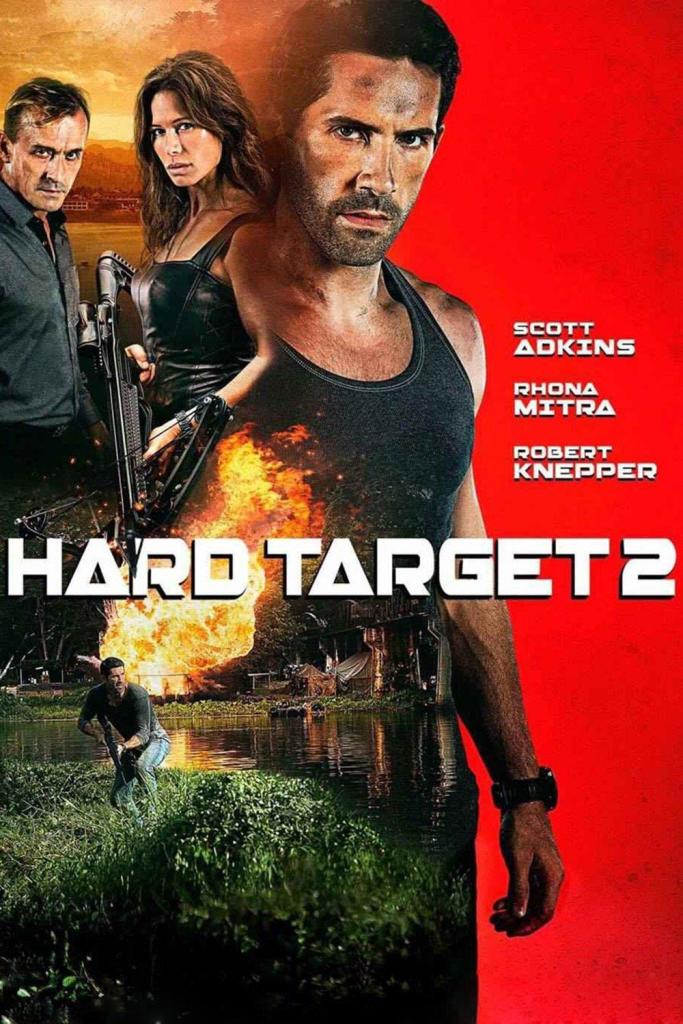
Dub’s Take: Hard Target 2 (2016)

A spoiler-free mini movie review.


3 out of 5

In 2009, when working at Blockbuster, I had to recommend movies to strangers. But my tastes are eclectic & subtitled and, sometimes, it was easier to suggest something I knew customers liked already instead of a personal favourite. One of those well-rented titles was “Vicky Cristina Barcelona”. One shift, I suggested it to a middle-aged woman, and she opposed because “Woody Allen is a child molester.” Oh, okay then. I wouldn’t have picked it because it’s crap.

Which leads us to today’s sidebar: even if someone has been exonerated of a crime, it doesn’t mean the court of public opinion ever really adjourns. Regardless of one’s feelings toward Robert Wagner; Depp and/or Heard; Kevin Spacey; or Allen, these people continue to work, and it’s up to each viewer’s own moral barometer whether they support these endeavours as their careers progress.

And so it goes that Robert Knepper (T-Bag on “Prison Break”) finds himself on that shortlist. Seeing Knepper’s name on the cast for Netflix’s recently-added direct-to-video sequel didn’t dispel me from watching it the same way I avoid a Woody Allen movie now: Knepper was great on Prison Break for its entire run playing a cogent asshat, so I assumed his presence in “Hard Target 2” would amount to him being a grade-A asshat here as well. And he is, even if his performance falls victim to some obvious ADR.

HT2 has great casting. Along with Knepper, we have Van Damme’s substitution in Scott Adkins; Bizarro World’s Kate Beckinsale: Rhona Mitra; and Boba Fett himself, Temuera Morrison as Knepper’s lackey. Adkins is awesome – maybe not a thespian (he’s better with tongue-in-cheek material, like his appearances in “Metal Hurlant Chronicles” & “John Wick 4”) but he’s been doing this a long time and at least looks like he’s enjoying himself.

Sadly, though, it’s with a heavy heart I report Miss Mitra’s femme-fatale in a leather tank-top isn’t given much to work with in the way of juicy lines or mindful direction. However, she’s vindicated in the film’s best scene, starting with her slow-motion dual-wielding mini-crossbows in front of an explosion, and ending with her pontificating on her character’s own awesomeness with a “Scarface”-sized pile of cocaine in the background. It’s great.

Most of Hard Target 2 is great. It’s nice when that happens. But there is a creepy guy in the cast. Up to you.


Poster sourced from imfdb.org. Yessir, that was Adkins in a fat suit playing the German in John Wick 4. Do you feel it’s time for mainstream Hollywood to give him more substantial roles? How do you feel about Kevin Spacey dipping his toe back into acting? Do you have anything good to say about more than 85% of Woody Allen’s output in the last thirty years, or are you done with him, too? So many questions – let me know what you think in the comments below!

Dub’s Take: The Wild Robot (2024)

A spoiler-free mini movie review.


3 out of 5

“The Wild Robot” was emotionally touching enough to earn my tears: that alone is worth a minimum star rating. But I thought I would be getting a wholesome, feel-good family film for general audiences, without any intercalated adult ‘baggage’ – would you believe producers found a way to sexualize one of the villains here, too? But I don’t have the word count to go over everything.

I cannot stress this enough: Wild Robot contains a vast amount of dialogue about death & dying, played mostly for laughs. Characters commiserate whether or not they’re about to croak on a minute-to-minute basis. A family of possums ask if they’ll be “murdered” before one of them is killed off-screen. For my 36-year-old self, it was extremely noticeable.

Sidebar: back in grade school, I wrote a play for a class Christmas concert. My first draft was rejected because the teacher didn’t like the bad guy telling the good guys he was going to “kill” them. But one of my favourite Xmas movies is “Home Alone”, and they spoke similarly in that movie, didn’t they? Worse, even: Joe Pesci says he’s going to bite Macaulay Culkin’s fingers off, and it was rated PG.

Obviously Home Alone isn’t germane to that teacher’s holiday movie marathon, but the real takeaway was that every parent has a different idea of what’s appropriate for their child and what isn’t – in their experience/opinion. I understand that Wild Robot’s story transpires in the untamed outdoors, and that finding your place in the circle of life – how & while you can – is a theme of the film, but there’s a difference between an effective implication of danger versus the definitiveness of death.

The only reason to keep regurgitating something in scripted lines is to underline to the audience how important it is. Today’s prepubescents can’t be so uneducated that a nice family movie already containing potent scenes of peril should have to push nonexistence to the front of their consciousness, too. Certainly the film’s trailers didn’t foreshadow it.

Wild Robot has one shot where the heroes are looking for survivors of a snowstorm, and silently, it conveys that what they found isn’t good. It’s less than ten whole seconds, but does a better job of communicating grief to an impressionable group, without forcing anything, than the other 90 minutes do. A shame, that.


Poster sourced from impawards.com. What do you think? Imagine this scenario: you have two family movies (not Wild Robot). Both movies have a main character die off-screen, and both will inevitably inspire a difficult conversation between (a) parent(s) & their child(ren). In one movie, the death is constantly referred to non-stop in the dialogue after it happens, reinforcing that this person is no longer around. The other movie implies the other characters’ sorrow & grief through facial expressions & behaviour, though their true, vocalized emotion is ultimately left up to audience interpretation. Which movie would you rather have incited the conversation with your child? Let’s talk in the comments below.