Dub’s Take: Jeanne du Barry (2023)

A spoiler-free mini movie review.


3.5 out of 5

Let us all admire for a second how far French actress/director Maïwenn has come, from Scream Queen in 2003’s “Haute Tension” to her filmmaking status in the 2010s. Her “Jeanne du Barry” may only stymie Western audiences for her casting of the French-speaking Johnny Depp as her film’s primary male lead: the King of France, no less. Allow me then to proudly declare that the two-hour-plus subtitled film was such a successful love story, that my pale-as-a-ghost wife – who will avoid foreign films – was in tears by its end.

In my screening’s post-film behind-the-scenes interview, Depp is as restrained as to his reasons behind the “challenge” of playing the character as his Louis XV is in the film itself, only really iterating that Maïwenn was able to convince him otherwise. Taking the last four years of Depp’s highly-publicized fall into account, it’s easy to dismiss his performance here as sleepwalking for a much-needed paycheque – personally, I think Maïwenn’s casting wants audiences to draw parallels between the eminent nature of her actor’s public & private lives with that of Louis XV’s, who also forwent the luxury of discretion based on his status and what was expected behaviour of royalty. As a man willing to forgo etiquette for love, Depp is great here, in a role he makes believable despite it leaving little room for his usual ostentatiousness.

Of course, the film’s real success isn’t just in its fortunate stunt casting: Maïwenn displays herself an equally-capable dramatic actress as she is director, allowing her Jeanne’s love for Louis to help her carry the silent burdens of her position. The production design is sumptuous (love those powdered wigs). While Jeanne’s poor upbringing made me want for more juxtaposition between her life in the palace and the one she left behind, I understand it was probably jettisoned to focus elsewhere (once you mention the Revolution, we want to see it). I also think the film could have ended at the perfect point about 10 minutes earlier than it did.

As a romance and not a biography, Jeanne du Barry is at its best. It’s when the viewer begins to look broader than the borders of its script that we realize the shortness of its plot: nothing much happens, other than the slow unfolding of life, which ends when it ends. I suppose you could say that about most lives.


Poster sourced from impawards.com. What do you think? Are you a big Johnny Depp fan? (I’m really not.) Are you excited to see him in a “normal” performance for once, even if it is the first post-trial role he was able to get? Do you think Amber Heard will ever have a similar comeback? Did you all know that Kevin Spacey is starting to work again, too? Do you believe in second chances, or are these all just a bunch of spoiled libertines? Leave a comment below!

just say

A poem about how I don’t believe you.


i am glowering at some clothed chick’s
skin-tight pant
because it is there
and because i am a man,
conceiving a conversation in my head
about Kubrick & cannabis and sex positions
that the two of us will never have.
my father was right:
i’m just like my mother –
a broken fucking record;
still choking up at the sight
of metronomic hips in dark blue jeans
when they pass;


long hair tightly pulled in a farm girl’s braid
with a ribbon
for a rubber keeping it all together,

but it’s habit.
leftovers.
i’m more attracted now than i ever have been
to my own thoughts
and dreams
it seems

and by and large
the thrill is gone
because i know now that nothing.
any time you want to talk to me
it’s always under the guise of you wanting something
other than me,
so if you’re going to say anything at all,
just say no and
please leave me alone
because you shouldn’t start what you can’t stop.

Continue reading

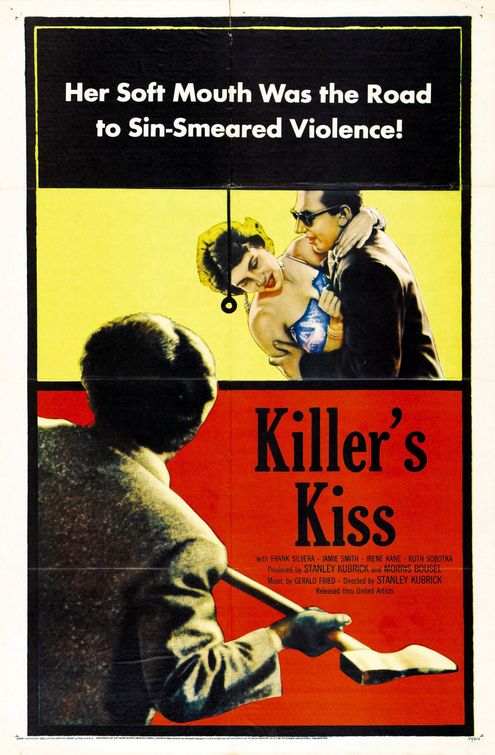
Dub’s Take: Killer’s Kiss (1955)

A spoiler-free movie review.


2 out of 5

It’s a mistake to confuse pity with love.

Stanley Kubrick’s second narrative feature “Killer’s Kiss” is a remarkable step-up in quality from his first film “Fear and Desire”, but it still ain’t no Georgia peach.

We’re talking about movies that are closer now to their centennial anniversaries than ever before, and unless you’re a Film Major in post-sec, or doing research, or you’re an old soul & actually enjoy watching older movies (the minority), or a senior (the majority), as we move further and further into the foreseeable future, it’s less likely that ensuing generations will seek out a black & white film from the 1950s, out of a largely-chauvinistic & misogynistic body of work, even if it IS a Kubrick film. Why watch this when you could watch “Full Metal Jacket” again, and possibly catch something you missed the first dozen times around? Is there even a reason to watch Killer’s Kiss in the 2020s other than what I mentioned, or possibly to farm content for a humble blog? Hmm? Read on to find out!

Continue reading

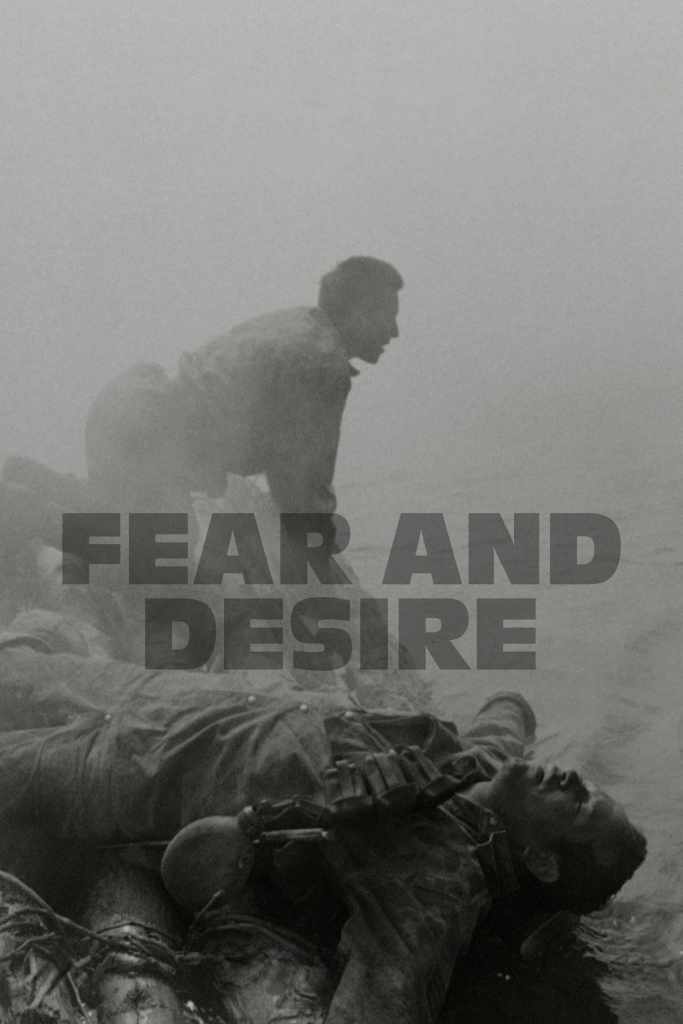
Dub’s Take: Fear and Desire (1952)

A spoiler-free movie review.


1.5 out of 5

If only Stanley Kubrick knew how, decades later, his acolytes would give credence to his debut feature, when he thought the negative itself should be burned. “Fear and Desire” is a trade photographer’s exercise in the world of narrative film, and of not much value otherwise, were it not for the retrospective knowledge of what its creator would go on to do (and to a different degree its cast, including “Harry & Tonto” director Paul Mazursky in a key role).

Fear and Desire has come back to consciousness with the discovery of the Venice Film Festival cut, longer by a mythical 10 minutes.

OOO! I’d be lying if I said those 10 minutes didn’t make me more interested to see the film than I was initially. Kubrick (particularly “A Clockwork Orange”) was my childhood gateway to “cinema”, but I’d never seen Fear and Desire before. As a result, I watched what I got, which is the widely-available 60-minute version.

Continue reading

Dub’s Take: Late Night with the Devil (2023)

A spoiler-free mini movie review.


Actor David Dastmalchian is an odd duck. He has a long face weighed down by the pressures his characters carry and the secrets & desires they harbour. Even when his role selection leans toward weirdos & villains (Polka-Dot Man in James Gunn’s “The Suicide Squad”; Piter in “Dune” (2021); Murdoch on TV’s “MacGyver” revival), Dastmalchian’s work sidesteps mockery for sympathy.

David’s casting as a talk show host in “Late Night with the Devil” is inspired, in one of the most “normal” portraitures that I’ve seen out his filmography. However, I think directors the Cairnes brothers do their lead a disservice by making David’s Jack Delroy a Carson competitor, placing the character in the same pantheon as contemporaries Leno & Letterman. Dastmalchian’s subdued Delroy would have played better as a Charlie Rose/ Dick Cavett type, even if that meant no additional texture in the form of a studio audience. I won’t say David’s Delroy is uncharismatic, but maybe a little too first-season Springer for the subject matter (the character deliberately transitioned his show to tabloid trash for ratings, so more cockiness would have played to that).

As someone who enjoys “lo-fi” vaporwave, “Late Night” was an aesthetic feast, with visuals mimicking live television from the 1970s, the on-stage orchestra with its oboes & saxophones, and crusty title-cards. In-between these moments of found-footage were black & white “behind-the-scenes” takes that are framed perhaps too much like a movie and took away from the purity of the “live” footage. Other details – such as the stoic Cavendish ad-reps sitting in the front row, or the boom-mic dipping into shots – counterbalanced the pretence of authenticity.

Does the film succeed as horror? I would say it succeeds at constantly-mounting dread: Ingrid Torelli as Delroy’s young, demon-possessed guest is incredibly cute & effectively spooky, and there’s a brilliant (and earned) sequence involving worms that plays with audience perspective. As far as the ending, it could have gone a number of different ways but I was not disappointed with what the filmmakers chose narratively: only underwhelmed by the out-of-place CGI work and abrupt aspect-ratio change (although it was a very cool creature design in the climax).

Overall, Late Night is effective in healthy fits-and-bursts, it’s a transient 90-minutes-long, and may play better via home streaming than in theatres.

2.5 out of 5

Poster sourced from impawards.com. What do you think? Much like an evil djinn, do you think you need to be very specific when making a deal with the Devil? Wasn’t Ian Bliss’ substitute for the late James Randi a pretty money enactment? What’s your favourite David Dastmalchian role? Do you agree with the Matt Zoller Seitz review that says the film would have been more effective had they left out the documentary-style preamble? Leave a comment below!