A spoiler-heavy movie review and personal analysis.
1987 – Director: Alex Cox
I haven’t been fortunate enough to watch Alex Cox’s other populist films Sid & Nancy and Repo Man, but if Walker is anything to go by then I should be adding them to my list. He’s fallen off the radar since this – his last major studio production – but similar to other cinematic artists like Richard Stanley and Richard Rush who Hollywood execs refuse to work with (since some of us have integrity beyond a paycheck) they never really went away. Stanley just released his Lovecraft adaptation Color Out of Space; Rush is old AF but still working as a film professor (and I liked Color of Night, but I also like Jane March); and Cox seems to be pumping out independently-financed features whenever he can get the money, in addition to teaching. It’s a twofer.
If Walker was what ended his career, then it’s miraculous that the finished film does not feel padded or affected by your typical studio interference. It’s an uncompromising work, with a challenging approach to storytelling guided by fully-committed performances from its actors; a great soundtrack; gratuitous violence; and an effective balance between piteousness and satire; all while shot on-location. AND it’s ONLY NINETY MINUTES LONG. COULD IT be THAT I HAVE FOUND the PERFECT “JASON” MOVIE? If general consciousness today has steered theatrical audiences away from mainstream fare towards more provocative work (say, for instance, Beasts of the Southern Wild and Parasite) then a film like Walker is due for reappraisal.
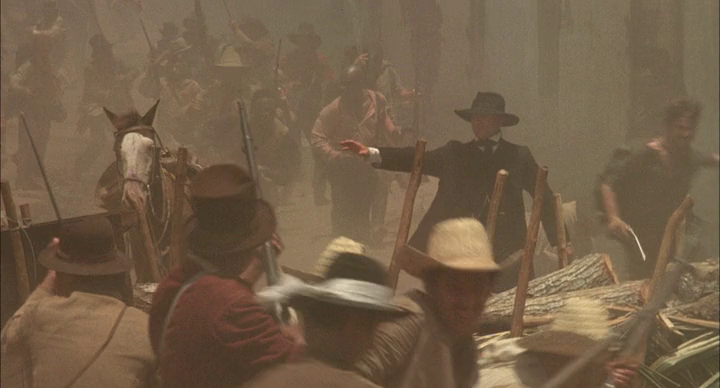
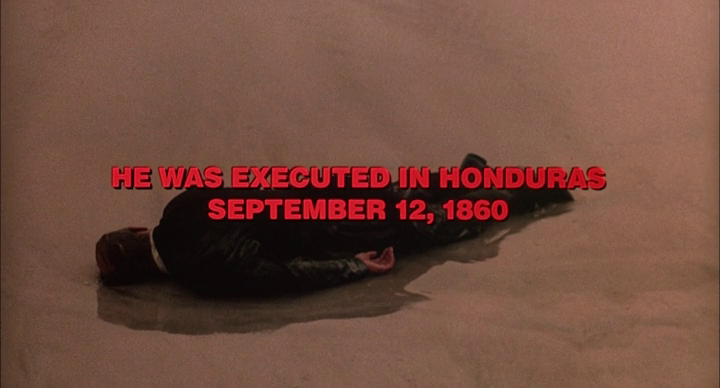
William Walker was a divisive figure. If we simply go off what the movie depicted then he has my sympathy, in part to the duplicity of Ed Harris’ performance. As Walker, Harris is initially the reluctant hero of the filibuster movement pre-American Civil War. He approves of slavery and the capitalist ideology of “Manifest Destiny”: it is his “destiny” to bring “democracy” to third-world nations and expand the American empire; but he is torn between the loyalty to his long-suffering and truly-Liberal wife and the wishes of the tycoons in-power. Make no mistake: the Walker at the start of the picture is an idealist-at-heart shaded by the environment around him. When his wife dies at the critical juncture of seeing his plans be financed by a wealthy-and-arrogant oil baron, he takes it as the sign he was looking for and throws away his preconceived notions of a “stable” life. That he is seen in the last scenes of the film literally eating the flesh off the men he was sworn to protect shows us just how deep the hole of “American intervention” can go.
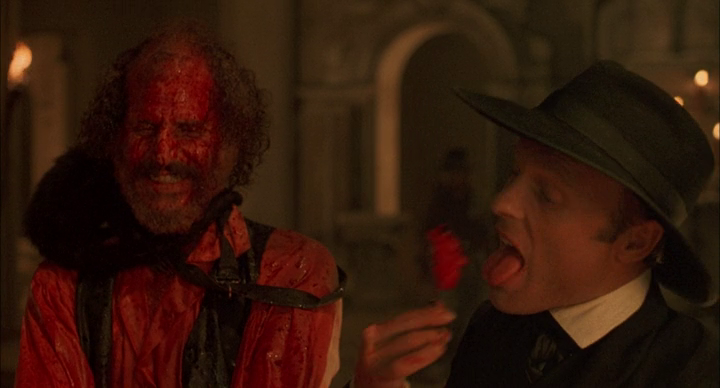
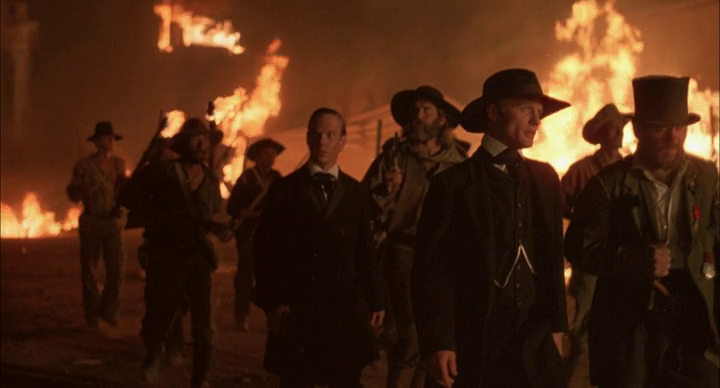
Ultimately he is consumed by the faculty of his mission without hindrance. It was a real shit show on the level of Columbus “discovering the Indies”: bringing disease; rape; slavery; and ultimately, “democracy” along with them (while breaking down the already-established commonwealth, which none of the civilians seem to express real dissatisfaction over). In his pursuit, Walker’s mission was noble but set-back by the limits of the humanity of his men and the “no rules” method of diplomacy that was common before we decided to “talk” our problems out over roundtable. Walker’s “Immortals” – his mercenary group of non-soldiers – bursts into every scene killing and pillaging everything within sight (piss drunk while they’re at it), and then they all huddle together as if they know that apart they wouldn’t stand a chance. Harris’ Walker treads confidently through battle like a prophet who cannot be touched while his subordinates follow blindly, and eventually Walker stops taking their advice and wantonly dispenses justice on anyone who should oppose him. This dictatorial hubris is his terminal end.
Let’s talk about the end. Most viewers who have heard of Walker (or who have seen it) remember it for its anachronistic touches. Cox draws parallels between the Nicaraguan Revolution of 1978 (and the circular events that led to American intervening again) versus Walker’s coup by adding little modern-day touches. These are not nearly as noticeable or as frequent as other writers would have you believe: there’s a Zippo lighter about 45-minutes into the movie, used to light a fuse; a few instances of modern American magazines (Newsweek and Time) used as propaganda in support of the ex-Pats; and finally, a helicopter that seems to arrive in the nick-of-time, as Walker’s empire crumbles around him (apparently there are cars too but I never saw any).
and now, Jason demonstrates that he can, in fact, do his homework with
A Guide to Walker’s Deliberate Metachronisms in Screen Captures
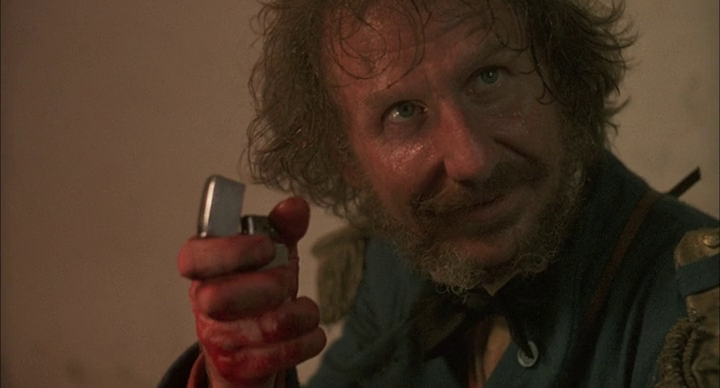
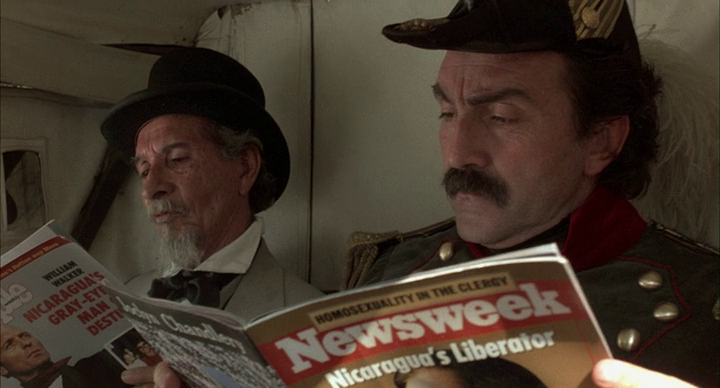
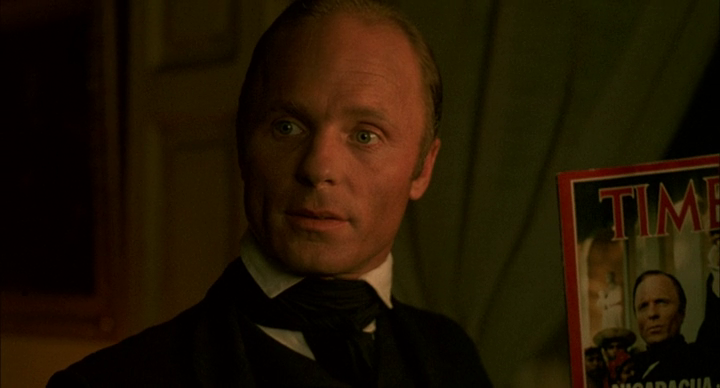
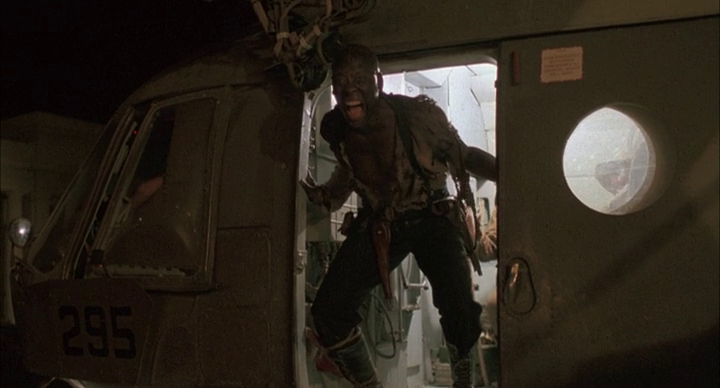
If you find any “cars” anywhere then let me know down below!
The transport chopper that lands just as Walker makes his last stand in Grenada spills forth American soldiers in modern-day (for the 80s) camo and another balding, middle-aged bureaucrat like Walker calling the shots. He tells them that the U.S. government has approved extraction of any Americans, as Walker’s former allies (the ones left alive, that is) rush to the chopper; some flashing their passports. Walker refuses to go. He believes so strongly in his mission that he made himself – and his soldiers – honorary Nicaraguans and presumes he should stay, as the chopper takes off without him. He then proceeds to tell the encroaching South American rebels that it is America’s destiny to make them all their slaves, and that though they may have won this battle, they’ll be back.
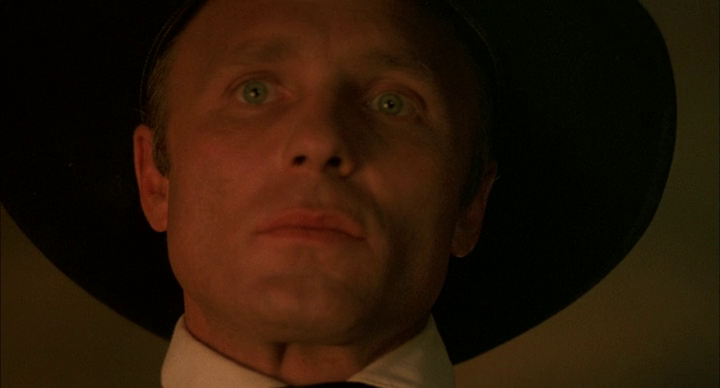
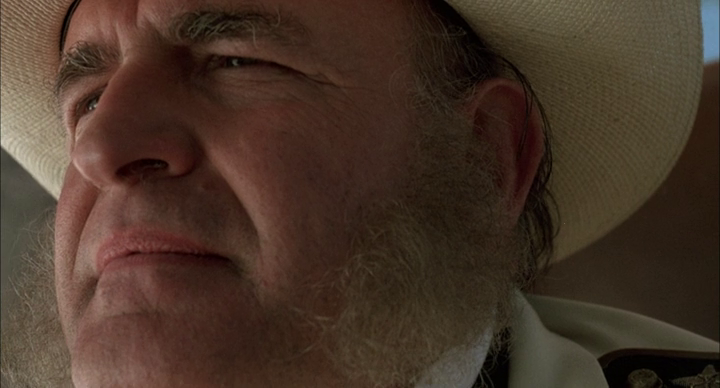
And we were back, time-and-time again, to ensure that the U.S. still held a controlling interest in whichever government the people decided to vote in, once we instilled the swift hand of democracy! Just look at Panama; Argentina; the Central American Crisis; and even Cuba. I feel sorry for Walker, the man. We have to remember that this was the norm. Society does not operate in contemporary times as it did in the 19th century. There WAS slavery, and not just of the Blacks. There was a definite fear of pandemia in cholera and dysentery, making any trip away-from-home a possible death sentence with no known antibiotics yet available. The U.S. government still acts like it rules the world (on its Atlantic side) and that it owes other countries the luxury of “freedom” and “the power of choice”. William Walker may have arrived in South America with the intention of freeing its people and implementing suffrage, but it wasn’t to be. Instead, the Americans could not look outward from their own pomposity and were cast out. Now it seems like South America is content with taking care of its own problems without external assistance. Whether that is a good thing or a bad thing is moot: I don’t live there. I am privileged to not have to experience the strife. Walker the movie showed me why. We cannot be trusted to mind our own business.
//jf 7.15.2020