A spoiler-heavy single-scene TV episode analysis.

Television takes the over-diversification of cinema and amplifies it to 11, with the same plots and the same beats being repeated ad-nauseum by every nation and orientation inclined to make their own show for the platform. Short-of-it: there is simply too much TV to watch. It’s ridiculous! Sure, maybe a cop show filmed in Germany will be a little harder than one from the States but, a cop show is still a cop show, whether it’s a “buddy” cop show or a “traumatized female detective” cop show or a “murder in a small town” cop show, etcetera. Same with sci-fi shows: how many “teen-aged vampires join a secret society in a Magic School to stop the werewolf invasion of an alien planet that secretly controls the fate of mankind” shows can you name? Same with wormhole shows, apparently.
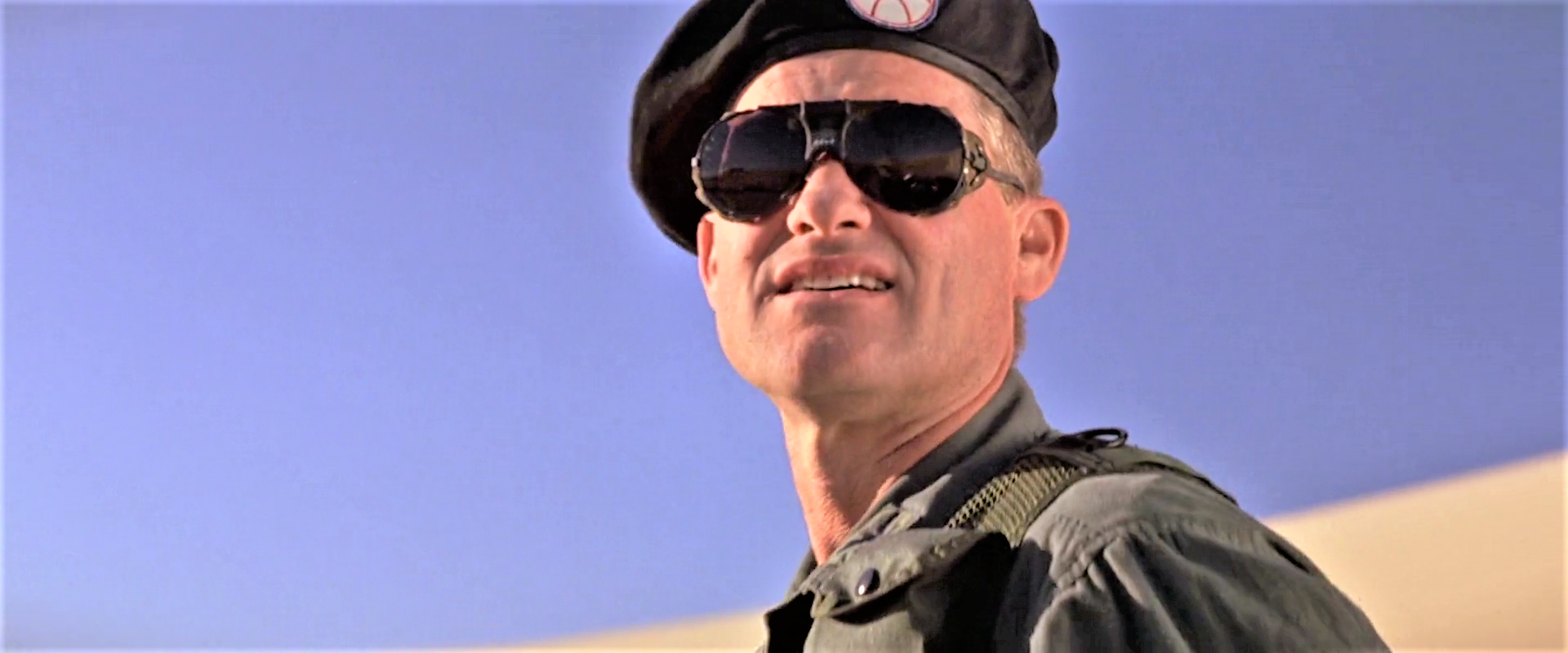
Relegating myself – for the time being – to getting through my backlog of most-wanted television by just watching the first seasons, I had just finished “Sliders” when I said to myself, “Isn’t this a lot like Stargate?” “Stargate”, the movie, was a 1994 blockbuster by the then-King of Blowing Things Up Real Good Roland Emmerich (the underrated “Universal Soldier”; “Independence Day”, of course) about a ragtag group of soldiers and scientists traveling to another world (as opposed to Sliders’ parallel universes) by using the eponymous Gate and along the way becoming the catalysts in a slave revolution. Its Egyptian-inspired mythology, then-impressive special effects, and cast (Kurt Russell & James Spader) made it a cult classic, even if the critics didn’t particularly like it.
Its success all-but-guaranteed a sequel that we never got, at least not theatrically. Three-years-later, “Stargate SG-1” was unleashed on its own “other world”: a television landscape that really wasn’t prepared for its success. Again, its fictional lore, special effects & movie-level budget, and cast camaraderie (including “MacGyver”‘s Richard Dean Anderson doing his second big “lifetime” leading-male role) made it a runaway hit, going for a then-record 10 seasons and inspiring its own line of popular spin-offs. We don’t hear much about the franchise anymore (except for the surprisingly-decent “Stargate Origins” project from 2018) but this doesn’t diminish the legacy that the show had on an adoring public only more than willing to lap up its own particular brand of B-movie “candy”. I like Stargate. My wife loves Stargate. I just finished the new MacGyver run so I’ve been watching the old one a bit and I thought, why not try SG-1? What’s one season? And by-and-large I have been very impressed, particularly with the consistency of the actual hard-quality of each episode. Say what you will show-to-show about the characters and story, but it’s hard to deny that you can see the money in every frame: sets and costumes are great; it’s one of the earliest shows I can recall that uses the 16-by-9 aspect ratio, allowing for “more” in every shot; the original Stargate movie theme is prominently used in the soundtrack, adding to the show’s legitimacy as a proper follow-up; and the return of the film’s two main characters (namely, Russell’s Colonel Jack and Spader’s Daniel Jackson), just played by different actors this time (Anderson and Michael Shanks, respectively). The entire first season is serialized in-scope and deals primarily with the aftermath of the events of the movie, and the retribution of the film’s antagonists, the Goa’uld. Joining the team are a sassy female Captain and pragmatist Samantha Carter (Amanda Tapping), and a reformed Goa’uld named Teal’c (Christopher Judge).
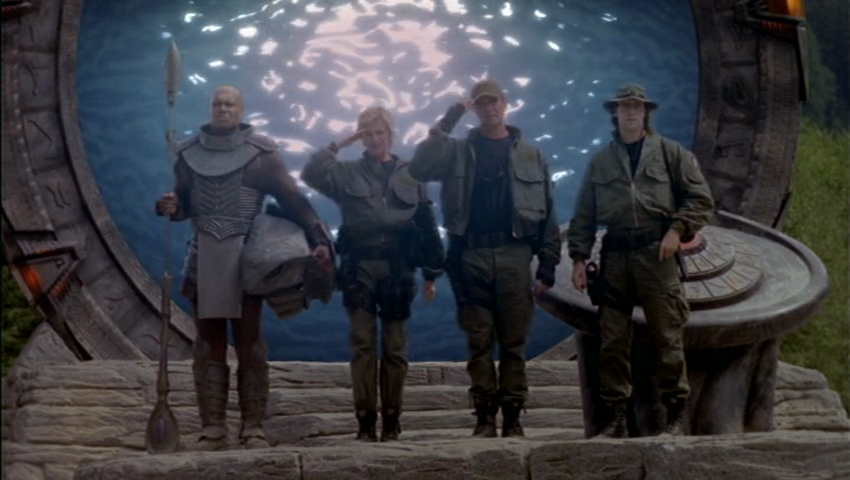
Up til now in the series, Teal’c has served as a wholly-secondary character. He is still included in team one-shots (where you have the four main characters standing side-by-side or staggered in one shot, “Avengers”-style) and does speak-up with his take on things from time-to-time, but until today’s episode “Bloodlines” he has been the Tonto to the team’s Lone Rangers. To be more specific, he is severely underwritten. His character is deliberately-apathetic and stoic, from years of servitude to the symbiotic race of Goa’uld that have taken over him and his people, and it’s very stranger-in-a-strange-land but not much else. We simply do not see him get emotional; angry; impulsive. This sounds like I am doing Judge’s work a disservice and, sadly, the show does this to him, too. The writers have already missed out on including several beats that would have loosened Teal’c up a bit, including his first time firing a gun when he has only ever known to fire the staff weapon he carries everywhere (Season 1 Episode 9 “Thor’s Hammer”), to his first time outside of the military compound that, until then, he has not been allowed to leave (1-06 “Cold Lazarus”). The omission of such scenes is ridiculous. As a result of the lack of development, the home audience doesn’t really know who the character of Teal’c is, yet, and we’re already halfway through the season (even Sliders’ Rembrandt had more side-content than Judge does, and that was only a half-season)! Is he friend of foe? Is there a twist coming where he’s been in-cahoots the whole time? Hold on there: I’m sure a Google search would answer my question, but that would be cheating! The writers were always going to give him his own episode eventually, and with Bloodlines they have, so let’s look at this creatively, instead of representationally:
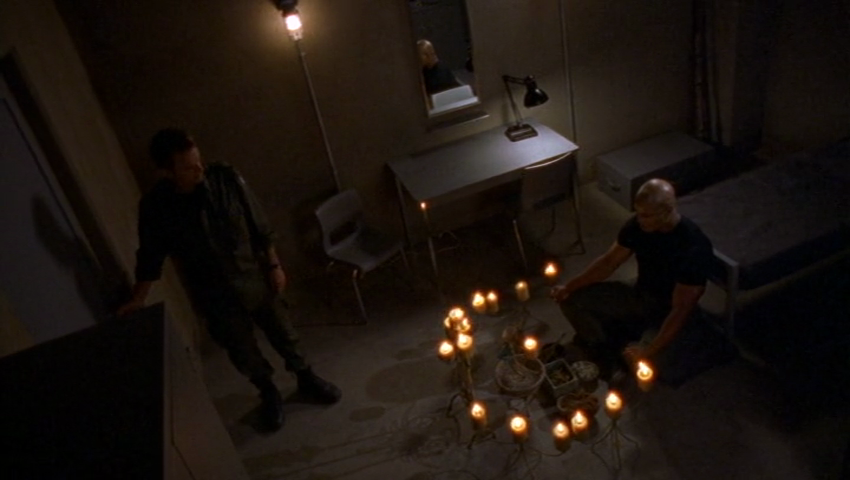
For weeks, the Stargate team has been trying to remove the parasitic Goa’uld from Teal’c’s body for study, only to have his stats crash every time that they do: it is simply too woven-in to his immune system for traditional, human, surgical ousting (and, as we saw from “Thor’s Hammer”, Teal’c himself is none too keen on having it removed anyway since he was unwilling to go through the pain of the Hammer to have it out, even though the late Galyn Görg’s Kendra was living proof that the Hammer worked). An away-mission is proposed to go back to the hostile planet of Chulak – the home planet of the slave race Teal’c belongs to – and bring back a young Goa’uld sample. Teal’c, however, is conflicted about the mission, as is the general overseer of the Stargate project, Major General Hammond (Don S. Davis). To the General, it’s a suicide mission: the Goa’uld’s grip on the galaxy is extensive enough that they should be able to find the sample they need on a different planet. To Teal’c, going back to Chulak means returning to the wife and son he left behind. What? Teal’c has a family he abandoned when he defected? Jack confronts him in his chambers: by not telling the team he had a family, how are they supposed to trust him now? That was the whole point of not telling them, though (the ol’ “beg for forgiveness than ask for permission” deal). Teal’c decides he must return to Chulak: his son has grown of-age to have his own Goa’uld implanted, and does not want him to suffer the same fate. Jack being Jack (another in a line of television bosses I wish I had in real-life, including Sergeant Hank on “Chicago PD” and Judge Harry on “Night Court”), him and the team stand in-solidarity with Teal’c. They can’t just let him go alone, can they? Think of everything he has done for them so far? All the times he saved their lives? But the General’s decision is supreme: it’s far too risky.
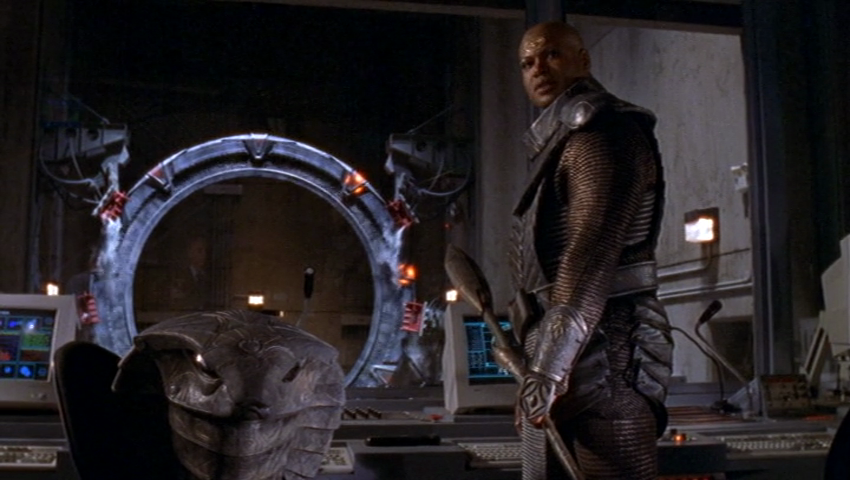
So Teal’c decides what any virtuous husband-and-father would do, and disobey direct orders and go through the Gate himself, personal-safety be-damned. The team tries to stop him, but he has made up his mind. The quality of the non-verbal acting between Teal’c and the General in this single scene make up for any prior exclusions in Teal’c’s arc. Teal’c’s desire to save his family is more than the sum of his duty – which has largely-dictated his actions until now. He is not really an enemy to be feared or mistrusted, but a human with feelings and flaws, like the other members of the General’s team. The General was just looking out for his Men like any military commander would in the same situation: ultimately it is the General’s empathy that makes him change his mind and approve the mission with the entire team. Besides, Teal’c has a better chance of succeeding if his best people are with him. Season 1 directorial-regular Mario Azzopardi allows this short (literally, less than TWO total minutes of the episode’s 45-minute runtime), quiet, but substantial scene breathe accordingly, in well-paced close-ups of our two primary actors and letting them do their work.
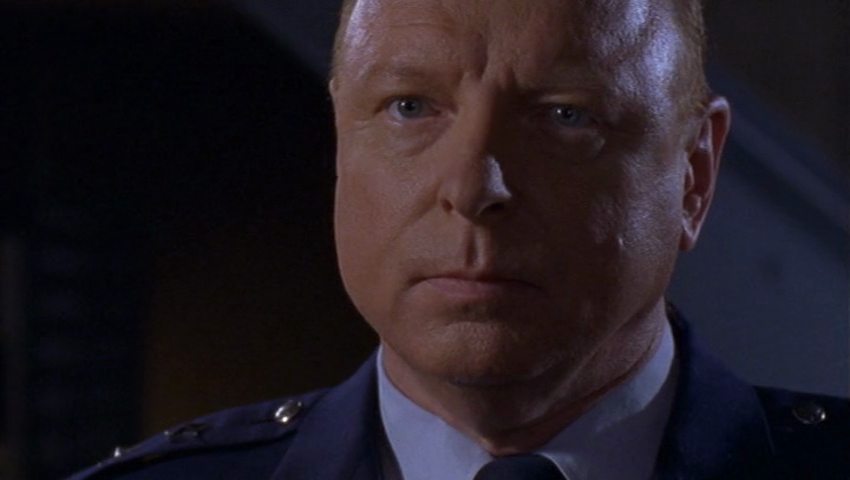
So let’s talk about the late Don S. Davis. Prior to SG-1, Davis’ big television role was the Major from David Lynch & Mark Frost’s “Twin Peaks”, and here he plays a more-grounded, refined version of the same character. Twin Peaks’ Major certainly pontificated more than SG-1’s General: the Major was a vocal theist but that vocalization was the “Lynchian” touch to the character and didn’t really affect his total arc other than the eventual confirmation of his spiritual beliefs (I’m thinking back to the scene where the Major first returns from the Lodge, but even after that he was still quintessentially the Major, with his military training and reservedness). As the General, Davis was not restricted by Lynch’s auteurism and as a result is more grounded, more sympathetic, and more human than the Major ever could have been under Peaks’ umbrella. The beat that he takes as he finally decides to help Teal’c is great stuff.
The General should also be added to the list of Great Bosses: he looks out for his team and rarely makes unilateral decisions (there is almost-always a roundtable discussion before any choices are made); he’s logical in his rationale (the 24-hour window to “check-in”); and he is willing to cede his directives when for the greater-good (allowing for greater “scientific discovery” on missions as opposed to simply “military exploration”). Imagine what your work site would be like if you had Jack as your immediate-manager and the General as your Assistant?
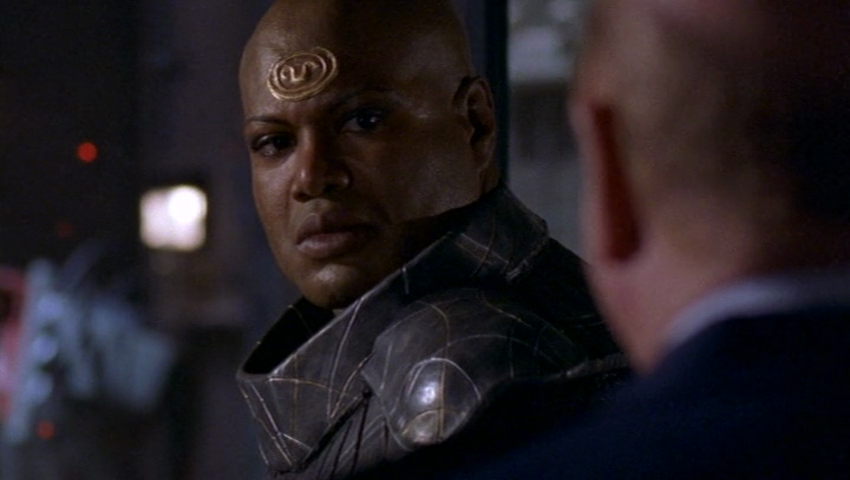
The rest of the episode is fairly-boilerplate. There is another “big scene” for Judge when he arrives at his family home on Chulak only to find it’s been burned to the ground and “TRAITOR” has been scrawled on the side of it, but other than that there isn’t anything else to discuss.
But what does the scene between Teal’c and the General spell for the remaining episodes of the show’s first season? Hard to say. Now that Judge has had his moment, there is a good chance Teal’c will be relegated to supporting-status again until it’s time for the climactic fight against the Goa’uld, or at least a proper-removal of the organism from his body, if that’s possible. I certainly hope the writers use this opportunity to have a fully-fleshed squad of characters as opposed to three Colonials and the garden-variety “tough-looking diversity hire”. I don’t remember the other seasons: when I was a kid, I recall watching the Pilot when it aired and maybe the odd episode throughout the years but the show never really seemed to change. The producers had hit the goldmine with the format they cultivated and – similar to the current record-holder “Supernatural” (that might actually end now with its 15th (!) season) – they were comfortable regurgitating the same formula until the only money any of them would be making was on the Comic-Con circuit. The show is long over now. The truth of its eventual thematic destination is not a mystery, if I wanted it spoiled. And I will probably give-up on it once this season is over (“Earth 2” and Damon Lindelof’s “Watchmen” are the next in my queue). I just hope my expectations for the back-half are realistic.
//jf 8.8.2020