A spoiler-heavy movie review.
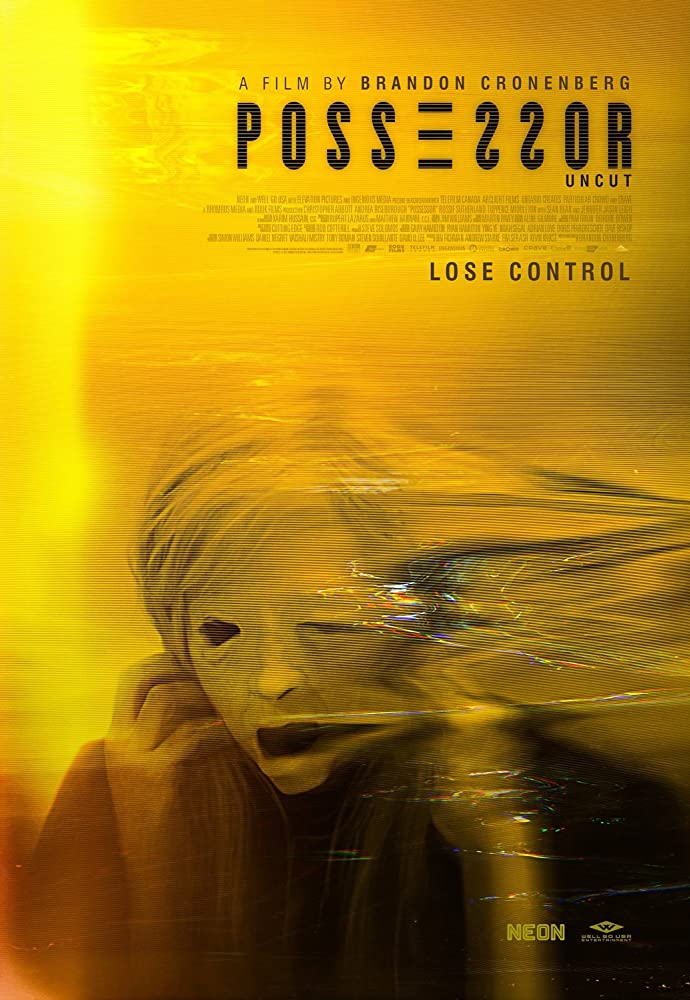
Know what really irritates me? Movie trailers containing critic quotes and awards notice. For a long time, I was indignant of this technique, which appears to only be reserved for film festival selections trying to make their way in the Big Scary World of the modern multiplex. I’d be watching a trailer for something that looks interesting, when all of a sudden they cut to a wall of text telling me that someone from the New York Times thought it was good, and so should you. If you can’t sell the movie on content alone and you have to bolster its status by telling us what the “professional movie-watchers” thought of it – before it’s available for mass-consumption – then my expectations of your product immediately drop. But readers, I think I’ve cracked the code. Let’s assume that the average trailer runs 60 to 90-seconds in-length, at least. If this is a Very Important film festival movie, then let’s also assume that you aren’t a big-budget production and you don’t have enough “money shots” in your film to fill a full-length trailer and sell the movie to a mainstream audience (Marvel movies now have nothing but money shots, and a 2 to 3-minute trailer without ruining the movie is entirely possible). Let’s assume further, that your low-budget film is only three actors in a room the whole time. You have enough intriguing shots to build a 30-second spot without spoiling anything, but anything more than that and your movie starts to look dull (like it’s three people in a room the whole time, which it is, but you don’t want Joe Cinema and his Scenetourage to know that). So you have to pad it with filler, and positive reviews are cheap filler.
Possessor’s trailer was full of filler, but that did not mean the spoiler-free footage it contained did not appeal to me. I can say now that the film itself is paced so particularly – with each shot serving a deliberate thematic purpose – that the “three-people-in-a-room” vibe I was getting from the trailer wasn’t necessarily “dull” but tied so intrinsically to the film itself that it couldn’t survive without context. So they made do with filler.
Possessor contains very few locations and very few actors and you could be mistaken for thinking that by watching the trailer, you’ve seen everything it has to offer. Boy, was I wrong. Possessor is fucking brutal. Maybe that’s also why they previewed so little: only a handful of people are killed in the movie but their deaths are lingered-on in excruciating detail, with the kind of practical special effects work that we had come to expect from the director’s father four-decades-ago (and I was joking with my wife before the movie that the “Uncut” subtitle they put on the theatrical release was only a PR move). And while some will see these sequences as gratuitous, they too serve a narrative function: because our protagonist, with the very-Cronenberg-sounding name Tasya Vos (played by the always-interesting Andrea Riseborough), is a God-damned psychopath! As the “shining star” in an organization that “possesses” the still-living bodies of unwilling hosts to conduct assassinations, Vos is so damaged from her time under the machine that she can’t bring herself to just follow orders. Instead of one-in-the-head, two-in-the-chest, Vos takes joy in murdering her clients in a variety of different ways, and then playing in their blood: presumably because she is unable to indulge in that kind of anti-social behaviour in her normal life. She doesn’t even know what a “normal” life is anymore, turning away her husband and child when she can’t emotionally connect. Her new hit is a cyber-security CEO (Boromir himself, Sean Bean) and her host body the boyfriend of his daughter (Christopher Abbott), but when the boy begins to exert his will against her mind-control, she finds herself trapped as both personalities fight to become dominant. It all sounds cool on paper, but it has been done before, not the least of which in Brandon’s Dad’s own movies: themes of losing what it means to be one’s self, and learning the hard way what your true identity really is. And it brings us back to the discussion of, since nothing is new, how do you make the old, new again? And while my previous argument that the actors can levitate mediocre material stands here (everyone is good), Brandon side-steps this point anyway by way of pure grindhouse territory, where it doesn’t matter that it’s been done before because it knows what it is and what it wants to achieve, and narrative originality is not its priority.
Of course, this doesn’t always bode well when you need a clear beginning, middle, and end to your movie. And while Possessor has a killer ending, for a good while I was wondering whether it was even able to pull it off. Would they cop-out for an artsy-fartsy climax where Vos and her host would “mind fight” over control of the body? Would it end abruptly, or be left up to interpretation? That it wrapped-up with a bow was commendable, but it did feel rushed: for how well-paced the film was, I wanted more from that internal struggle over the body. For some of the movie, I was confused about why Vos was having such a difficult time on her mission: she’s portrayed as a capable operative and it isn’t her first time going under, so why was there so much displacement between her and Colin (her host)? Was it because she had been under too many times and her psychic-link was beginning to break? Was it a result of her own psychotic behaviour taking over? Or was the entire mission just a “final test” for the “promotion” she’s offered by her handler (an over-stimulated Jennifer Jason Leigh – watch how she takes the antacid)? Turns out, it was because Colin was a fiercer personality than she had trained for: Vos’ job presumably involves hours – if not days – of undercover surveillance to understand her host before she possesses their body, but she’s in such a rush to “get back to work” that she didn’t do as much research into Colin as she should have. So Colin fights back, culminating in him regaining control over his body, but unable to remove Vos from his brain without killing himself. Very morbid, but cool. But there weren’t enough scenes of Colin freaking out, you know, screaming in front of the mirror, “Oh my God, get out of my head!” That stuff. It’s formulaic, sure, but it would have helped me to make the connection earlier, instead of the scenes they did have, which make their psychic-displacement seem more like digital artifacting than split-personalities. I know the artifacting was the point: I think it’s the “human element” that was deficient. And while we’re on the subject of things that didn’t work, what was up with those opening titles? Are these indie films contractually-obligated to list every single one of their financers in the first five minutes? I’m trying to get-in to the movie, and every few seconds it just cuts to one header for one company for a few seconds, and back and forth, back and forth. JUST PUT THEM ALL ON ONE SCREEN! The film ALREADY opened with the whole “this film has been released Uncut” bullshit, so just put a single card up with everybody’s name on it and be done with it. It just screams “you’re watching a movie!”
Now, let’s talk about the violence. I have written before about my lack-of-interest when it comes to unearned violence in movies: “Tenet” is two-and-a-half-hours-long and it was ruined by five-minutes of tone-deaf domestic abuse; “The New Mutants” used-and-abused the X-Men name to make some unsettling points about childhood trauma. These movies were intended as entertainment, but it seemed all they were good for in-the-end were to leave a bad taste in my mouth. And those studios want, nay, need your money right now. But things are so dour all-over that I’m not interested in going to a movie theatre and escaping reality by watching something unwarrantedly upsetting. From a trailer perspective, there are two new film festival movies coming out: “The Nest”, with Judge Law as a manipulative husband in the “Not Without My Daughter”-vein; and “The Father”, with Anthony Hopkins as a man with dementia who begins to suspect his daughter is abusing him. Neither of these films look entertaining. I would go so far as to ask, haven’t they made enough “battered wife” and “sad senior” movies that if someone wants to put one on and commiserate they can go on Netflix and pick any one of them without being inundated with MORE CHOICES? My wife argues that something like “The Father” is necessary for people who maybe have never cared for the elderly before and that it could raise awareness of the struggle. We, however, do care for an older individual, and I don’t need a movie that uses the pain of aging as leverage for a fun and relaxing time at the movies. So, take a movie like Possessor, then. Yes, it is sickeningly violent, but it’s detached in a way that the violence belongs in the film’s world and not in our own. It isn’t trying to be anything more what’s on the screen: a defining trait of the best genre movies out there. There you go.
All the hot, new studio releases that were supposed to pad-out the rest of the year have been postponed until 2021 at the earliest: that means if you were looking forward to “Bond 26” in November LIKE THEY PROMISED (or “Saw 9” with Chris Rock, which was supposed to come out in May), you might be out-of-luck. But have no fear, because all your indie film festival movies are taking advantage of the gap left behind to see if they can squeeze some theatrical dollars out of audiences before they’re relegated to video-on-demand purgatory. This means that you have a rare opportunity to try something different – removed from the Hollywood machine (Canadian, actually) – before theatres disappear entirely or are filled-up again with the big-budget spectacles that leave no room for the Little Guy except that one lonely screening at 10:30 on a Thursday night. If you have a strong stomach, Possessor is certainly different, and certainly worth it: as escapism, and as a grungy spectacle.
//jf 10.10.2020
Poster sourced from imdb.com.

