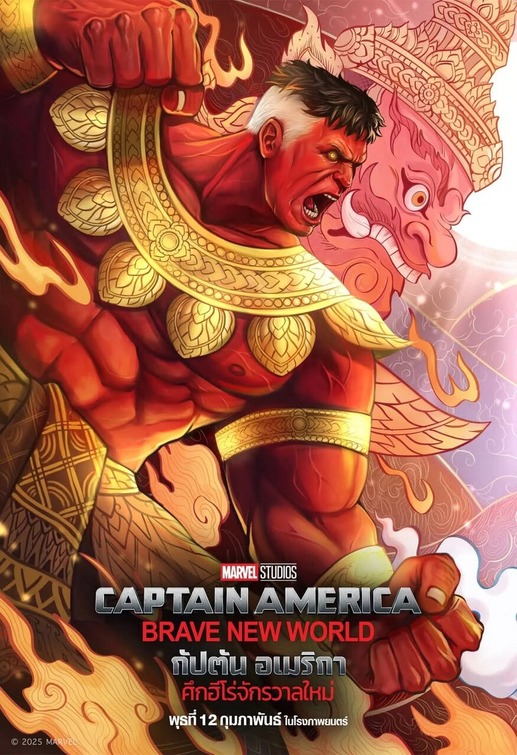
Dub’s Take: Captain America: Brave New World (2025)

A spoiler-free mini movie review.

4 out of 5

My wife & I were watching “FBI: Most Wanted,” and she’s a lateral thinker: why are the good guys not wearing gloves when the bad guys have sarin gas? And I said inimitably, “It’s network TV: it’s supposed to be stupid.”

While this simple oversight could amount to a mere continuity error, creatives really do appreciate it when viewers take their projects seriously – consider actor & Marvel Television alumnus Ethan Hawke’s recent call for more “offensive” art.

The general furor over “Captain America 4” (aka. “CA4”) – aside from the foreboding that delays & reshoots purport – seems to be that the filmmakers didn’t take enough thematic chances. Superhero fantasy, including comics, is one way of making sense of topical issues, but, for my money, I’d had enough thinking for the week, and wanted a big-budget spectacle with as little logicism required.

For a Marvel outsider who doesn’t let canon get in the way of a good night’s rest, CA4 serves its purpose, in the mindless way I wanted when I watched it. Audiences haven’t seen The Hulk be The Hulk on-screen in almost a decade, whether that’s Hulk or Not-Hulk, and for a treatment that amounts to “a race to stop Harrison Ford from turning into Not-Hulk,” director Julius Onah plates palatable tension, a brisk pace, coherent action, and – best of all – payoff.

Onah’s chief accomplice is “The Annihilation of Fish” composer Laura Karpman, whose dynamic soundtrack timekeeps – as opposed to handicapping – the story. The sound design is fantastic overall, and the Spanish-speaking actors (Danny Ramirez; Giancarlo Esposito) actually get to speak Spanish – always a fun surprise.

As Thaddeus Ross is such a central character here, his recasting is bittersweet: the late William Hurt didn’t live long enough to get the honour of headlining, but Grandpa Harrison is a worthy replacement, overfilling his scenes with effortless gravitas. There’s even a pleasing “Akira” visual reference, which surely adds legitimacy to anything or anyone that pulls it off, particularly a curmudgeonly senior like Ford.

Captain America 4’s advertising isn’t misrepresentational, so why project onto it? In one brief shot, Ramirez is playing a crisp-looking version of Williams’ “Defender” on an old Motorola flip phone – on a screen only double the resolution of the original monochromatic Game Boy – and he’s acting like he’s enjoying it. It’s a studio movie: it’s supposed to be stupid.


Poster sourced from impawards.com. What do you think? Does Anthony Mackie have what his co-stars call “the sauce?” Do you wish the film delved more into the news of the day? Esposito was a late-production addition: do you have thoughts on bringing the other actors back to reshoot scenes they had already shot, but with retooled dialogue? What do you think of the detail in Red Hulk’s nipples? Leave us a comment below!
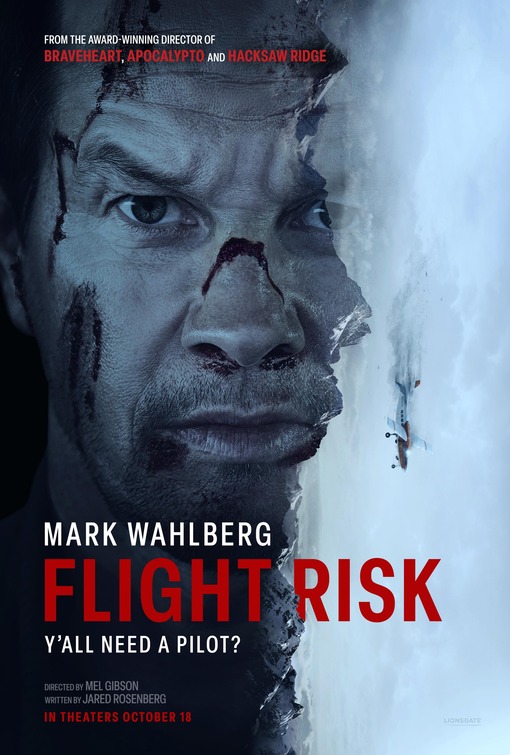
Dub’s Take: Flight Risk (2025)

A spoiler-free mini movie review.


1 out of 5

I think it was “Plastic Bag” & “99 Homes” director Ramin Bahrani who said he hasn’t use for narrative over-explication, since audiences statistically weren’t going to show up for his movie unless they’d seen a trailer first.

With that in mind, if you’ve seen the trailer for “Flight Risk,” you don’t need to show up at all: there are no additional story twists; a sleepy soundtrack; a reliance on juvenile humour; obvious acting; and zero flair from a director I expected more from.

For the second time this year already, I ask: what the Hell happened? Mel Gibson may strike malaise in the hearts of certain cinephiles, but he’s still directed some bangers. Similar to Kevin Costner’s self-produced features, Gibson indulges in unhinged hero worship at the centre of large-scale story conflict.

Flight Risk, then, offered Mel the chance not only to follow his first female protagonist, but to attempt a ‘bottle feature:’ just a handful of actors in one location. Sadly, he doesn’t deliver on the juj Flight Risk’s predictable, placid plotting needs.

Take the reveal that Mark Wahlberg’s psychotic hitman is actually balding: rather than pay homage to Hitchcock’s “Psycho” and overplay the moment, it’s a throwaway image lacking luridness or camp. Had the production shot some alternate takes with hair so the bald head was a surprise, my reaction may have differed, but drab also sums up composer Antonio Pinto’s sparse soundtrack, which should be driving the story during the frequent moments it can’t carry itself.

Joining Mark are “Downton Abbey’s” Michelle Dockery, whose pastiche of stoic cop tropes forgets the Aviators – which she pulls out an hour too late for her arc – along with poor Topher Grace as a sharp-tongued, pushing-50 Eric Forman. Maybe Netflix audiences new to “That 70’s Show” will find his schtick appealing, but I’ve watched Topher play the same character now for almost thirty years. I’m done.

The film starts getting good in its final 10, which crams 90-minutes worth of action – that should have been evenly spaced throughout the rest of the picture – all into the climax, including one unexpectedly juicy bit of gore just because. If you fall asleep or turn it off before that, though, I won’t blame you.

Watching Flight Risk is to learn the hard way that Mel Gibson’s directorial idiom shouldn’t be through a macro lens.


Poster sourced from impawards.com. What do you think? Could Flight Risk’s advertising have benefitted from some Marvel Studios-style misdirection, even extending to shooting certain pivotal scenes more than once? Would the film have been more engaging had Topher Grace recycled his serial killer from 2010’s “Predators” and played the villain here instead? Will Michelle Dockery even still have a career after this, besides the recently-announced “Downton Abbey 3?” Are YOU stoked for “The Passion 2?” Let us know in the comments below!

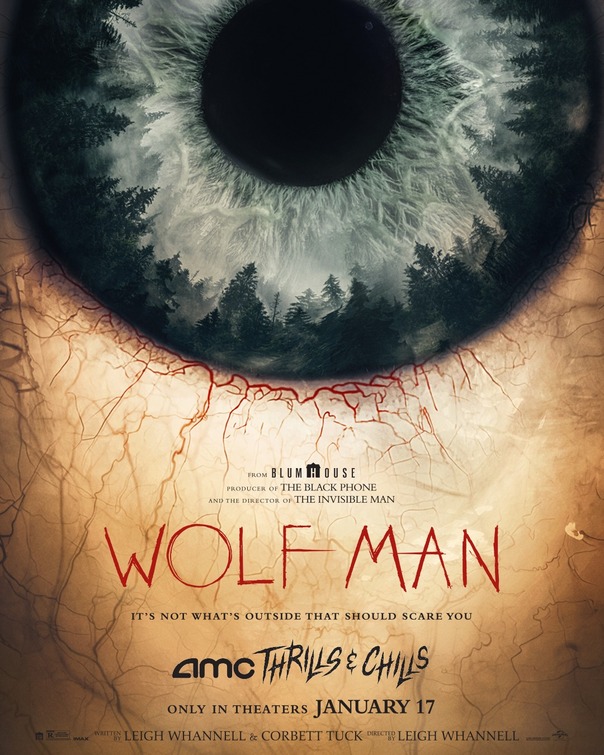
Dub’s Take: Wolf Man (2025)

A spoiler-free mini movie review.


1 out of 5

You can blame Film School for my objectively watching movies wondering what I’d do different: “Well, if they had moved the opening flashback to the midpoint, flash-forward to the middle for a bit, then go back, cut the next twenty minutes…” and etcetera.

However, I’m sure the only way to fix “Wolf Man” would be to start over with new hires. To quote “Family Guy,” it “insists upon itself”: it’s innately serious with its body-horror aspirations à la Cronenberg’s “The Fly”, but lacks Jeff Goldblum’s humanizing arc or, plainly, anything else of interest.

What happened? I mentioned TV’s “The Handmaid’s Tale” in my negative review for Blake Lively’s “It Ends With Us”, but actress Elisabeth Moss’ time there – particularly the long close-ups of her character’s mental atrophy – made her the perfect actress to quietly communicate the fear of an abusive partner in director Leigh Whannell’s 2020 reimagining of “The Invisible Man”. A palatable discomfort made that project borderline-unwatchable, but its potency made me excited for what Whannell did next.

Well, next is here, and Wolf Man’s casting sucks: indie-darling Christopher Abbott and “Ozark’s” Julia Garner, as a bickering couple, have zero chemistry. Despite his character’s learned sheepishness, Abbott lacks primality as a father trying to break a cycle of toxic parenting. Garner equally trifles as the shocked city-mom out of her element, emptily channelling Moss’ internal acting successes. Putting Abbott & Garner together at their most unpleasant is like banging two coconut halves together and calling it a horse.

Bad acting can be charming if the story is still engaging, but Wolf Man’s specialty is its disengagement. Abbott’s character history isn’t fleshed out, leaving his father’s notes on hunting the lycan for no one to find and a neighbourly relationship undeveloped & whitewashed, a mother MIA, and a second-act twist without emotional resonance. We spend an inordinate amount of the first act with Abbott & Garner’s marital issues, and the transformation itself doesn’t start until the halfway point, prorating the rest with Abbott barricading only one of the two entrances into the farmhouse where the family is hiding, not including the windows.

Like a puzzle, Wolf Man’s pieces are all there, but there’s no ends tying the loose, disparate bits together, and what’s left doesn’t match the picture on the box: it’s poorly acted, poorly plotted, and goes nowhere fast. Next time, just remake “Van Helsing” instead.


Poster sourced from impawards.com. What do you think? Assuming there are always bits on the cutting room floor, should the filmmakers have swapped out scene-after-scene of Garner & her movie daughter running back & forth between the farmhouse and the barn with some actual backstory about Abbott’s father’s hunt for the lycan? Is it worth hypothesizing about movie scenes not included in the final cut, even if they didn’t exist to begin with? Do you re-edit movies while you’re watching them, too? Leave a comment for us down below!

Dub’s Take: Better Man (2024)

A spoiler-free mini movie review.


2 out of 5

What creative doesn’t love a contract, which includes being a good rep by spending your daylight hours fielding endless interview questions from a bevy of international reporters?

Much like film criticism, there’s a finite number of queries before you end up answering the same ones over-and-over again. But you still have to act like you’re chuffed no one’s asked you that one before, just like singer/songwriter/“Better Man” subject Robbie Williams and director Michael Gracey. Any conversation about Better Man is eventually going to devolve into an opinion on whether the monkey thing actually works or not. And much like questions at a press gala, if you have to ask so many of them to get the answer you want, then maybe it wasn’t so interesting to begin with.

Gracey says in the pre-show, “Whatever kind of movie you think (Better Man) is going to be, it’s not that movie.” But it is, following the same Sisyphean tropes that other biopics of its vein already have. While I can respect Williams’ tenacity of spirit, he hasn’t lived through anything the public hasn’t already seen from the celebrity sphere before. If Williams is this in-your-face in Britain then it’s no wonder his movie is struggling at the box office: the public already knows more than it wants to from the covers of tabloid magazines.

Better Man’s resilience, then, relies on its music & aesthetics which, for the most part, are successful. Despite some lackadaisical CGI (Williams’ avatar isn’t as detailed as those in “Kingdom of the Planet of the Apes”), the movie still looks good, including a solid visual metaphor for panic attacks. While I can’t see myself picking up the soundtrack album, the music was pretty good, too. If you go solely off the film’s cuts, you’d think Williams is a balladier like solo George Michael: these needle-drops work for the movie’s somber beats, but I longed for more up-tempo numbers like in the show-stopping Take That & Knebworth sequences.

At the film’s midway point, Robbie goes through a frosted-tip phase, but instead of solely colouring the monkey’s head hair blond, the filmmakers dye his face & neck hair, too. Does that mean his chest hair is blond as well? Where’s the walking on all-fours & clattering? Better Man gets points for trying something different, even if it’s a shallow template for another, more-bonkers film with superior follow-through.


Poster sourced from impawards.com. What do you think? Even if the film didn’t totally work, Williams & Gracey concocted some wild, “Across the Universe”-esque fantasy sequences, such as Williams & Raechelle Banno’s courting montage, when Williams is caught with heroin, or the left-field “Beowulf” climax. Would any of these scenes have played better with a human actor as opposed to a monkey? Should there have been more monkey-isms? Did the movie strike the right balance between monkey & man? Do you even care? Let us know in the comments below!

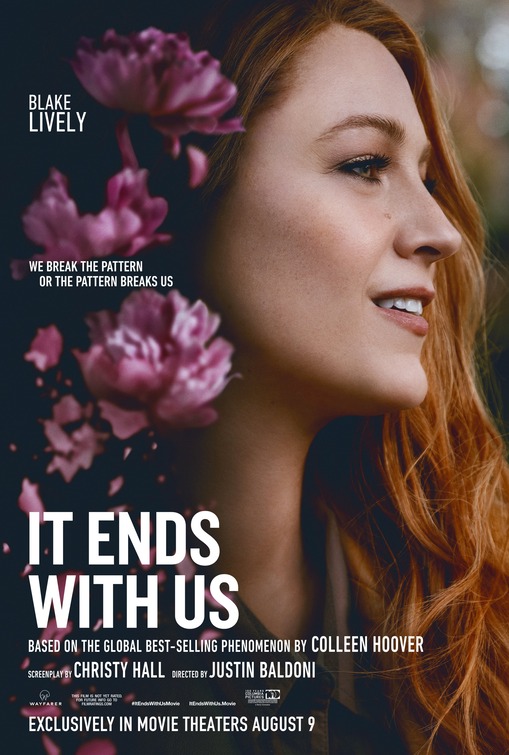
Dub’s Take: It Ends With Us (2024)

A spoiler-free mini movie review.


1 out of 5

You are forgiven for thinking “It Ends With Us” (aka. IEWU) is an ‘important’ movie, what with all the rigamarole behind its scenes. Trust me to tell you like it is, and IEWU did not end soon enough.

Lion’s share of blame is awarded to director/star Justin Baldoni, and not for the same reasons as his now-mangled future career prospects: long passages are staged & shot flatly like community theatre, with a never-ending rooftop meet-cute beheading the pacing right out of the gate; line-readings recall Hulu’s “The Handmaid’s Tale,” built on plot reaction rather than action; and Blake Lively’s Lily Bloom is fitted into tight, sexy tops that certainly made me envious of her current beau Ryan Reynolds, but are a betrayal of the self-taught defences of her character on-screen.

Original author Colleen Hoover ain’t no saint neither, and IEWU’s greatest fault is its disingenuous take on domestic violence. These handful of scenes are told with an unreliable presentation, tricking the audience into wondering whether Baldoni’s toxic neurosurgeon Ryle isn’t such a bad guy… until the contemptuous slow-motion reveal in the third-act spells it out.

It’s hard to say whether IEWU would have benefitted from an unflinching eye opposed to the choppy PG-13 implications we got here instead. What’s crystal-clear, however, is both leads’ reverse dramatic-irony that would be overanalyzed in literary form (such as Ryle’s shoulder-shrugging in the climax) lands here with a thud because of the meandering cinematic handling of the core narrative. The hot & heavy courting Lily puts Ryle through is starkly contrasted to how easily triggered she is, despite his adamance of love, and neither’s behaviour is ever studied beyond its broad strokes.

This isn’t to fault Lively’s performance, which is about as good as the material will allow, but I only ever had empathy for Amy Morton’s underused Mama Bloom. Certain people in life continue to make poor choices despite being compulsively aware of the signs, but a romance centered around these otherwise well-educated, well-intentioned one-percenters who all run their own businesses is perhaps the wrong podium.

It Ends With Us is an overlong message movie that fails in its amateur, sanitized telling. Only you, the potential viewer, know whether you would have paid full price to see this in theatres. At what point can I walk out and still get a refund?


Poster sourced from impawards.com. What do you think? Keeping up with all the drama, I was expecting an oral sex scene after Lively’s lawsuit mentioned that Baldoni wanted more, only to find there wasn’t any simulated sex in the movie at all. Are you telling me that Justin wanted an oral sex scene just because? Does its feuding leads impact your impressions of the film itself? Are you like me, and the drama is the reason you decided to watch it in the first place? Let us know in the comments below!