or, “Reconciled to Live from the Sidelines”: A spoiler-free mini movie review.
1.5 out of 5
“…it’s been so long since I did that stuff, I literally cannot remember how we did most of it. […] I really have to insist that we don’t talk about ‘Scanners’, or special effects, or exploding heads…”
– Canadian filmmaker David Cronenberg on Ken Finkleman’s “The Newsroom”, 1996
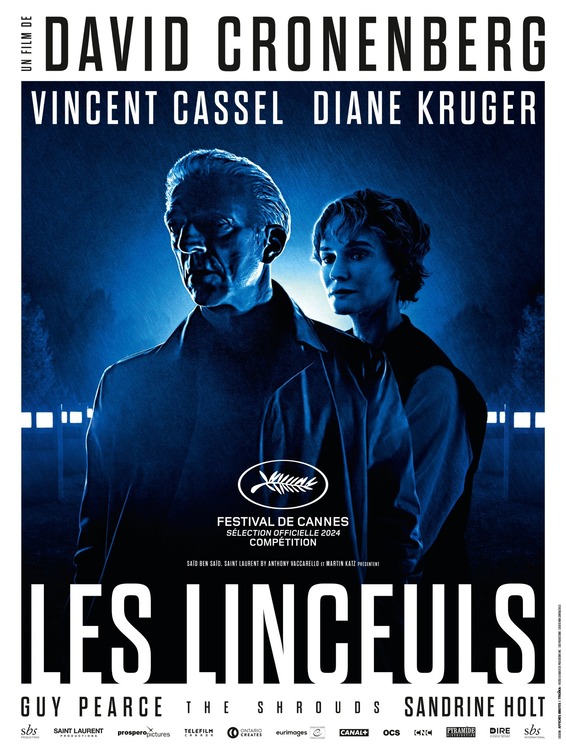
“The Shrouds” is an 82-year-old artist’s auto-elegiac statement. It’s aesthetically pleasing, and way too talky; its themes cerebral, though defeatist; its characters horny but dispassionate; and it’s told from a sanctimonious perspective that engenders viewer apathy.
My high school friends & I once drove an hour to see “A History of Violence”. We walked in late to the screening after getting a parking ticket, and immediately after the big 69’ing scene (but before the diner shootout). We didn’t find out until much later what else we had missed.
or, “Buying-In to the Confusion”: A spoiler-free mini movie review.
3 out of 5
While my wife would call me a “gamer”, I don’t clock nearly as many hours as when I was a kid: life gets in the way. So when I do play, it’s almost exclusively ‘arcade-style’ games that I can disconnect from quickly – physically & mentally – and there must be a Pause button.
Though I can’t attest, “Until Dawn” seems regarded as one of the premier, Western-made, story-driven video games of the previous console generation: a group of disposable teens trying to survive a throng of wendigos, with a branching narrative based on player interaction. “Until Dawn: The Movie” swaps out the choose-your-own-adventure input for a “Groundhog Day” esque time-loop, with some other surprises meant to mimic the discovery a player would get from the game.
My surprise was palpable. Though lacking the original’s star-power (which featured Rami Malek & Hayden Panettiere), the movie’s twenty-something players do a convincing job and, tonically, all five are spotlighted equally throughout the script. The savagery is effective, including a show-stopping water tower sequence & a close-up of a crushed face that gave me “Irréversible” flashbacks. The dialogue isn’t bad either, often breaking the fourth-wall to cheekily address the core plot’s uninspiredness, or the suicidal inclinations of its protagonists to reset the loop & try again.
A Canadian Legacy TV Review and Personal Discussion
“(…) Why do they call news, ‘stories?’ After man takes care of his basic animal needs, he indulges in a behaviour not imposed by nature, but invented by him. Emerging, as it does, from his imagination, can we not, then, call all invented human life (…) a fiction?”
– Peter Keleghan in Ken Finkleman’s The Newsroom (Episode 1×12: Meltdown Pt.3)
Preface
What are ‘White guy problems’?
Patriarchally speaking, man-kind is always thinking about ‘man-things’. Whether you have the privilege to only have to worry about yourself determines its White guy status.
Ken Finkleman – Canada’s answer to a Winnipeg-born, politically-charged Woody Allen (without the marrying-your-adopted-daughter nonsense) – has lots of White guy problems.
That isn’t to say the one-time Hollywood screenwriter & director (Grease 2; Airplane 2; Head Office), comedian, and provocateur’s satirical agenda on fascism & privatization wasn’t valid in its time – isn’t still valid – to the right viewer. Art is, above all, subjective. But when Finkleman calls his audience “an abstract” in a 2013 interview with Canada’s Dick Cavett, George Stroumboulopoulos, Ken’s peak on national television between 1996 & 2005 could retrospectively appear to some as the practice of a middle aged White guy with White guy problems, and the federal financing to produce aesthetically-pleasing art about it.
His acme for most (myself included, as of today) would be The Newsroom – not to be confused with the Aaron Sorkin HBO series – which ran for three split seasons and a TV movie at the Canadian Broadcasting Corporation. As a Larry Sanders Show-style spoof (think an early-90s The Office) at a television network, Finkleman’s alter ego – news director George Findlay, as played by Ken himself – is his preferred vessel for his commentary on male myopia; cowardliness; and Fellini-esque disdain & admiration for the opposite sex, going so far at one point to physically liken himself to Marcello Mastroianni’s Guido from Fellini’s 8 1/2 (although without making that connection, Ken’s dark sunglasses will likely make a newer generation of viewers think he smoked a big fat doob off-camera, which I wouldn’t rule out, either).
While there are plenty of pro-tem left-minded observations about North American society, it’s Ken’s George and his ensemble’s flagrant pettiness & sharp-edged selfishness that defines season one of the show, with Jeremy Hotz & Karen Hines being personal supporting highlights. But the majority of viewers will flock to Peter Keleghan’s meme-worthy portrayal of an idiot anchor, not unlike Michael Scott.
This era of Newsroom is often very funny and occasionally poignant – particularly the three-parter – but no one else I’ve shown it to, over the last twenty years of being a fan, shares my sentiment.
Time and experience has taught me why: empathy. Ken Finkleman is a Daskeman.
or, “Doing Away with the Chiller in the Thriller”: A spoiler-free mini movie review.
2 out of 5
I remember the trailer for Conclave last autumn, and I didn’t want to see it then, either.
Between the super-serious ensemble of Ralph Fiennes, John Lithgow, and Stanley Tucci all speaking in soft whispers; to the frequent high-angle framing of old White men in robes walking briskly through courtyards; to the punctuated explosion, it simply did not look like a good time. It looked like someone, somewhere was trying too hard.
Lo-and-behold, Conclave’s advertising & creative choices are misrepresentational – this isn’t a nail-biter: it’s a procedural about what happens when the Pope dies, and finding the right person to replace them.
The subject matter at-large joins The Program & The International as a movie with a rich topic worth edu-telling the viewer. But here, that knowledge is at the expense of wasting my time! (with an overdramatized aesthetic suggesting a core mystery that doesn’t actually exist)
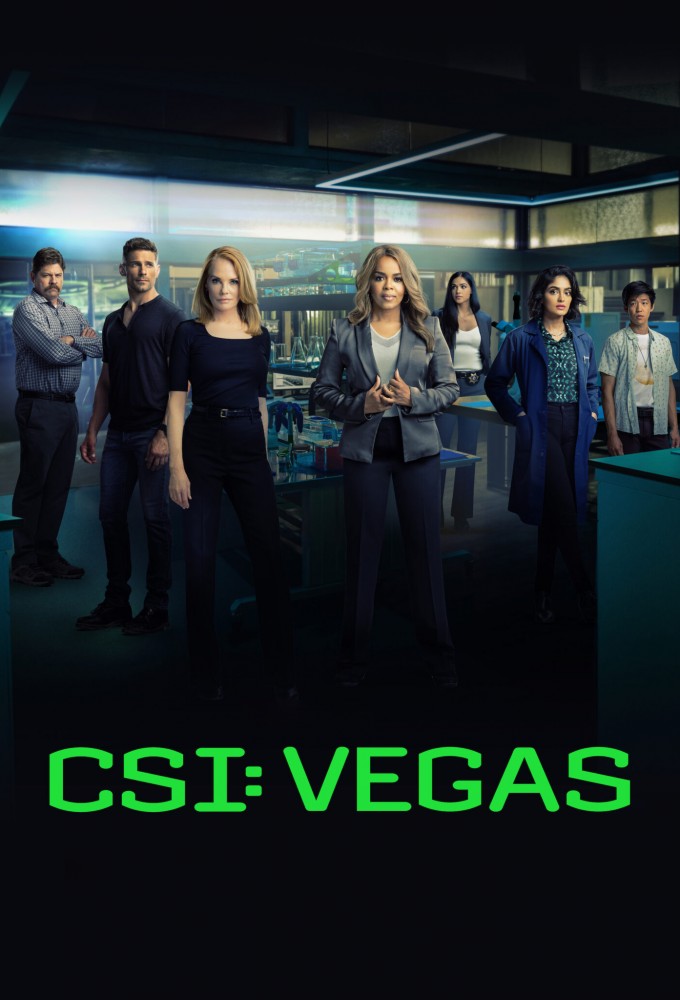
After an underwhelming ‘series finale’ in 2015 (with creepy-guy Doug Hutchinson as the villain), that “CSI” we like came back in style with a standalone, limited-series revival in 2021. It was pretty good, too: cozy returning work from William Pedersen, Jorja Fox, and Paul Guilefoyle; a straightforward serial; and the successful casting of Paula Newsome (“Chicago Med”) as the department’s new supervisor.
I didn’t connect with the other new actors, but those secondaries weren’t the focus: there’s only so many episodic stories you can tell before details overlap, and CSI’s adroitness – from the 15 seasons of the original series to its various spin-offs – was the slow dishing of its characters’ personal info, only ever noting those beats as they pertained to the caseload.
Flash-forward, and – like all good things – executives misread the positive ratings as audiences wanting more. Pedersen, Fox, and Guilefoyle all left, with Marg Helgenberger & Eric Szmanda chosen to represent the old guard’s new bequest. Weeks would go by without fresh episodes, suggesting that focus-group proposals (including dumping an older, tired Szmanda after only three chapters) were being implemented in real-time: always a bad sign.
And both sequel seasons of “CSI Vegas” were pretty bad: staff writers just couldn’t get their priorities straight. Too much time was dedicated to Newsome’s recovery after an assault, and not enough to Lex Medlin’s Beau’s rehabilitation after getting spooked in the field. Helgenberger, like Szmanda, looked tired, and was only in half the episodes. Scribes instead pivoted to Matt Lauria’s Folsom and his poor decision-making (a three-way office romance; avenging his mother’s murder then having to regain the team’s trust), but Lauria played him without irony: his line readings were surface-level gruff, opposed to finding the Warrick-style pathos.
Season 3’s back-end was spent investigating a cyborg factory, which devolved into Newsome having one-way conversations with the suspected robot antagonist in her office. Catherine being a mentor to Sarah Gilman’s Penny was forgotten. And I would be remiss to not mention episode 2-06 (“Here’s the Rub”) as one of the worst-edited forty minutes of television I’ve ever watched – odd, since established director Mario Van Peebles’ filmography suggests a comfort with the TV format.
Relentlessly disappointing from-a-point and contemptuous toward longtime fans, CSI Vegas is now six-feet underground in the grave it dug itself.
RIP 2024
Poster sourced from thetvdb.com c/o Zeferovic. What do you think? Do you agree that Vegas peaked with its first season, or were you a fan of all three? Was it disrespectful of the original series’ legacy – particularly its treatment of Catherine and disregard for her history with Sam Braun – or have you never been a supporter of the CSI franchise? Let us know in the comments below!


 theory of a daskeman