Dead Show Eulogy: More Tears (1998)

A Canadian Legacy TV Review and Personal Discussion


“(…) Why do they call news, ‘stories?’ After man takes care of his basic animal needs, he indulges in a behaviour not imposed by nature, but invented by him. Emerging, as it does, from his imagination, can we not, then, call all invented human life (…) a fiction?”

– Peter Keleghan in
Ken Finkleman’s The Newsroom
(Episode 1×12: Meltdown Pt.3)

Preface

What are ‘White guy problems’?

Patriarchally speaking, man-kind is always thinking about ‘man-things’. Whether you have the privilege to only have to worry about yourself determines its White guy status.

Ken Finkleman – Canada’s answer to a Winnipeg-born, politically-charged Woody Allen (without the marrying-your-adopted-daughter nonsense) – has lots of White guy problems.

That isn’t to say the one-time Hollywood screenwriter & director (Grease 2; Airplane 2; Head Office), comedian, and provocateur’s satirical agenda on fascism & privatization wasn’t valid in its time – isn’t still valid – to the right viewer. Art is, above all, subjective. But when Finkleman calls his audience “an abstract” in a 2013 interview with Canada’s Dick Cavett, George Stroumboulopoulos, Ken’s peak on national television between 1996 & 2005 could retrospectively appear to some as the practice of a middle aged White guy with White guy problems, and the federal financing to produce aesthetically-pleasing art about it.

His acme for most (myself included, as of today) would be The Newsroom – not to be confused with the Aaron Sorkin HBO series – which ran for three split seasons and a TV movie at the Canadian Broadcasting Corporation. As a Larry Sanders Show-style spoof (think an early-90s The Office) at a television network, Finkleman’s alter ego – news director George Findlay, as played by Ken himself – is his preferred vessel for his commentary on male myopia; cowardliness; and Fellini-esque disdain & admiration for the opposite sex, going so far at one point to physically liken himself to Marcello Mastroianni’s Guido from Fellini’s 8 1/2 (although without making that connection, Ken’s dark sunglasses will likely make a newer generation of viewers think he smoked a big fat doob off-camera, which I wouldn’t rule out, either).

While there are plenty of pro-tem left-minded observations about North American society, it’s Ken’s George and his ensemble’s flagrant pettiness & sharp-edged selfishness that defines season one of the show, with Jeremy Hotz & Karen Hines being personal supporting highlights. But the majority of viewers will flock to Peter Keleghan’s meme-worthy portrayal of an idiot anchor, not unlike Michael Scott.

This era of Newsroom is often very funny and occasionally poignant – particularly the three-parter – but no one else I’ve shown it to, over the last twenty years of being a fan, shares my sentiment.

Time and experience has taught me why: empathy. Ken Finkleman is a Daskeman.

[cont’d]

Continue reading
Dead Show Eulogy: CSI Vegas (2021)

A spoiler-free mini television review.


SEASON 1 RATING:
4 out of 5

SEASONS 2 & 3 RATING:
1 out of 5

After an underwhelming ‘series finale’ in 2015 (with creepy-guy Doug Hutchinson as the villain), that “CSI” we like came back in style with a standalone, limited-series revival in 2021. It was pretty good, too: cozy returning work from William Pedersen, Jorja Fox, and Paul Guilefoyle; a straightforward serial; and the successful casting of Paula Newsome (“Chicago Med”) as the department’s new supervisor.

I didn’t connect with the other new actors, but those secondaries weren’t the focus: there’s only so many episodic stories you can tell before details overlap, and CSI’s adroitness – from the 15 seasons of the original series to its various spin-offs – was the slow dishing of its characters’ personal info, only ever noting those beats as they pertained to the caseload.

Flash-forward, and – like all good things – executives misread the positive ratings as audiences wanting more. Pedersen, Fox, and Guilefoyle all left, with Marg Helgenberger & Eric Szmanda chosen to represent the old guard’s new bequest. Weeks would go by without fresh episodes, suggesting that focus-group proposals (including dumping an older, tired Szmanda after only three chapters) were being implemented in real-time: always a bad sign.

And both sequel seasons of “CSI Vegas” were pretty bad: staff writers just couldn’t get their priorities straight. Too much time was dedicated to Newsome’s recovery after an assault, and not enough to Lex Medlin’s Beau’s rehabilitation after getting spooked in the field. Helgenberger, like Szmanda, looked tired, and was only in half the episodes. Scribes instead pivoted to Matt Lauria’s Folsom and his poor decision-making (a three-way office romance; avenging his mother’s murder then having to regain the team’s trust), but Lauria played him without irony: his line readings were surface-level gruff, opposed to finding the Warrick-style pathos.

Season 3’s back-end was spent investigating a cyborg factory, which devolved into Newsome having one-way conversations with the suspected robot antagonist in her office. Catherine being a mentor to Sarah Gilman’s Penny was forgotten. And I would be remiss to not mention episode 2-06 (“Here’s the Rub”) as one of the worst-edited forty minutes of television I’ve ever watched – odd, since established director Mario Van Peebles’ filmography suggests a comfort with the TV format.

Relentlessly disappointing from-a-point and contemptuous toward longtime fans, CSI Vegas is now six-feet underground in the grave it dug itself.

RIP 2024

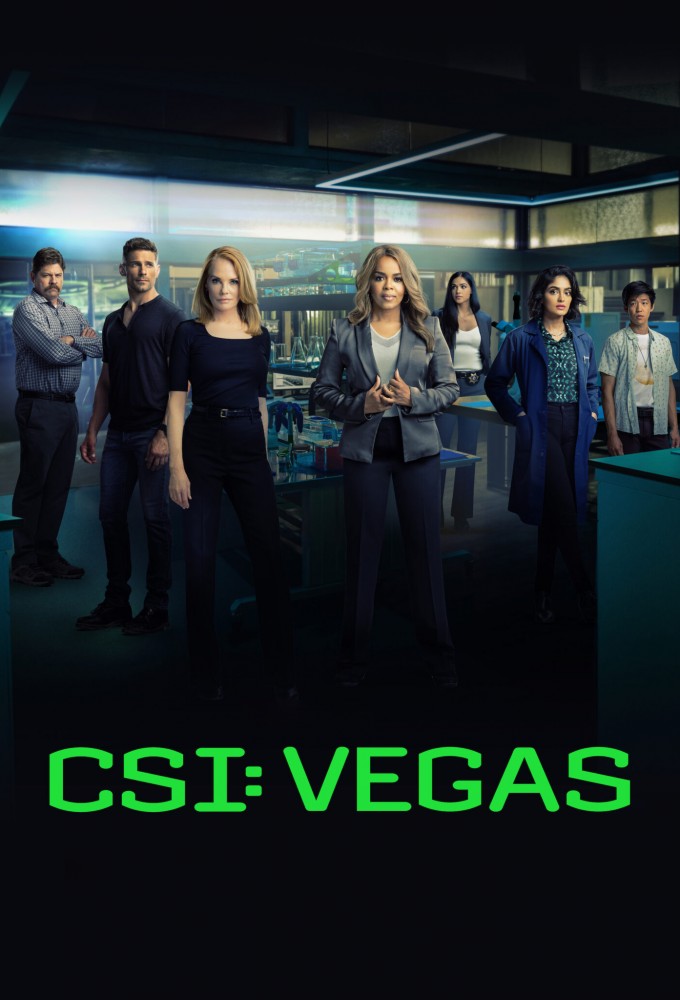
Poster sourced from thetvdb.com c/o Zeferovic. What do you think? Do you agree that Vegas peaked with its first season, or were you a fan of all three? Was it disrespectful of the original series’ legacy – particularly its treatment of Catherine and disregard for her history with Sam Braun – or have you never been a supporter of the CSI franchise? Let us know in the comments below!

Selected Scenes: Stargate SG-1 111

A spoiler-heavy single-scene TV episode analysis.

vlcsnap-2020-08-05-07h40m50s131

Television takes the over-diversification of cinema and amplifies it to 11, with the same plots and the same beats being repeated ad-nauseum by every nation and orientation inclined to make their own show for the platform. Short-of-it: there is simply too much TV to watch. It’s ridiculous! Sure, maybe a cop show filmed in Germany will be a little harder than one from the States but, a cop show is still a cop show, whether it’s a “buddy” cop show or a “traumatized female detective” cop show or a “murder in a small town” cop show, etcetera. Same with sci-fi shows: how many “teen-aged vampires join a secret society in a Magic School to stop the werewolf invasion of an alien planet that secretly controls the fate of mankind” shows can you name? Same with wormhole shows, apparently.

Continue reading

Selected Scenes: Suits 904

vlcsnap-2019-12-24-08h13m57s998

Happy 50th Cumulative Post!

Faye Richardson, a Stormtrooper for the New York State Bar, has been called in to housekeep a messy law firm that has been working against protocol: their Senior Partner Robert Zane, removed for contempt, still has his name up on the wall. Maybe you’ve heard of the Firm by its old name? Pearson Spector Litt? Yes, that Firm: the one that hired a college dropout with a photographic memory as Junior Partner without taking the Bar first; the one that promoted a glorified Secretary to act as their Chief Operating Officer; the one that’s been in all the papers lately on corruption charges and their low standards-of-practice. There can be up to five names on the wall at any given time but none are founding Partners. It makes no difference to Faye: the Firm is still a mess, and rightly so. Without a stable leader for months and discord within the Name Partners it doesn’t seem like anyone can make up their mind what direction the Firm should take. With the organizing body behind her, Faye uses her power to demote COO Donna and Acting Managing Partner Louis; not to mention emasculating Louis in front of his Associates, but nothing seems to be working. Their resolve cannot be broken. Frankly, the group of them are just too damned close: they would rather run the Firm their own way then have an outsider tell them what to do: stay the course and go down with the ship, so long as their values and their pride are intact. Louis’ secretary Gretchen being claimed by Faye, and Donna’s reprimand for being romantically-entangled with Harvey, are the last straws. The four remaining Partners corner Faye in her office and tell her that they have gone over her head and amended the Code Of Conduct to allow for inter-office relationships. Maybe Faye can’t take them all on together. Maybe she would get more flies with honey. She releases Gretchen back to Louis as a sign of her commitment to compromise, as opposed to integrity.

Continue reading

Selected Scenes: Game of Thrones 806

vlcsnap-2019-06-13-10h06m56s722

it all would come down to what jon decided to do. it was his choice. becoming lord commander was not something he asked for, neither was defacto leader of the wildlings. now, on top of everything, the last male targaryen heir to the iron throne? he didnt ask for any of it. fate was thrust upon him at every turn and when finally faced with a choice that only he could make, he decided to take tyrions advice and act quickly and swiftly, just like when he hung his predecessor to lord commander and his conspirators. jon had never been afraid or reluctant to duel out justice when it was called for, but he has been a reluctant leader. a brave fighter but a humble diplomat. he allowed himself to love again after ygritte and not only did the woman turn out to be his sister but another tyrant leader and threat to his family. a threat to his crown! he was the only one who could kill daenerys but did he ever imagine in a million years that he would end up where he began? being sent back to the nights watch, exiled from westeros with his secrets intact. maybe he thought that it would turn out differently, just a little glimmer in the back of his mind that lured him with the thought of being king, all he had to do was do what he had always done, which were the needs of the many over the needs of the one.

Continue reading