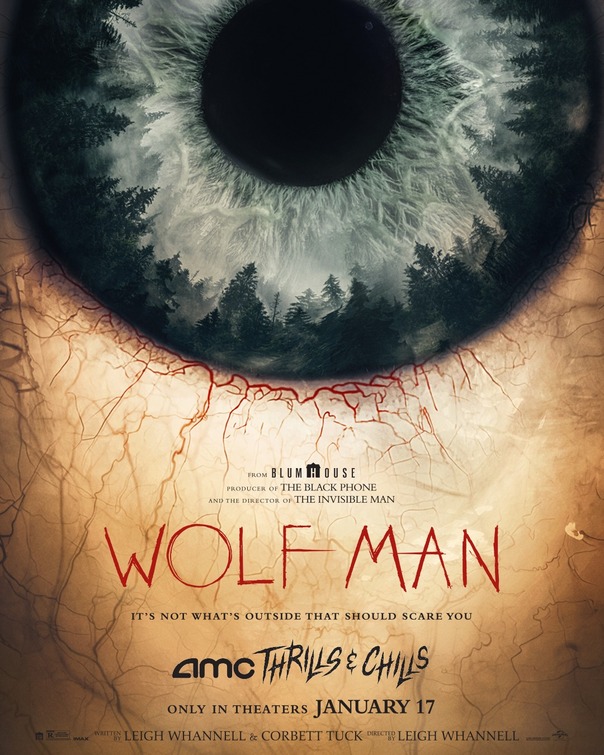
400 Words on: The Alto Knights (2025)

or, “Running Around the Woods with Shrimp Cocktails”:
A spoiler-free mini movie review.


2.5 out of 5

There are few things more comforting to a cinephile than Robert De Niro calling someone an expletive & unloading an entire pistol clip into them.

It’s unwholesome, but this has been his playground for decades. The Alto Knights is an impassioned throwback to the Scorsese/De Niro collaborations of old, but lacks the oomph of those masterpieces.

GQ’s 2006 interview with Bob is required reading for anyone wanting an encapsulation of the stubborn actor. I’m not here to rag on De Niro: he’s had many legendary performances over his long career. But like any artist (*cough* senior), he’s set in his ways, rejects change, and becomes crotchety when he feels disrespected.

Now an octogenarian, Bob can’t just go back & retroactively change his De Niro-isms, no matter how much digital technology de-ages him (like in Scorsese’s The Irishman). Now forced into ‘grandpa’ roles that he may or may-not feel are beneath him (being a new dad at 81 certainly increases that obligation), audiences know exactly what to expect.

[cont’d]

Continue reading

400 Words on: Caligula (1979)

A spoiler-free mini movie review.


NO STAR RATING

The following post contains language
that could be triggering.

If one tries to explain why they consider the ‘fall of the Roman Empire’ docudrama Caligula great, civilians won’t get it.

Then you show it to them, and not only will they still not get it, they are unlikely to speak with you again. Caligula is an ugly movie, in technique; aesthetic; and content combined (this is the Theatrical Version I’m talking about, presently).

[cont’d]

Continue reading

Dub’s Take: Forsaken (2015)

A spoiler-free mini movie review.


2.5 out of 5

Let’s consider the contentiousness between celebrity parents & their offspring: the Voigt/Jolie/Pitt’s; the O’Neal’s; the Barrymore’s…

The public only receives as much information that’s dished; often, that doesn’t include the forgiveness intrinsic to maintaining a healthy, life-long relationship with one’s family. That’s usually something us plebs experience ourselves, in time.

Great, then, for actor Kiefer Sutherland actually wanting to work with his late father & icon Donald. Kiefer hasn’t been featured on-screen so much since the height of COVID, what with his side-gig as a country musician. I saw him live in 2019 and, while I can’t remember his music, I think all of us in attendance were awed to see Jack Bauer/David the Daywalker in the flesh.

Where their filmography choices differ, father & son’s similar acting disciplines, and uncanny biology, can be felt in their shared scenes for the 2015 western Forsaken.

Forsaken has noble intentions – no doubt about that. It has a linear, easy-to-follow man-versus-himself redemption story, devoid of texture that doesn’t serve the plot. It has wonderfully verbose dialogue, recited melodramatically by its cavalcade of character actors (Demi Moore; Michael Wincott). It has a subversive epilogue, swapping a lovesick reunion for a tearful family goodbye. There really isn’t anything thematically wrong with it.

But it’s slow. Damn slow! Characterizations & script points are blander than superior genre examples, like Clint Eastwood’s Unforgiven (Richard Harris’ English Bob vs. Wincott’s Gentleman Dave) and Ed Harris’ Appaloosa (the love triangle). Brian Cox as the villain is Brian Cox as the villain, doing his billowy, profane Brian Cox thing – though credit goes to director Jon Cassar for convincing the Shakespearean-trained thespian to die next to a big pile of horse shit. And it’s always a bit rocking to see close-ups of gory, chunky gibs in the last ten minutes when the previous eighty lacked such morbid details.

Although only an hour-and-a-half, Forsaken feels twice as long when its quiet moments insist on themselves, like endless wood-cutting, and rumours from the church social club. If there were fewer of those hyperrealistic pauses – so common in modern prestige television – perhaps Kiefer & Donald’s understated work here would have serviced the picture as a whole, as opposed to being ‘one effective element’ of a decidedly average film.

If you want to see peak cinematic familial synchronicity, Forsaken is a low-calorie – if forgettable – clone.


Poster sourced from themoviedb.org. As of publication, Forsaken is available to watch for free in Western Canada on CBC Gem (unsponsored). What do you think? Leave us a comment below!

Dub’s Take: The Program (2015)

A spoiler-free mini movie review.


3 out of 5

In Tom Tykwer’s 2009 thriller The International, there’s a two minute scene explaining banking for laymen. Being now middle-aged, I get that financial institutions profit off interest, but, 16-years-ago & raised without financial skills, some surprise edu-tainment was appreciated.

Same goes for Lance Armstrong biopic The Program: Guillaume Canet as moustache-twirling Dr. Ferrari breaks down the science of steroids for a non-sports guy like myself within a few well-delivered lines.

If there’s one thing to admire about the film, it’s this streamlined structure: we start with Armstrong’s first Tour de France, and stay largely with the Tour and Lance’s first-hand experiences with cycling culture – including doping – in a linear narrative.

Ben Foster is the perfect lead for this creative direction: he exudes determination, even in his Lance’s moments of weakness. This vulnerability very rarely materializes under the narcissism, leading to some genuine – albeit cringey – humour, like a break-up message from Nike, or whispered threats to his competitors mid-race.

Awkward levity is par-for-the-course for High Fidelity director Stephen Frears, who also brings a digital, documentary quality to the film’s images, which work in favour of the lengthy, zestful racing scenes.

Alas, the film also feels the need to pivot to The IT Crowd’s Chris O’Dowd as David Walsh – a real-life journalist skeptical of Armstrong’s wins & author of the non-fiction book the film is based on. The Program may maintain a sprightly momentum its entire duration, but that includes the numerous office scenes with O’Dowd, which are visually edited so haphazardly they took me out of Golden Topping Land. Chris is good as the character, but viewers already follow a first-hand account in Lance himself, rendering O’Dowd’s role & the scenes it inhabits narratively supererogatory.

Usually I’m a champion of shorter movies, but The Program’s ninety minutes end too abruptly, where there would traditionally be a third-act courtroom climax. The post-film text alludes to events not-yet-transpired, suggesting the movie was made while Armstrong’s fate was still in litigation. Had producers waited, and exchanged O’Dowd’s material for more about Lance’s personal life (his wife’s meet-cute is blocked like a fling, but in the next scene they’re married), I may not have been disconnected from the material as often.

In spite of that, The Program is still worth watching for the knowledge gained, the racing, and Ben Foster’s performance.


Poster sourced from impawards.com. As of publication, The Program is available to watch for free in Western Canada on Tubi (unsponsored). What do you think? Leave us a comment below!

Dub’s Take: Wolf Man (2025)

A spoiler-free mini movie review.


1 out of 5

You can blame Film School for my objectively watching movies wondering what I’d do different: “Well, if they had moved the opening flashback to the midpoint, flash-forward to the middle for a bit, then go back, cut the next twenty minutes…” and etcetera.

However, I’m sure the only way to fix “Wolf Man” would be to start over with new hires. To quote “Family Guy,” it “insists upon itself”: it’s innately serious with its body-horror aspirations à la Cronenberg’s “The Fly”, but lacks Jeff Goldblum’s humanizing arc or, plainly, anything else of interest.

What happened? I mentioned TV’s “The Handmaid’s Tale” in my negative review for Blake Lively’s “It Ends With Us”, but actress Elisabeth Moss’ time there – particularly the long close-ups of her character’s mental atrophy – made her the perfect actress to quietly communicate the fear of an abusive partner in director Leigh Whannell’s 2020 reimagining of “The Invisible Man”. A palatable discomfort made that project borderline-unwatchable, but its potency made me excited for what Whannell did next.

Well, next is here, and Wolf Man’s casting sucks: indie-darling Christopher Abbott and “Ozark’s” Julia Garner, as a bickering couple, have zero chemistry. Despite his character’s learned sheepishness, Abbott lacks primality as a father trying to break a cycle of toxic parenting. Garner equally trifles as the shocked city-mom out of her element, emptily channelling Moss’ internal acting successes. Putting Abbott & Garner together at their most unpleasant is like banging two coconut halves together and calling it a horse.

Bad acting can be charming if the story is still engaging, but Wolf Man’s specialty is its disengagement. Abbott’s character history isn’t fleshed out, leaving his father’s notes on hunting the lycan for no one to find and a neighbourly relationship undeveloped & whitewashed, a mother MIA, and a second-act twist without emotional resonance. We spend an inordinate amount of the first act with Abbott & Garner’s marital issues, and the transformation itself doesn’t start until the halfway point, prorating the rest with Abbott barricading only one of the two entrances into the farmhouse where the family is hiding, not including the windows.

Like a puzzle, Wolf Man’s pieces are all there, but there’s no ends tying the loose, disparate bits together, and what’s left doesn’t match the picture on the box: it’s poorly acted, poorly plotted, and goes nowhere fast. Next time, just remake “Van Helsing” instead.
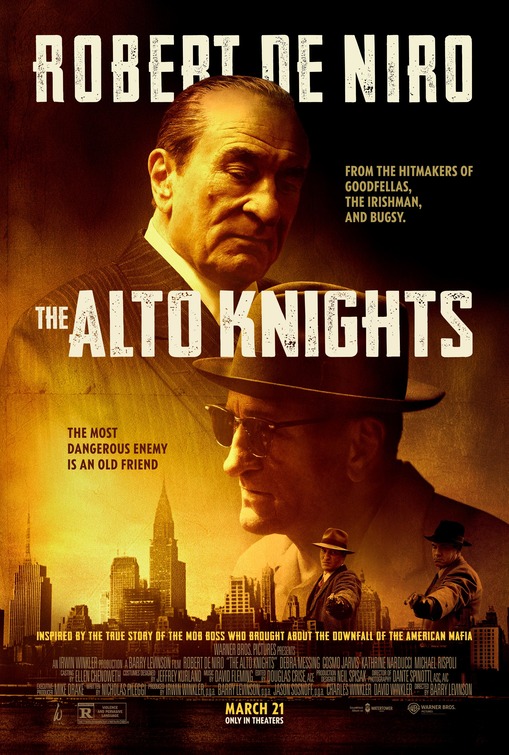
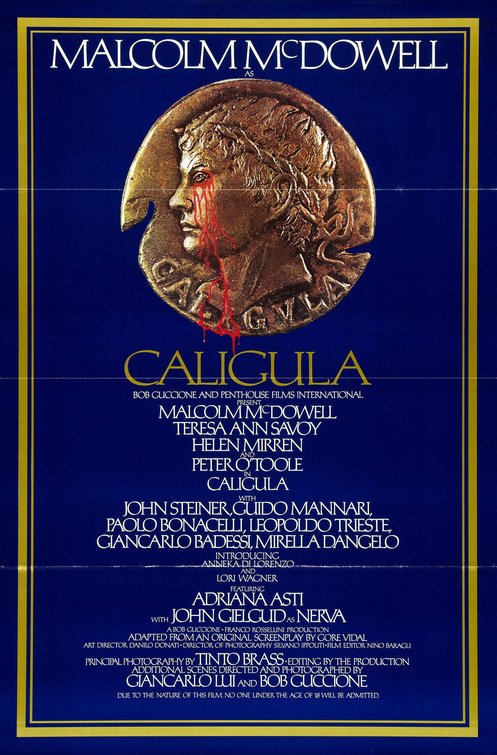
Poster sourced from impawards.com. What do you think? Assuming there are always bits on the cutting room floor, should the filmmakers have swapped out scene-after-scene of Garner & her movie daughter running back & forth between the farmhouse and the barn with some actual backstory about Abbott’s father’s hunt for the lycan? Is it worth hypothesizing about movie scenes not included in the final cut, even if they didn’t exist to begin with? Do you re-edit movies while you’re watching them, too? Leave a comment for us down below!